
FAQs2024-06-21T06:05:11+00:00

Best Foldable Pet Cot 2026 for Global Buyers

Choosing the Best Foldable Pet Cot 2026 for Global Buyers means looking beyond attractive product photos. A Foldable Pet Cot should suit your pet’s size, your available space, and the way you plan to use it. Measure your pet while lying down, then compare those measurements with the cot’s sleeping surface. Check the listed weight limit, frame materials, fabric type, and assembly instructions. Fit matters. A cot that looks roomy online may feel cramped when your dog stretches out.

Global buyers should also consider climate, storage, and shipping details. Mesh panels can support airflow in warm settings, while a raised design keeps pets off cold or damp floors. However, no cot is ideal for every home, and a breathable fabric may not feel warm enough in cooler conditions. Small details count. Look for clear care instructions, replacement-part information, and dimensions shown in familiar units. Product availability and delivery times can vary by destination, so confirm these before ordering. This guide compares practical features, portability, comfort, and value to help buyers make informed choices. It also points out trade-offs, because lightweight frames may be easier to carry but can feel less substantial. A careful fit check is still essential.
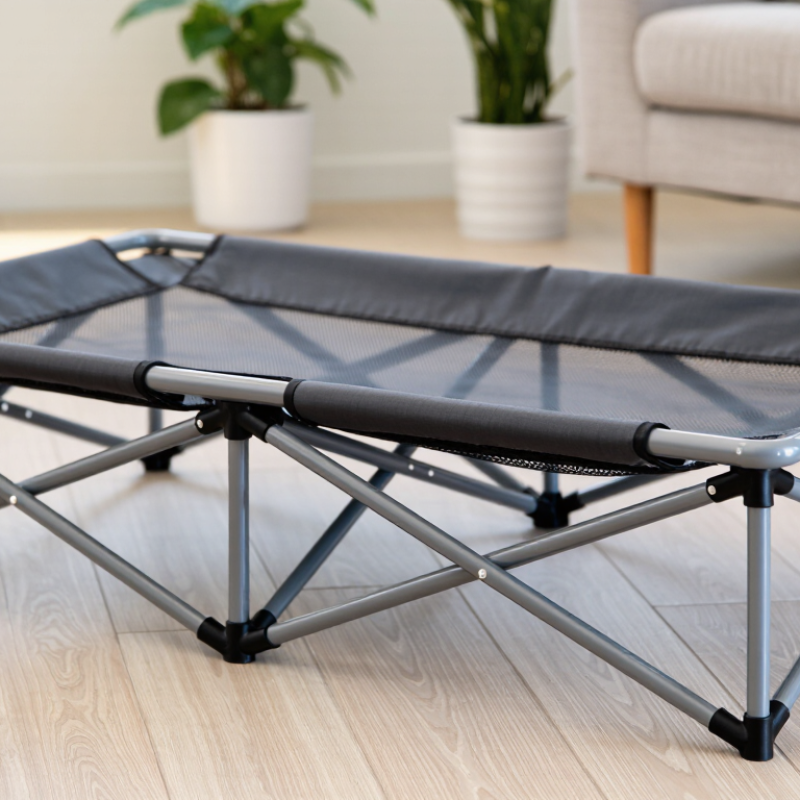
Best Foldable Pet Cot 2026 for Global Buyers

What a Foldable Pet Cot Is and How It Supports Pets

A foldable pet cot is a raised resting platform with a frame that collapses for storage or travel. Most designs use a fabric panel stretched across lightweight supports. The gap beneath the bed can improve airflow compared with a cushion placed directly on the floor. On a warm afternoon, that difference may help a dog settle more comfortably, though it cannot replace shade, water, or a cool room.

The raised surface also keeps pets away from cold tile, dusty floors, and small damp patches. For older dogs, a stable cot can make resting easier, but the height matters: a tall frame may be awkward for pets with stiff joints. Check the cot’s weight limit, frame connections, and fabric tension before use. Press gently on the center and corners. Any wobble deserves attention.

Foldable designs suit homes with limited space and trips where a full bed is impractical. A cot should sit on level ground, with enough room for the pet to lie naturally. Fabric can sag over time, and outdoor dust collects underneath more than some owners expect. That part is easy to overlook. Wipe the surface regularly, inspect seams, and let it dry fully before folding it away. A raised bed is useful, not automatically right for every pet.

Core Components, Materials, and Folding Mechanisms

A dependable foldable pet cot starts with a frame that stays steady when a dog shifts its weight. Steel tubing can feel reassuringly firm, while aluminum is lighter to carry; wall thickness and joint quality still matter. Look for rounded tube ends, secure rivets, and feet that grip smooth floors without scratching them. Small parts matter. The sleeping surface often uses woven polyester mesh, which allows airflow and keeps the cot raised above damp ground. Check its stitching at the corners, where fabric tension gathers during use. A tight weave may resist snagging better, but it can feel warmer in a sunny room.

The folding mechanism is more than a convenience. Hinges should move without pinching fingers, and each leg should lock firmly before a pet climbs aboard. A crossbar design can spread weight across the frame, yet extra joints create more points to inspect. That trade-off is easy to miss. For buyers shipping across regions, confirm the folded dimensions, packed weight, spare-part availability, and care instructions. Clear diagrams help caregivers reopen the cot correctly after storage. Ask for load-testing details and inspect samples on both tile and carpet; a cot that wobbles empty will not inspire confidence. I would also check whether the fabric can be removed for cleaning, though some designs make this awkward. Not every fold feels smooth.

How to Compare Comfort, Stability, Portability, and Size

Choosing a foldable pet cot means balancing comfort, stability, portability, and usable space. APPA’s 2025 State of the Industry Report estimates U.S. pet-industry spending reached $152 billion in 2024. Its 2025–2026 National Pet Owners Survey estimates 94 million U.S. households have pets. These figures show a large, varied market, but they do not prove any cot is comfortable or durable. Check the actual materials and construction. Mesh should feel taut, seams should lie flat, and frame joints should lock without grinding. Small details matter.

For size, measure your pet from nose to rump and allow room to stretch and turn. A cot that fits only a curled sleeping position may feel cramped during daytime use. For stability, check the stated weight limit, leg design, and locking points; test the frame on the floor where it will be used. A cot can look sturdy in a product photo. It may still wobble on tile. Portability is more than low weight: compare folded dimensions, carrying comfort, and how easily one person can set it up. I would still question any listing that omits its load rating or packed size. Those missing details make fair comparisons difficult, especially for buyers ordering across borders.

Best Foldable Pet Cot 2026 for Global Buyers — How to Compare Comfort, Stability, Portability, and Size

Portability reference: pounds converted to kilograms. These are unit-conversion examples, not product weights or test results.

When comparing cots, check the listed cot weight for portability, measure your pet to confirm the sleeping surface is long and wide enough, and review frame construction and weight capacity for stability. For reference, 1 lb equals 0.45359237 kg; always verify the specifications of the individual cot.

Safety Standards, Maintenance, and Expected Durability

For a foldable pet cot, ask for a safety and durability report that identifies the tested model, methods, results, and lab. There is no single globally applicable standard covering every pet cot. Fabric tests such as EN ISO 12947-2 assess abrasion resistance, while ISO 13934-1 measures textile tensile strength. These tests do not prove that the assembled frame is stable or safe. Check for separate load, folding-joint, and tip-resistance assessments. The APPA 2024 State of the Industry report estimated U.S. pet-industry spending at $152 billion for 2024; market growth, however, is no substitute for product-level evidence.

Inspect the cot on a flat floor before use. Press each corner, check that locking joints stay engaged, and look for sharp edges or fabric pulled from its seams. Keep the maker’s stated weight limit visible; do not infer capacity from frame thickness. Wash removable fabric as directed, then dry it fully before refitting. Moisture trapped beneath a tight seam can encourage odor and weaken fabric over time. Recheck stitching, feet, and hinges weekly, especially after outdoor use. A shiny frame can look reassuring, but looks alone tell you little. Expected lifespan depends on pet weight, chewing, sun exposure, cleaning, and storage; request repeated-use test results rather than relying on a vague “heavy-duty” claim.

Best Foldable Pet Cot 2026 for Global Buyers - Safety Standards, Maintenance, and Expected Durability

Buyer consideration What to look for Practical check before purchase Why it matters
Frame and folding joints Rigid metal or reinforced polymer frame; securely retained pins, hinges, and locking braces; no sharp edges or exposed burrs. Open and close the cot several times. Confirm that each lock engages fully and that the frame does not wobble on a level surface. Loose joints, pinch points, and unstable legs can cause collapse or injury. Keep paws and fingers clear while folding.
Stability and load rating A clearly stated maximum load and guidance on intended pet size. The rating should apply to the assembled cot, not just an individual frame component. Compare the rating with the pet’s current weight and consider movement, jumping, and growth. Do not exceed the maker’s limit. Static weight alone does not represent the extra force created when a pet jumps onto or shifts around on the cot.
Sleeping surface Tightly fitted fabric with secure seams and attachment points. Mesh can improve airflow; solid fabric may be preferable where claws could catch in open mesh. Check for loose threads, gaps, fraying, snag points, and fabric that sags close to the ground under the pet’s weight. Damaged or poorly tensioned fabric may tear, trap claws, or allow the pet to contact the floor.
Material and chemical information Material details, care instructions, and traceable supplier or product documentation. Ask about coatings, dyes, and applicable chemical restrictions for the destination market. For EU sales, check whether the seller provides information relevant to applicable REACH restrictions. Do not assume that a “non-toxic” claim is a certification. Requirements differ by country and product. Clear documentation helps buyers assess materials and verify market-specific obligations.
Applicable safety requirements Evidence that the product meets relevant consumer-product and chemical rules in the country where it will be sold. Request test reports that identify the tested model and test scope. Ask the importer or seller which rules apply in the destination country. There is no single universal performance standard that certifies every foldable pet cot worldwide. A general safety statement or unrelated certification does not by itself demonstrate that a particular cot has been tested for stability, load, or folding hazards.
Cleaning and routine care Removable or accessible fabric, clear washing instructions, and frame surfaces that can be wiped clean. Follow the product’s stated care limits. Remove hair and debris from joints; clean with the recommended method; dry fabric fully before folding or storage. Moisture and trapped dirt can encourage odour, staining, or corrosion, while unsuitable washing may weaken coatings or fabric.
Inspection and repair Replaceable fabric panels or available spare parts are useful. Inspect stitching, fasteners, feet, locks, and frame connections regularly. Stop using the cot if a lock fails, a tube bends, a seam opens, or a foot or fastener is missing. Do not improvise a structural repair unless the maker approves it. Continued use of a damaged folding frame or torn sleeping surface can increase the risk of failure.
Expected service life Use a planning estimate rather than a guaranteed lifespan: approximately 1–3 years for frequent outdoor use, or 3–5 years for careful indoor use, depending on materials and upkeep. Treat these figures as broad estimates, not product test results. Replace the cot sooner if the frame, locks, fabric, or seams show damage. Actual durability varies with pet size and behaviour, frequency of folding, exposure to sun or moisture, cleaning, and storage conditions.
Travel and storage Folded dimensions and weight suited to the intended vehicle or storage space; a carry bag is useful but does not replace secure transport. Measure the folded cot and check that it can be secured during travel. Set it up on firm, level ground and away from heat sources. Transport impacts, uneven surfaces, and excessive heat can damage the cot or create avoidable hazards for the pet.
Warranty and buyer support Written warranty terms, a clear returns process, and accessible support in the buyer’s market. Check whether fabric and frame are covered separately. Confirm coverage period, exclusions, proof-of-purchase rules, and who pays return shipping before ordering internationally. Warranty length alone does not establish durability, but clear support can help resolve defects and obtain suitable replacement parts.

Buyer note: This table is a general purchasing guide, not a certification or product-specific test report. Always follow the manufacturer’s assembly, load, cleaning, and inspection instructions, and verify current regulations for the destination market.

How Global Buyers Can Match a Cot to Their Needs

A foldable pet cot should fit the animal, the room, and the way it will be used. Measure your pet while it is stretched out, then compare that length with the cot’s usable sleeping area. Fit comes first. A small dog that curls up may need less space than a long-bodied dog that sleeps fully extended. Check the listed weight capacity, frame stability, fabric tension, and whether replacement covers are available. A cot that folds neatly but feels wobbly on a kitchen floor is not a good match.

Market data helps explain why needs vary. The American Pet Products Association’s 2023–2024 National Pet Owners Survey estimated that 66% of U.S. households owned a pet. Its 2025 State of the Industry report placed U.S. pet-industry spending at $152 billion in 2024. These figures describe a large, varied market, not a guarantee that any cot suits every animal. For global buyers, confirm dimensions in both inches and centimetres, plus the packed size and stated load rating. Small differences matter.

Think about the cot’s destination: a balcony, a car boot, or a sunny campsite. Mesh can improve airflow, while a removable cover makes muddy paws easier to manage. Check the frame joints and feet, especially if the surface is uneven. Even careful measuring leaves some guesswork; pets may reject unfamiliar fabric or change sleeping positions. If possible, let your pet try the cot indoors before relying on it for travel.

Go to Top