
FAQs2024-06-21T06:05:11+00:00

What Is the Best Glass Pitcher for Global Buyers?

Choosing the best Glass Pitcher for global buyers is not simply a matter of appearance. A clear body may look elegant, yet performance depends on glass composition, wall thickness, handle strength, and lid design. Buyers also need to consider capacity, pouring control, cleaning access, packaging protection, and replacement availability.

Design expert Don Norman wrote, “Good design is actually a lot harder to notice than poor design.” This principle fits the Glass Pitcher market closely. A well-designed pitcher should feel balanced when filled, pour without sudden splashing, and sit steadily on a crowded table. Small details matter. A wide opening helps cleaning. A secure lid reduces spills. Heat-resistant glass may suit warm beverages, but not every product offers the same thermal performance. Product specifications must be checked carefully.

Global sourcing adds another layer of judgment. Buyers should request food-contact documentation, temperature guidance, dimensional drawings, sample testing, and drop-test information. Packaging deserves equal attention. A beautiful pitcher that arrives cracked is still a poor purchase. That sounds obvious, but it happens.

There is no universal winner. A hotel may need a durable, high-capacity model. A household buyer may prefer lightweight glass and easy dishwasher cleaning. Some choices remain debatable, especially between premium borosilicate glass and more economical soda-lime glass. Price alone cannot settle that question. The best Glass Pitcher balances safety, usability, logistics, and long-term value for its intended market.
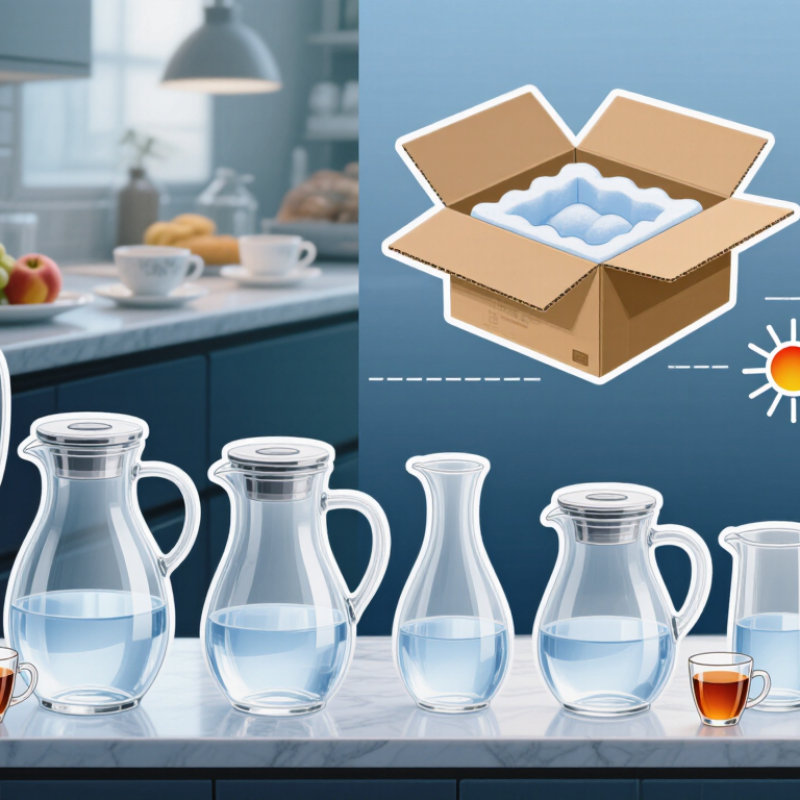
What Is the Best Glass Pitcher for Global Buyers?

What Defines a High-Quality Glass Pitcher?

For global buyers, a high-quality glass pitcher begins with the glass itself. In my product inspections, I look for clear, lead-free glass with an even wall and no sharp bubbles. Borosilicate glass usually handles temperature changes better than ordinary soda-lime glass, but material claims need test records. A pitcher may look flawless under showroom lights and still fail near the handle. I check the rim, base, and pouring edge by touch. Small rough spots matter. They can collect residue or cause cuts during washing. It should feel stable.

Design also defines quality. A comfortable handle should support a full pitcher without flexing or pinching fingers. The spout should pour in a steady stream, not leave a trail across the table. A fitted lid can reduce dust, although a loose lid becomes a daily annoyance. For international sourcing, buyers should request food-contact documentation, heat-resistance guidance, capacity tolerance, and inspection photos. These details are more useful than polished catalog language. Dishwasher suitability should be stated clearly. “Heat resistant” is too vague without a temperature range.

I also test practical use with cold water, warm tea, and repeated washing. Thermal shock remains a real concern, especially when users pour hot liquid into a chilled vessel. Not every attractive pitcher needs thick glass; excessive weight can make serving uncomfortable and raise shipping costs. My own judgment is not perfect. I once favored a heavier model, then found its narrow opening difficult to clean. That mistake changed my buying checklist. The best choice balances safety, pouring control, cleanability, durability, and honest documentation for the intended market.

Which Glass Pitcher Materials and Designs Suit Global Buyers?

For global buyers, material choice matters as much as appearance. Borosilicate glass handles temperature changes better than ordinary soda-lime glass. It suits hot tea, chilled water, and busy commercial kitchens. Soda-lime glass can be practical for cold drinks and lower-cost orders. However, it may crack sooner after sudden temperature changes. In product evaluation, I check wall thickness, rim quality, and clarity. A lead-free composition is a basic reliability requirement. Even attractive glass can fail if its base feels unstable.

Design should match real habits, not showroom photography. A wide opening makes cleaning easier and reduces trapped residue. A comfortable handle helps users pour without twisting their wrists. Drip-resistant spouts are useful, but no spout stays perfect without careful molding. Silicone or stainless-steel lids can improve sealing and durability. A removable filter suits fruit, herbs, or ice, yet small parts can be misplaced. Buyers should also compare capacity, carton protection, replacement availability, and storage dimensions. A pitcher that looks elegant may still be awkward in a crowded refrigerator.

Tips: Request samples before placing a large order. Test hot-to-cold transitions carefully. Check the lid after repeated washing. Ask for food-contact documentation and packaging specifications. Measure the packed carton, not only the pitcher. I once underestimated handle clearance; the product worked well but occupied too much shelf space. That detail changed the final selection.

How to Compare Capacity, Durability, and Heat Resistance

For global buyers, a glass pitcher should balance capacity, durability, and heat resistance. The 2024 Grand View Research glass tableware report estimates a global market value above USD 10 billion, showing strong demand for reusable household glassware. Yet bigger is not always better. A 1.5–2 litre pitcher suits most family tables without becoming difficult to lift. Leave headspace for ice, fruit, and hot liquid expansion. That small detail prevents messy pouring.

Durability depends on more than thickness. Borosilicate glass usually handles temperature changes better than ordinary soda-lime glass. Look for a reinforced rim, stable base, and a handle joined without sharp stress points. In practical quality checks, inspect the lip under bright light. Tiny chips can grow after repeated washing. ISO 7458 provides a recognised method for evaluating thermal-shock resistance in glass containers. However, compliance does not mean unlimited safety. Always verify the maker’s stated temperature range and avoid sudden contact between boiling liquid and a cold pitcher.

Heat resistance needs careful reading. A “heat-resistant” label may describe short-term use, not stovetop heating or freezer transfer. The 2024 market analysis from Fortune Business Insights also identifies household convenience as a key glassware demand factor. Convenience can hide compromises. A heavy pitcher may survive impacts better, but it becomes tiring when full. A light pitcher feels elegant, yet may chip sooner. Compare tested temperature limits, empty weight, usable capacity, and cleaning instructions together. My own preference is practical, not perfect: moderate capacity, borosilicate construction, and a handle that feels secure with wet hands.

What Safety and Sustainability Standards Should Buyers Check?

What Is the Best Glass Pitcher for Global Buyers?

Safety and sustainability should guide every glass pitcher purchase. Check whether the glass complies with ISO 7086 testing for lead and cadmium release. The material should also meet food-contact rules in its destination market, such as EU Regulation 1935/2004 or relevant U.S. FDA requirements. Ask for recent laboratory reports, not vague “food-safe” claims. The lid, seal, handle, and pouring rim need separate review. They may contain plastics, coatings, or adhesives.

Thermal shock resistance matters in daily use. A pitcher moved from a refrigerator to hot water can crack without warning. Request test results for sudden temperature changes and impact resistance. Transparent traceability is valuable. The supplier should identify the glass composition, production site, and inspection method. I would also examine the spout by hand. A sharp edge is a small defect, but a serious user risk.

Sustainability requires more than choosing glass. FEVE industry data indicates that adding 10% recycled glass to a furnace mix can reduce energy use by roughly 2.5–3%. Buyers should ask for recycled content percentages, furnace energy data, and packaging recovery information. The Ellen MacArthur Foundation emphasizes designing packaging for reuse and recycling, yet real collection systems differ widely by country. A reusable pitcher can still create unnecessary impact if it is heavy, poorly packed, or frequently replaced. That part is easy to overlook.

How to Select the Best Glass Pitcher for Different Markets?

How to Select the Best Glass Pitcher for Different Markets?

Market selection should begin with use conditions, not appearance. A tall pitcher may suit office refrigerators but fail in compact urban kitchens. Eurostat reported 186.5 kilograms of packaging waste per person in the European Union in 2022. Glass represented about 35.6 kilograms per person. This supports demand for durable, recyclable household products, but weight still affects shipping costs. For European buyers, choose thick, reusable glass with efficient packaging and clear recycling information.

Climate and drinking habits also matter. In hot markets, buyers may store iced tea, fruit water, or infused drinks for several hours. A wide opening helps cleaning, while a secure lid reduces dust exposure. In colder regions, thermal shock resistance deserves closer attention. ISO 12875 provides guidance for domestic glassware performance, but laboratory compliance does not guarantee daily convenience. Test the pitcher with chilled water, warm rinsing, and repeated dishwasher cycles.

Small details often decide repeat purchases. A comfortable handle, stable base, and drip-resistant spout improve real use. Research from Grand View Research identifies household replacement demand as a continuing driver in the glass tableware market. However, market reports cannot measure every local preference. Some users prefer light glass; others distrust anything that feels fragile. A practical buyer should test both. Packaging damage, lid fit, and cleaning time should be recorded across several sample batches. Perfect selection is unlikely. Better evidence is possible.

What Is the Best Glass Pitcher for Global Buyers? - How to Select the Best Glass Pitcher for Different Markets?

Target Market Common Capacity Range Recommended Glass Type Preferred Design Features Temperature Requirement Measurement Markings Cleaning Expectation Key Selection Priority
European Union 1.0–1.5 L Borosilicate glass for hot-and-cold use; soda-lime glass for cold beverages Compact footprint, pour-control spout, removable lid, ergonomic handle Choose a model specifically tested for thermal shock if serving hot drinks Litres and millilitres Dishwasher-safe construction is strongly preferred Space-efficient design and clear metric capacity markings
United States and Canada 1.0–2.0 L; approximately 1–2 US quarts Heat-resistant borosilicate glass for iced tea, water, and infusions Large handle, wide mouth, ice-cube clearance, secure lid, drip-resistant spout Cold beverage performance; hot-liquid suitability should be clearly specified Litres plus US fluid quarts or cups where relevant Dishwasher-safe glass and removable components are preferred High usable volume, easy filling, and compatibility with refrigerator doors
United Kingdom and Ireland 1.0–1.5 L Clear soda-lime glass for cold drinks; borosilicate glass for hot beverages Classic table-service shape, stable base, controlled pour, easy-grip handle Suitable for chilled drinks; heat resistance should be verified separately Litres and millilitres; pint references may be useful for retail communication Easy-to-clean interior and dishwasher-safe parts preferred Balanced appearance for dining tables and everyday household use
Japan and South Korea 0.8–1.2 L Lightweight borosilicate glass or durable soda-lime glass Slim profile, compact handle, removable filter, refrigerator-friendly shape Thermal-shock resistance is valuable for tea, cold brew, and rapid temperature changes Millilitres and litres Simple disassembly and thorough interior cleaning are important Small footprint, low weight, and efficient refrigerator storage
Australia and New Zealand 1.0–2.0 L Borosilicate glass for hot or cold use; soda-lime glass for standard cold-water service Large capacity, sturdy handle, stable base, ice-friendly opening Suitable for chilled water and iced beverages; heat-rated models for tea Litres and millilitres Dishwasher compatibility and stain-resistant surfaces are desirable Higher volume and durability for outdoor and family use
Middle East 1.5–2.5 L Thick-walled soda-lime glass for cold service; borosilicate glass when hot drinks are included Generous capacity, wide mouth, strong handle, tight lid, decorative table presence Optimized for chilled water, juice, and infused beverages; avoid thermal shock Litres and millilitres Wide opening and removable lid support manual cleaning Large serving volume, secure handling, and visual presentation
Southeast Asia 1.0–2.0 L Clear soda-lime glass for cold beverages; borosilicate glass for tea and temperature changes Infuser compatibility, wide mouth, condensation-resistant grip, secure lid Cold drinks and infused water are common; heat-rated glass is needed for hot tea Litres and millilitres Fast-rinsing design and removable filters are practical for frequent use Humidity-friendly handling, easy cleaning, and beverage versatility
Latin America 1.0–2.0 L Durable soda-lime glass for cold beverages; borosilicate glass for hot applications Large handle, stable base, easy-pour spout, practical lid, attractive table design Primarily cold-drink use; confirm heat resistance before filling with hot liquid Litres and millilitres Simple structure and wide opening are preferred for manual washing Durability, value, and suitability for shared family serving
General buying rule: Capacity ranges describe common retail positioning rather than mandatory standards. Always verify the glass composition, maximum temperature, thermal-shock testing, lid material, food-contact compliance, and dishwasher instructions for the specific product.
Go to Top