
FAQs2024-06-21T06:05:11+00:00

7 Best In Building DAS Solutions for Global Buyers

Reliable indoor coverage is built, not assumed. A phone can show full bars beside a window and lose service two rooms away. Concrete walls, elevators, and crowded venues all change how signals travel. In Building DAS Solutions address these gaps by distributing wireless coverage through a building. The right design depends on the site, carrier requirements, user demand, and future capacity.

Wireless infrastructure analyst Joe Madden of Mobile Experts studies how networks meet changing capacity needs. A useful paraphrase of that broader industry lesson is: “Plan indoor coverage around real demand, not ideal conditions.” This is a paraphrase, not a verbatim quotation. It captures a practical principle for buyers: request evidence from site surveys, design documents, and performance testing. A polished proposal alone is not enough.

This guide compares seven In Building DAS Solutions for global buyers. It considers system architecture, supported frequency bands, scalability, installation demands, and ongoing support. It also looks at where a solution may be a poor fit. No system suits every building. A hotel, hospital, warehouse, and office tower have different coverage patterns and operating needs. Even a well-designed system may need adjustment after occupants move in. That detail is easy to overlook. The goal is a clear shortlist, not a promise of perfect coverage. Buyers can use these criteria to ask sharper questions, compare vendors fairly, and identify trade-offs before committing.
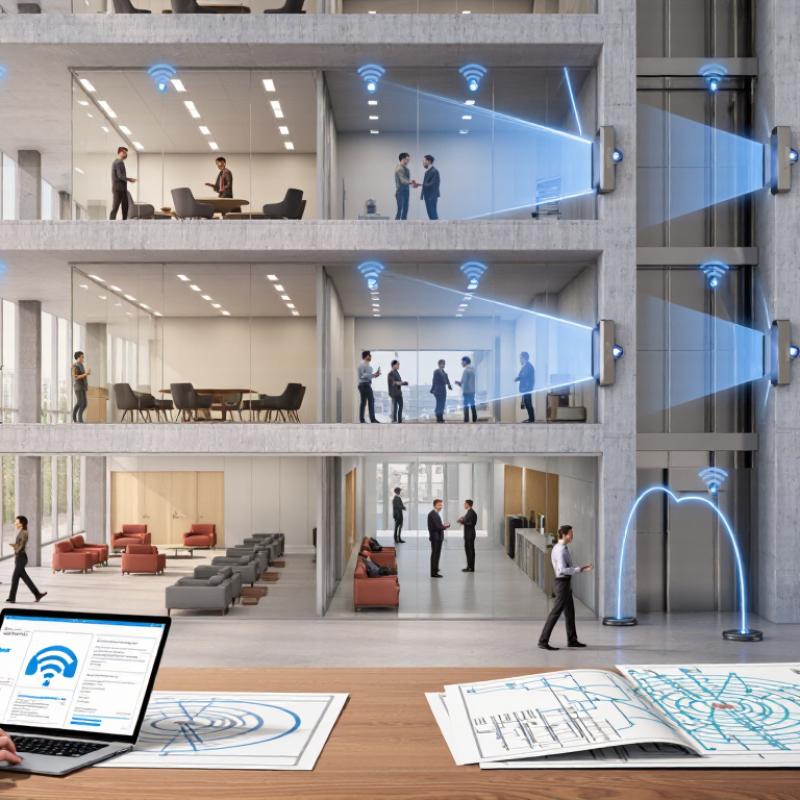
7 Best In Building DAS Solutions for Global Buyers

Understanding In-Building DAS and Its Role in Wireless Coverage

An in-building distributed antenna system (DAS) brings cellular signals into spaces where outdoor towers struggle. Concrete walls, metal-coated glass, basement levels, and long corridors can weaken coverage. A DAS receives signal from a network source, then distributes it through cables and indoor antennas. The result is more consistent service across rooms, not simply a stronger signal at the entrance. Small detail, big difference.

The ITU’s Facts and Figures 2023 estimated that 5.4 billion people used the internet. That figure does not measure indoor cellular demand, but it shows how ordinary connectivity has become. In offices, hospitals, hotels, and transit buildings, users expect calls and data to work beyond the lobby. DAS design must account for building layout, frequency bands, user capacity, and existing signal quality. More antennas alone are not a solution.

There are trade-offs. Active DAS can carry signals over larger areas, while simpler passive systems may suit smaller sites. Neither can fix a poor network source without careful planning.

A walk-through survey, signal measurements, and a review of peak-hour usage help identify dead zones before installation. Yet predictions can miss how a building is actually used. A busy conference room may need more capacity than its floor plan suggests.

Criteria for Evaluating DAS Solutions in Global Markets

A strong in-building DAS solution should match the site’s radio bands, user demand, and building layout. Ask for coverage measurements from basements, stairwells, elevators, and crowded meeting rooms, not just open offices. Measure the gaps. A clear heat map and documented test method make vendor claims easier to verify. Capacity matters too: a system that works during a quiet site survey may struggle when hundreds of people arrive for an event.

For global projects, check how the design adapts to different operator requirements and locally permitted spectrum. Confirm that equipment can integrate with the building’s existing cabling, fire systems, and network management tools. Request details on power use, backup arrangements, alarms, and remote fault reporting. These details affect maintenance after installation, when access to a ceiling or equipment room may be difficult. Ask who will test performance and provide support in each market. An elegant proposal can still leave practical questions unanswered. Even a tidy coverage map may miss seasonal occupancy or future tenant changes, so leave room for reassessment rather than treating the first design as permanent.

Seven Leading In-Building DAS Solutions and Their Strengths

Seven leading in-building DAS approaches offer different strengths. Passive DAS uses coaxial cable and splitters, making it relatively simple for smaller venues. Active DAS converts and distributes signals electronically, supporting larger buildings and centralized monitoring. Hybrid DAS combines both, balancing reach and installation cost. Digital DAS transports signals over fiber and can simplify long cable runs. Fiber-fed remote units bring radio equipment closer to weak-signal areas. Neutral-host DAS shares infrastructure among multiple operators, reducing duplicate cabling. Small-cell-integrated DAS adds capacity in crowded zones. Walls matter. Each design has limits.

Ericsson’s June 2024 Mobility Report estimates monthly mobile network traffic will rise from about 160 exabytes in 2023 to 466 exabytes by 2029. That forecast supports planning for greater capacity, but it does not mean every building needs DAS. A concrete site survey should check signal levels, user density, frequency bands, and existing cabling. The trade-off is easy to miss: stronger coverage alone may not solve peak-hour congestion.

Tips: Compare measured indoor coverage with expected user demand before choosing an architecture. Test stairwells, lift lobbies, and basement corners, not only open offices. Ask for a walk-test report and a clear maintenance plan. Measure, don’t guess.

7 Best In-Building DAS Solutions for Global Buyers

Compare the nominal spectrum widths of seven cellular bands commonly relevant to multiband in-building DAS planning.

Values are calculated from 3GPP band-edge ranges. FDD values add the paired uplink and downlink ranges; n78 is a single TDD range. Local availability depends on national spectrum allocations and operator deployments.

Comparing Coverage, Capacity, Compatibility, and Deployment Needs

An in-building DAS should be judged by the spaces it serves, not just its headline coverage. A hotel needs dependable signal in guest rooms, elevators, and underground parking. A hospital may need consistent service across dense walls and busy corridors. Measure before choosing. Walk tests, floor plans, and a review of existing network conditions help reveal weak spots. Coverage is not capacity.

Compare passive, active, hybrid, and fiber-fed designs against expected user demand. A system that reaches every floor may still struggle during a conference or shift change. Check compatibility with local frequency bands, operator requirements, and the devices people actually use. For multi-country projects, these details vary; assumptions from one site can fail elsewhere. Ask for design documents, capacity estimates, and post-installation test results. Installation also matters: riser access, ceiling space, power, and building hours can affect cost and schedule. Some estimates look neat on paper. Reality is messier.

Tips: Request a site survey before setting a budget. Confirm who will maintain the system and how faults are reported. Keep room for future capacity, but avoid paying for unused performance.

7 Best In-Building DAS Solutions for Global Buyers: Comparing Coverage, Capacity, Compatibility, and Deployment Needs

Solution Type Typical Coverage Fit Capacity Characteristics Compatibility Considerations Deployment Needs Best Suited For Key Trade-Off
1. Active Fiber-Fed DAS Large buildings, campuses, transport hubs, and multi-floor venues; coverage is engineered around the building layout. Can distribute multiple frequency bands and sectors; capacity depends on the connected signal sources, sector design, and user demand. Confirm supported bands, radio technologies, MIMO configuration, operator interfaces, and local approval requirements. Requires a headend, fiber links, remote units, RF planning, power, and coordination with participating operators. Large or complex properties needing managed coverage across many areas. Offers flexible distribution, but typically involves higher design complexity and infrastructure requirements than simpler systems.
2. Passive Coaxial DAS Small-to-medium buildings or defined areas where coaxial cable runs and antenna placement are practical. Does not add radio capacity by itself; available capacity depends on the connected source and how signals are divided among areas. Passive components must support the required frequency bands and power levels; verify source, band, and operator compatibility. Uses coaxial feeders, splitters, taps, and antennas; careful RF balancing and cable-loss planning are important. Sites with a suitable signal source and relatively straightforward distribution needs. Can be simpler than an active architecture, but signal loss and limited flexibility can constrain larger or more complex deployments.
3. Hybrid Fiber-and-Coax DAS Medium-to-large buildings where fiber is useful for long backbone links and coax is practical for local antenna distribution. Capacity is determined by the source and system design; fiber can support distribution over longer distances without coaxial feeder loss over the backbone. Check band support, interfaces between fiber and RF sections, MIMO needs, and the capabilities of the connected source. Combines fiber transport with coaxial distribution; requires planning for conversion points, power, cable routes, and antenna locations. Properties with a mix of long backbone paths and shorter local coverage zones. Can balance reach and installation practicality, but adds more design interfaces than a single-medium system.
4. Neutral-Host Multi-Operator DAS Large venues and shared buildings where multiple mobile network operators need indoor coverage. Can distribute signals from multiple operators; user capacity still depends on each operator’s source capacity, spectrum, and sector planning. Each participating operator must confirm supported bands, technology, interconnection, acceptance testing, and operating arrangements. Needs multi-party coordination, a shared distribution design, access agreements, monitoring, and a defined maintenance model. Multi-tenant properties, public venues, and sites seeking coverage for users across several operators. Reduces the need for separate in-building distribution systems, but operator coordination and commercial arrangements can be substantial.
5. Single-Operator Enterprise DAS Buildings where indoor coverage is required for one selected mobile operator or one defined network source. Capacity is tied to the chosen operator’s available source and the design’s sectorization and spectrum configuration. Must match the chosen operator’s bands, radio technology, equipment interfaces, and deployment requirements. Requires operator engagement, an approved signal source, building cabling, antenna design, and commissioning. Organizations with a clear priority network or a site-specific coverage agreement. Can simplify initial coordination compared with a multi-operator system, but does not automatically serve other operators.
6. Public-Safety In-Building Radio System Critical indoor areas such as basements, stairwells, and fire-service access routes, as determined by local code and testing. Designed for the required public-safety radio service; capacity and performance targets are defined by the relevant authority and system design. Must match local public-safety frequencies, radio systems, code requirements, and authority acceptance criteria; it is not a substitute for commercial mobile coverage. May require code review, signal testing, approved equipment, backup power, supervision, and inspection by the authority having jurisdiction. Buildings required to support emergency responders’ radio communications indoors. Addresses a distinct life-safety requirement; regulatory requirements and acceptance procedures vary by location.
7. In-Building Small-Cell System Targeted areas such as offices, retail floors, hotels, and venues where localized radio coverage is needed. Can add localized radio capacity when appropriately connected and configured; performance depends on radio resources, backhaul, and network planning. Requires compatible radio equipment, spectrum authorization, network integration, and operator or private-network support. Needs radio nodes, power, backhaul, network configuration, and coordination to manage coverage overlap and interference. Sites prioritizing localized capacity or a dedicated private-network use case; it can complement or serve as an alternative to DAS. Small cells are a distinct architecture rather than a DAS type; they can provide localized capacity but require network integration and careful planning.

Planning note: Coverage and capacity are site-specific and cannot be reliably stated as universal distances or user counts. Final selection should be based on an RF survey, building materials and layout, required frequency bands and technologies, operator participation, local codes, and lifecycle costs.

Selecting a DAS Solution for Regional and Building Requirements

Selecting a DAS solution begins with the region, not the equipment list. The ITU’s Facts and Figures 2024 reports that 5G coverage reaches 84% of people in high-income countries, but only 4% in low-income countries. That gap makes local operator support and available frequency bands essential checks. A system designed around one market may not serve another.

The building matters just as much. A hotel with concrete stairwells, a hospital with shielded rooms, and a stadium packed with visitors create very different coverage demands. Map weak spots floor by floor, then compare those needs with the required operators, bands, capacity, and expansion plans. The ITU figures describe outdoor population coverage, not indoor service. That distinction is easy to miss.

Passive, active, and hybrid DAS designs each involve trade-offs in cabling, equipment placement, and future upgrades. Check regional approvals and operator requirements before specifying hardware. Ask for measured signal levels and capacity assumptions, not just a coverage diagram. A polished plan can still overlook a basement corridor. That deserves a second look.

Article Source:

Go to Top