China Best Smart LED Light Supplier for Global Buyers
Global buyers are rethinking lighting as energy costs, carbon targets, and building automation accelerate. Smart LED Light systems combine efficient illumination with sensors, wireless controls, scheduling, and real-time monitoring. They can turn an empty warehouse aisle dark within minutes. That small action matters across thousands of fixtures.
The International Energy Agency reports that lighting represents about 15% of global electricity consumption. It also identifies efficient LEDs and connected controls as important efficiency measures. The U.S. Department of Energy notes that networked lighting controls can produce additional energy savings when correctly installed and commissioned. These figures support a practical buying question: who can deliver reliable products beyond attractive specifications?
China remains a major manufacturing base for LED components, drivers, controllers, and complete luminaires. However, “best supplier” should not mean the lowest quotation. It should reflect verified testing, stable color performance, thermal management, firmware support, warranty processes, and export experience. Reports from MarketsandMarkets project continued growth in the smart lighting market, although forecasts differ by definition and region. That uncertainty deserves attention.
A dependable Chinese supplier should provide LM-80 or equivalent LED data, electrical safety documentation, ingress protection ratings, sample testing, and transparent factory communication. Buyers should also inspect app security, protocol compatibility, and replacement-part availability. One missed detail can weaken an otherwise excellent installation. The strongest partnerships develop through documented testing, controlled production, and honest technical discussion—not exaggerated claims. This guide examines the capabilities that global purchasers should compare when selecting a China-based Smart LED Light supplier.
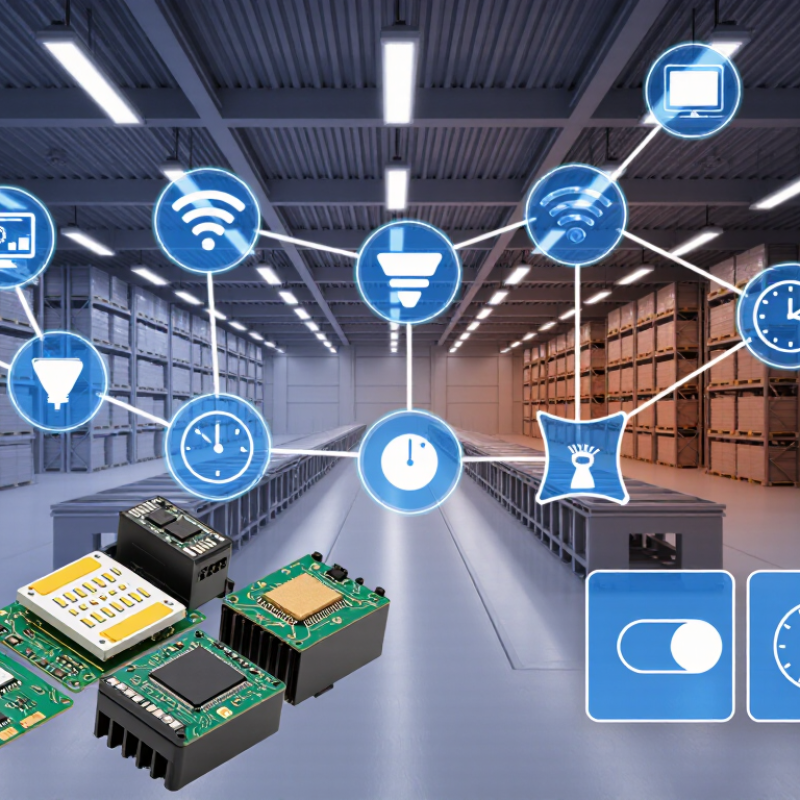
Smart LED Lighting: Definition, Features, and Core Technologies
Smart LED lighting combines light-emitting diodes with digital controls, sensors, and connected software. Unlike conventional lamps, it can adjust brightness, color temperature, schedules, and power use. A well-designed system may detect movement in a hallway or reduce output near a sunlit window. These details improve comfort and operating efficiency.
Core technologies include wireless communication, occupancy sensing, daylight harvesting, and intelligent drivers. Dimming quality depends on stable current control, not only the LED chip. Color rendering also matters in retail spaces, offices, and homes. During testing, installers should check flicker, response time, heat management, and network reliability. A specification can look impressive. Field performance may still differ.
Tips: Match the control protocol with existing building systems before purchasing. Test the lights at night and during bright daylight. Measure actual energy use instead of trusting estimates alone. Keep emergency operation independent where regulations require it. Smart features are useful, but unnecessary complexity can increase maintenance. One honest limitation remains: wireless control may weaken through concrete walls. Plan for that early.
Why China Leads the Smart LED Lighting Supply Industry
China Best Smart LED Light Supplier for Global Buyers
Why China Leads the Smart LED Lighting Supply Industry
China leads the smart LED lighting supply industry through dense manufacturing networks and practical engineering experience. In major production areas, LED chips, drivers, housings, sensors, and control modules are made within short shipping distances. This structure helps suppliers adjust designs quickly. A buyer can request a warmer color temperature, a different connector, or a stronger outdoor housing. Engineers often test these changes within days, not months.
Cost is important, but it is not the only advantage. Chinese factories commonly combine automated assembly with manual inspection. Workers check solder joints, diffuser surfaces, and wireless connections before packing. Many suppliers also provide photometric reports, electrical safety documents, factory audit records, and batch traceability. These details help global buyers evaluate performance instead of trusting attractive samples alone. Ask for testing data.
Smart lighting requires cooperation between hardware and software teams. Chinese suppliers increasingly develop motion sensors, scheduling functions, energy monitoring, and app-compatible controls together. This shortens communication between product designers and production managers. It also supports private specifications for hotels, warehouses, offices, and residential projects. The process is not flawless. Firmware updates can cause delays, and low-cost components may reduce service life. Careful buyers should inspect pilot batches, confirm warranty terms, and test products in real environments. A bright sample proves little. Reliability appears after months of switching, heat, dust, and network changes.
Key Products and Customization Options for Global Buyers
Global buyers need more than low-cost smart LED products. A capable China-based supplier should offer bulbs, downlights, panels, strip lights, and outdoor luminaires. MarketsandMarkets estimates that the smart lighting market may grow from USD 20.4 billion in 2024 to USD 46.7 billion by 2029. That growth increases demand for stable supply, tested components, and flexible engineering.
Customization should match the project, not only the catalogue. Buyers can specify color temperature, CRI, beam angle, housing finish, voltage, dimming method, and communication protocol. Options may include DALI-2, Zigbee, Bluetooth, or Matter-compatible control. Firmware, packaging, labels, and installation guides can also be adapted for different markets. The International Energy Agency reports that lighting uses about 15% of global electricity, so efficient thermal design matters. A thin aluminum body with proper heat dissipation can protect LED performance, although some suppliers still understate heat-related risks.
Tips: Request LM-80 or equivalent LED data, sample testing, photometric files, and production inspection records. Confirm regional safety requirements before mass production. Ask for a pilot batch. It reveals weaknesses early. Do not assume every “smart” lamp works smoothly with every platform. Check app stability, offline control, warranty terms, and replacement procedures. A lower unit price can become expensive when firmware changes, failed samples, or unclear after-sales support appear later.
Ordering, Quality Control, and International Delivery Process
China Best Smart LED Light Supplier for Global Buyers
Ordering smart LED lights from China requires more than comparing unit prices. Experienced buyers confirm the product specification before discussing volume. Share target wattage, color temperature, beam angle, dimming method, plug type, and installation conditions. Request a production sample, not only a digital image. The sample should match the final bill of materials.
Quality control should be visible and measurable. A trained inspection team can check LED consistency, power output, driver safety, housing finish, and communication performance. Aging tests expose early failures. Carton drop tests reveal weak packaging. Random checks are useful, but they cannot replace process control. No inspection plan is perfect. We once found that a correct lamp was packed with the wrong mounting clips, proving that accessories need separate verification.
International delivery depends on accurate documents and realistic schedules. Confirm the trade term, shipping route, carton dimensions, gross weight, and customs requirements before production begins. The supplier should provide commercial invoices, packing lists, test reports, and shipping updates. For ocean freight, allow time for booking changes and port delays. For urgent orders, air delivery may reduce transit time but increase cost sharply. Keep one approved sample and a signed specification for reference. Small details matter.
China Best Smart LED Light Supplier for Global Buyers - Ordering, Quality Control, and International Delivery Process
The chart presents a practical planning reference for the main stages of an international smart LED lighting order. Actual timing depends on product customization, order quantity, inspection requirements, port conditions, and the selected shipping method.
Production and ocean transportation usually represent the largest portions of the timeline, while specification confirmation, sample approval, and quality inspection help reduce avoidable delays and improve delivery reliability.