How to Choose the Best Rechargeable AA Batteries for Your Devices
In today's technology-driven world, the demand for high-performance rechargeable AA batteries has surged due to the increasing reliance on portable devices and environmentally conscious consumers. According to a report by MarketsandMarkets, the rechargeable battery market is expected to grow significantly, projected to reach $67.2 billion by 2026. This trend underscores an urgent need for consumers to select the most efficient and dependable rechargeable AA batteries for their devices, as the right choice can optimize performance and reduce environmental waste.
Rechargeable AA batteries are not only a more sustainable option, but they also provide a better long-term solution for powering a variety of devices, from remote controls to digital cameras. The Energy Storage Association highlights that using rechargeable batteries can reduce the number of single-use batteries that contribute to landfill waste, thereby promoting a more sustainable lifestyle. However, with a multitude of options available on the market, consumers must navigate factors such as capacity, lifespan, and charging times to ensure they find the best fit for their needs. This article will guide you through the essential criteria for selecting the ideal rechargeable AA batteries, helping you enhance your device's performance while being eco-friendly.
Understanding the Different Types of Rechargeable AA Batteries
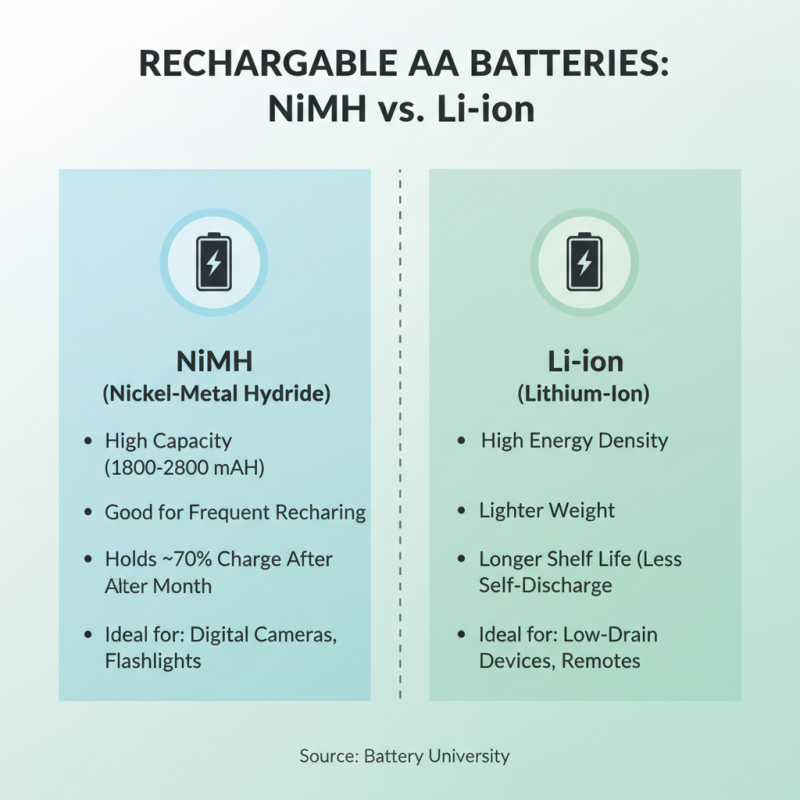
When choosing rechargeable AA batteries, it's crucial to understand the different types available in the market. The most common rechargeable batteries are Nickel-Metal Hydride (NiMH) and Lithium-Ion (Li-ion) options. NiMH batteries are renowned for their high capacity and ability to handle frequent recharging cycles, often boasting capacities ranging from 1,800 to 2,800 mAh. According to a report by Battery University, NiMH batteries can maintain about 70% of their charge after a month of storage, making them ideal for high-drain devices like digital cameras and flashlights.
On the other hand, Lithium-Ion AA batteries are becoming increasingly popular due to their lightweight design and higher energy density. With capacities often exceeding 2,600 mAh, Li-ion batteries provide longer-lasting power and shorter recharge times. However, they can be more expensive and less stable if not properly managed, as highlighted by the International Electrotechnical Commission (IEC) safety standards. It's essential to consider the allowed applications and devices' energy demands since certain devices may perform better with one type over the other, ensuring optimal battery life and performance.
Key Factors to Consider When Choosing Rechargeable AA Batteries
When choosing the best rechargeable AA batteries for your devices, it’s essential to consider a few key factors that can significantly impact their performance and longevity. First, assess the battery capacity, which is measured in milliamp hours (mAh). Higher capacity batteries can store more energy, providing longer usage time for your devices. For typical household devices, batteries with a capacity around 2000-2500 mAh are often ideal.
Another important factor is the charge retention of the batteries. Look for rechargeable options that hold their charge well over extended periods, even when not in use. This characteristic is particularly crucial for devices that are infrequently used, as it ensures you won't be left with dead batteries when you need them most.
**Tips:** Always choose batteries from reputable manufacturers to ensure reliability and safety. Test models under real-life conditions to see how they perform with your specific devices. Lastly, consider the environmental impact; many rechargeable batteries are designed for multiple charging cycles, reducing waste compared to single-use alternatives.
Battery Capacity Comparison of Common Rechargeable AA Batteries
Comparing Battery Capacity and Performance Ratings
When selecting rechargeable AA batteries, understanding battery capacity and performance ratings is crucial. Capacity, measured in milliampere-hours (mAh), indicates how much energy a battery can store. Typically, the higher the mAh rating, the longer the battery can power your devices. For instance, while standard NiMH batteries usually range from 1300 to 2800 mAh, recent data suggests that premium options like the Eneloop Pro can deliver up to 2500 mAh, making them ideal for high-drain devices such as digital cameras and gaming controllers (Battery University, 2023).
In terms of performance ratings, it's essential to consider factors such as self-discharge rate and cycle life. High-quality rechargeable batteries can retain up to 70% of their charge after several months of storage, compared to lower-end models that can lose up to 30% in just a few weeks. Furthermore, industry reports indicate that rechargeable batteries can typically withstand hundreds of charge cycles, with some models like the AmazonBasics or Energizer's rechargeable line rated for up to 500 cycles before performance significantly degrades (Consumer Reports, 2023). These metrics help consumers choose batteries that will offer durability and reliability over time, meeting the power demands of their devices effectively.
How to Choose the Best Rechargeable AA Batteries for Your Devices - Comparing Battery Capacity and Performance Ratings
| Battery Type |
Capacity (mAh) |
Voltage (V) |
Recharge Cycles |
Performance Rating (Out of 5) |
| NiMH |
2400 |
1.2 |
500 |
4.5 |
| Li-ion |
3000 |
3.7 |
1000 |
4.7 |
| NiCd |
1200 |
1.2 |
1000 |
3.5 |
| LFP (LiFePO4) |
2500 |
3.2 |
2000 |
4.6 |
| NiMH Low Self-Discharge |
2000 |
1.2 |
1000 |
4.3 |
Evaluating the Charging Time and Lifespan of Rechargeable Batteries
When selecting the best rechargeable AA batteries, two crucial factors to consider are charging time and lifespan. The market offers a variety of chemistries, with NiMH (Nickel-Metal Hydride) and Li-ion (Lithium-ion) batteries being the most common for standard applications.
According to a report by the Battery University, high-quality NiMH batteries typically take between 1 to 2 hours to fully charge, while Li-ion batteries can charge in under 1 hour. However, the actual charging duration may vary depending on the charger used and the battery's capacity.
Lifespan is another vital aspect, often measured in charge cycles. Leading brands like Eneloop and Energizer claim that their NiMH AA batteries can endure up to 2000 cycles before noticeable capacity loss. In contrast, Li-ion batteries may offer fewer cycles, averaging around 500, yet they tend to hold charge longer when stored.
A research paper published in the Journal of Power Sources reveals that traditional alkaline batteries, while initially cheaper, can lead to higher costs over time due to their lower cycle counts and inability to be recharged. Thus, understanding both charging time and lifespan can drastically affect your choices, ensuring you find the most efficient and cost-effective solution for your devices.
Assessing Compatibility with Your Devices and Charging Options
When selecting the best rechargeable AA batteries for your devices, assessing compatibility is crucial. Different devices may have unique requirements regarding voltage, capacity, and charge cycles. For instance, high-drain gadgets like digital cameras and gaming controllers benefit from batteries with higher mAh ratings, ensuring longevity during intensive use. Additionally, it's important to check whether your device can handle nickel-metal hydride (NiMH) batteries, which are commonly used in rechargeable options, as some devices may have limitations on battery type.
Charging options also play a significant role in battery selection. Some rechargeable AA batteries come with their own charging stations, while others can be charged using universal chargers. This consideration may influence your choice, especially if you prefer convenience and speed in recharging. Furthermore, fast-charging batteries may appeal to users with high usage frequency, allowing devices to be ready more quickly.
Ultimately, understanding both compatibility with your devices and the available charging options will lead to a more satisfactory experience with rechargeable AA batteries.