
FAQs2024-06-21T06:05:11+00:00

How to Choose the Best Gramophone Record Player?

Choosing a Gramophone Record Player is not just about appearance. It means matching a turntable to your records, room, and listening habits. The market gives one reason to look carefully: the Recording Industry Association of America reported that U.S. vinyl revenue reached $1.4 billion in 2024, a 6% increase over the previous year. That growth signals enduring interest, but it does not mean every player offers dependable sound or good value.

A sensible comparison starts with the details you can check. Does the player support the speeds your records require? Can you replace its stylus or cartridge? Is the tonearm adjustable, and does the unit include a phono preamp? These features affect setup, future maintenance, and whether you can connect the player to your existing speakers. A heavy wooden plinth may look reassuring. It cannot, by itself, guarantee stable speed or clear playback.

Listen closely. Check the return policy.

This guide will explain which specifications matter, where entry-level models make compromises, and when a separate amplifier or preamp may be necessary. It will also distinguish practical design from decorative styling, using published industry data as context rather than proof of sound quality. A report can describe demand; it cannot tell you how a specific record sounds in your room. That part takes careful listening, and sometimes a little trial and error.
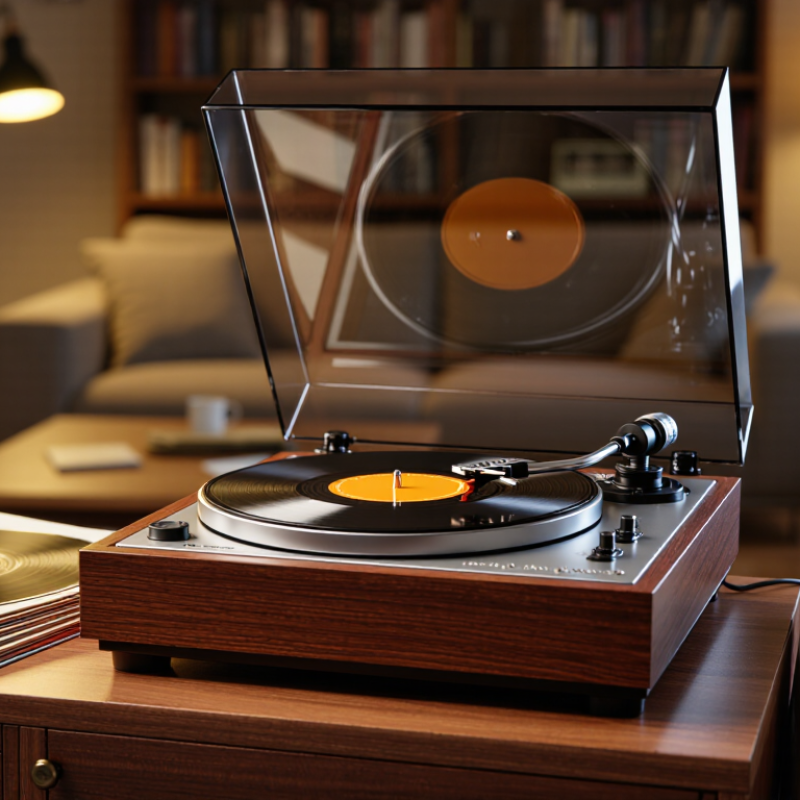
How to Choose the Best Gramophone Record Player?

Understanding How Gramophone Record Players Work

A gramophone turns tiny movements in a record groove into audible sound. As the record rotates, its spiral groove guides the stylus across the surface. The groove’s changing shape makes the stylus vibrate. In a traditional acoustic gramophone, a linkage carries those vibrations to a diaphragm, which moves the air inside a horn. The horn helps project the sound into the room. No electronic amplifier is needed in this basic design. It is mechanical.

The parts must work together. A worn or unsuitable stylus can damage records and produce distorted sound, while a loose connection may cause rattling. Before choosing a player, check that its speed settings match the records you intend to play; many common records use 33⅓ or 45 revolutions per minute, while some older discs use other speeds.

Also consider whether you want an acoustic mechanism or an electric pickup. Electric models convert stylus movement into an electrical signal, which needs amplification and speakers. That changes both setup and sound. It is easy to overvalue a large horn’s appearance and overlook the condition of the moving parts. A steady rotation and clean stylus matter more than dramatic decoration. Even a well-made mechanism can reveal surface noise, so expectations should stay realistic.

Defining Your Listening Needs and Budget

Before choosing a gramophone record player, think about how and where you will listen. A compact bedroom setup has different needs from a living-room system used for weekend listening. Consider your records, too: check their condition and whether you plan to play them often. Decide if you prefer simple automatic operation or are comfortable placing the tonearm by hand. Convenience matters. So does the listening ritual.

Set a budget for the complete setup, not just the player. You may also need speakers, an amplifier, a sturdy surface, and cleaning supplies. Check whether the player includes the equipment needed to connect to your speakers. Keep some money aside for a replacement stylus or basic maintenance. Prices can be tempting, but a low-cost player may not suit your records or expectations. It is easy to focus on appearance and overlook setup costs; I would pause and compare the full list before buying.

Tips: Write down your room size, listening habits, and maximum total spend. Ask what is included and what must be purchased separately. If possible, listen to a familiar record before deciding. A small detail, like a hum from nearby equipment, can be hard to notice in a quick demonstration. Don’t rush it.

Comparing Turntables, Tonearms, and Cartridges

How to Choose the Best Gramophone Record Player?
Comparing Turntables, Tonearms, and Cartridges

A turntable’s job is to spin a record steadily, with little vibration. Look for a solid, level plinth and a platter that rotates consistently. The U.S. Recording Industry Association of America’s 2023 Year-End Report puts U.S. vinyl revenue at $1.4 billion, up 10% from 2022. That measures sales, not sound quality, but it confirms a substantial audience for records. Small details matter.

The tonearm holds the cartridge and guides its stylus through the groove. Its bearings should move smoothly, without looseness or sticking. Adjustable tracking force helps the stylus sit at the manufacturer’s recommended pressure. Too much can wear records faster; too little may cause mistracking. Anti-skate adjustment can help keep the stylus centered. Not glamorous. Still important.

The cartridge turns groove movement into an electrical signal. Moving-magnet designs are often easier to maintain because their stylus assemblies are commonly replaceable; moving-coil designs may require specialist servicing. Check that the cartridge fits the tonearm and that the player provides suitable output for your amplifier. One honest caveat: setup can feel fiddly, and alignment errors are easy to miss. A small protractor, a steady hand, and careful listening help; even then, my first adjustment might not be perfect.

Checking Record Compatibility and Player Condition

How to Choose the Best Gramophone Record Player?

Check record compatibility before judging a player by its cabinet or sound. Records may require different speeds, commonly 33⅓, 45, or 78 rpm. Confirm that the player supports the speed and record size you own. Older 78 rpm records also need a suitable wider stylus; a standard LP stylus may not fit their grooves correctly. Small details matter. It is tempting to focus on appearance, but a polished case cannot make an incompatible setup safe for your records.

Tips: Bring a record you know well when testing a player. Listen for steady pitch, clear sound, and unusual scraping. Watch the platter for wobble, and check that the tonearm moves smoothly. Ask whether the stylus, belt, or wiring has been replaced. A quick test helps, though it cannot reveal every hidden fault.

Inspect the player in good light. Cracked cables, loose controls, heavy dust, or a bent tonearm deserve careful attention. A faint hum may point to a connection or grounding issue, while fluctuating speed can make familiar music sound strangely uneven. Ask to test several speeds if you need them. I would not assume that a machine works well just because it turns on; that is an easy mistake to make. If the seller cannot demonstrate playback, budget for a professional inspection before buying.

How to Choose the Best Gramophone Record Player? - Checking Record Compatibility and Player Condition

Check What to Verify Suitable / Good Sign Potential Issue
Record speed Check the speed printed on the record label and the player’s available settings. The player supports the record’s required speed, commonly 33⅓, 45, or 78 rpm. A record played at the wrong speed will sound too fast or too slow, and its pitch will be incorrect.
Record size Check the record diameter and whether the player has the correct platter, spindle, and tonearm reach. The record sits flat and the stylus can reach the playable grooves without obstruction. Record size does not always indicate speed; confirm both separately rather than relying on diameter alone.
78 rpm records Confirm 78 rpm support and check whether the cartridge can use a stylus suitable for the record’s groove type. The player has a 78 rpm setting and a compatible stylus is fitted or available. A standard microgroove LP stylus is not automatically suitable for older 78s; using the wrong stylus can impair playback and may damage the record.
Record format and groove Identify whether the disc is a modern microgroove record or an older coarse-groove record. The stylus and cartridge are intended for the record format being played. A record’s age or appearance alone may not identify its groove type; check its label or reliable record information.
Record condition Inspect under good light for deep scratches, cracks, warping, dirt, and damaged edges. The disc is reasonably flat, clean, and free of cracks or severe groove damage. Deep scratches, cracks, or pronounced warping can cause noise, skipping, unstable playback, or further damage.
Stylus condition Look for a bent cantilever, visible debris, loose mounting, or signs that the stylus is worn. The stylus is clean, properly mounted, and its service history is known or recently checked. A worn or damaged stylus can distort sound and wear records; do not touch the tip or test it on a valuable record.
Tonearm and tracking Check that the tonearm moves smoothly and that tracking force can be set according to the cartridge instructions. The arm is stable, the cueing mechanism lowers gently, and the cartridge is aligned and secured. A stuck arm, abrupt lowering, or incorrectly set tracking force may cause skipping or excessive record wear.
Platter and rotation Run the player and listen for unusual mechanical noise; observe whether the platter turns evenly. The platter starts and rotates smoothly, without obvious wobble or speed fluctuations. A loose platter, excessive vibration, or inconsistent speed can affect pitch and playback stability.
Output and system connection Check the player’s output type and whether the amplifier or speakers provide the required phono input or phono preamplification. The player and audio system have compatible connections and the correct phono-stage arrangement. A player without a built-in phono preamp may need an external phono preamp or a suitable phono input.
Overall condition and test playback Check the power supply, cables, controls, dust cover, and operation of any automatic functions; test with a clean, non-valuable record. Controls work, connections are secure, and playback is stable without unexpected hum, skipping, or mechanical noise. Intermittent power, damaged wiring, persistent hum, or unreliable automatic functions may require repair.

Practical tip: Match the player’s speed and stylus to each record, and confirm the player is in good working condition before playing valuable or fragile discs.

Choosing a Player for Your Space and Setup

Choosing a gramophone record player starts with the room, not the spec sheet. Measure the shelf or table, including space for the dust cover to open. Leave room to lift records safely and reach the controls without twisting cables. A narrow shelf may look tidy, but it can make everyday use awkward. Stability matters, too: a firm, level surface helps reduce unwanted vibration. Keep the player away from speakers when possible, since low-frequency sound can travel through furniture and affect playback.

Tips: Check the player’s dimensions, cable reach, and required connections before buying. Some setups need a separate phono preamp; others do not. Confirm the details in the manual.

Think about how the player will fit your existing audio setup. If you use powered speakers, check whether they accept the player’s output or need an additional preamp. With a separate amplifier, confirm it has a suitable phono input or plan for a compatible preamp. Keep cables short enough to stay neat, but not pulled tight. Dust, sunlight, and nearby heat sources can also make a spot less practical. A beautiful corner is not always the best listening spot. I would reconsider my layout after a week of use; small annoyances, like blocked controls, are easy to miss at first.

Go to Top