How to Choose the Best Waterproof Micro Switch for Your Needs?
Choosing the right Waterproof Micro Switch is crucial for many applications. These small devices are key in ensuring durability and reliability in challenging environments. Whether in outdoor equipment, automotive systems, or industrial machinery, having a dependable micro switch can make a significant difference.
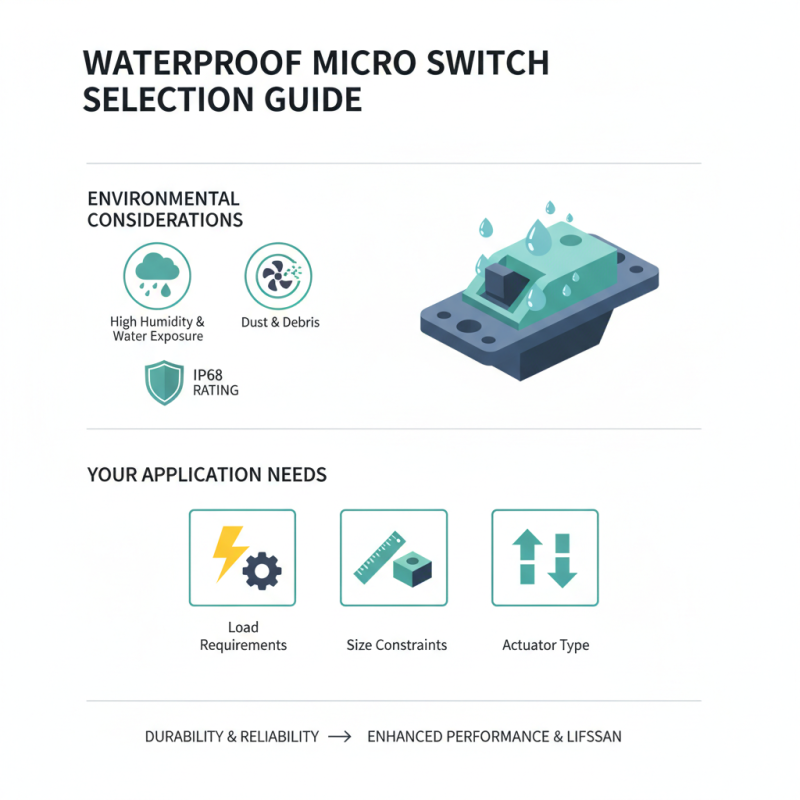
Consider the environment where the switch will be used. High humidity, dust, and exposure to water can impact performance. A top-notch waterproof Micro Switch must resist these conditions. Look for specific ratings like IP68 to guarantee protection.
Reflect on your needs as well. Not every waterproof micro switch will fit all scenarios. Assess the load requirements, size constraints, and actuator type. Selecting the right one might take time, but it’s worth it. A well-chosen transition can significantly improve functionality and lifespan.
Understanding Waterproof Ratings: IP65, IP67, and IP68 Explained
Choosing a waterproof micro switch requires understanding IP ratings. These ratings indicate the degree of protection against dust and water. IP65, IP67, and IP68 are common ratings you might encounter.
An IP65 rating means the switch is dust-tight and can withstand water jets from any direction. This is suitable for applications exposed to splashes and light rain. However, it may not fully protect against submersion.
On the other hand, an IP67 rating indicates the switch can be submerged in water up to one meter for a limited time. This level provides better protection against moisture but is not foolproof.
In contrast, IP68 offers the highest level of waterproofing. Devices with this rating can be submerged deeper than one meter for longer durations. According to industry reports, IP68-rated devices are increasingly preferred in sectors like automotive and marine due to their enhanced durability.
However, what about the environment? Excessive exposure to moisture can still affect the switch's longevity. This is a point of reflection for users. Understand your environment first to choose wisely.
Key Factors to Consider When Selecting a Waterproof Micro Switch
When selecting a waterproof micro switch, the environment is crucial. How wet will it get? For outdoor applications, look for switches rated for high moisture. Check the IP rating. A higher IP means better protection. Yet, remember that these ratings can sometimes be misleading. Manufacturers might exaggerate capabilities. So, verify through user experiences.
Next, consider the actuation force. Too light and it may trigger unintentionally. Too heavy, and it can be hard to operate. Balance is key. Think about where the switch will go. Dim lighting can make small switches difficult to use. Larger switches might be easier to access. However, they can take up more space.
Also, think about lifespan and durability. Some switches might be cheap upfront but fail quickly. This can lead to higher costs later on. Ask, where will it be used? In a dusty area? Choose accordingly. Reflect on how often it will be pressed. More frequent use requires a higher-quality product. Balancing all these factors is not easy, but it will lead to a better choice.
How to Choose the Best Waterproof Micro Switch for Your Needs? - Key Factors to Consider When Selecting a Waterproof Micro Switch
| Key Factor | Description | Recommended Specifications |
| Ingress Protection (IP) Rating | Indicates the level of protection against water and dust. | IP67 or higher |
| Operation Force | Amount of force required to operate the switch. | 100g - 300g |
| Contact Configuration | The arrangement of contact types (SPST, SPDT, etc.). | SPDT (Single Pole Double Throw) |
| Temperature Range | Operating temperature the switch can withstand. | -25°C to +85°C |
| Electrical Ratings | Current and voltage specifications suitable for the application. | 5A, 250V AC |
| Mechanical Life | Number of cycles the switch can operate effectively. | Over 1,000,000 cycles |
Common Applications for Waterproof Micro Switches in Various Industries
Waterproof micro switches are essential in many industries. They operate effectively in harsh environments. Common applications can be found in sectors like automotive, marine, and industrial machinery. In automotive applications, these switches control wipers and lighting systems. Their resistance to moisture ensures reliability in rain or snow.
In the marine industry, waterproof micro switches are crucial. They are often used in navigation systems and boat controls. Exposure to saltwater can damage standard switches. Waterproof options resist corrosion and ensure safety. In industrial settings, these switches are utilized for machinery and equipment. They can handle dust, debris, and moisture. This durability boosts operational efficiency.
However, selecting the right switch requires careful thought. Different environments demand different specifications. Users may overlook details like temperature ratings or actuation force. It’s easy to assume all waterproof switches are the same. Examining the intended application is key. Doing so helps avoid potential failures later on. The wrong choice could lead to costly downtime or repairs.
Performance Metrics: Life Cycle, Actuation Force, and Environmental Resistance
Selecting the right waterproof micro switch involves understanding key performance metrics. Life cycle is vital. It refers to how many times a switch can operate before failure. A longer life cycle means less frequent replacements. For critical applications, look for switches with a life cycle in the millions. However, a higher cycle rating can mean a higher cost too. Balance is crucial.
Actuation force is another important metric. This refers to the amount of pressure needed to activate the switch. Some may prefer a lighter touch for ease of use, while others favor a firmer response to avoid accidental activation. Testing different actuation forces can help gauge what feels right. Finding the right balance isn't always easy; it may require multiple tests.
Environmental resistance shouldn't be overlooked. This includes factors such as temperature, humidity, and exposure to dust or water. Some switches handle extreme conditions better than others. However, durability can come at a price. Sometimes, a waterproof rating won't meet other needs. Researching materials and designs can shed light on these trade-offs. Reflecting on what environment the switch will face is vital for making the best choice.
Evaluating Cost vs. Quality: Making the Right Investment Decision
When evaluating the balance between cost and quality for waterproof micro switches, several factors come into play. A lower-priced switch may seem appealing. However, it might lack durability in harsh conditions. On the other hand, an expensive option doesn’t always guarantee superior performance. It’s essential to assess the specific application your switch will serve.
Consider the environment where the switch will be used. If it’s for outdoor equipment, true waterproof capability is critical. Invest in a switch that meets IP67 or higher ratings. This can save future costs related to replacements. Seek reliable material as well; plastic may not endure UV exposure as well as metal.
Quality control should never be overlooked. Production standards can vary greatly. It's worthwhile to look for independent testing certifications. Each option has its pros and cons, and sometimes, a mid-range switch can deliver satisfactory results. Finding the right product often involves difficult trade-offs. Reflecting on usage scenarios can help clarify the ideal choice.