
FAQs2024-06-21T06:05:11+00:00

How to Choose Organic Body Lotion for Your Business?

Choosing an Organic Body Lotion for your business is not simply a matter of selecting a product with a green label. Your customers will notice how it spreads, absorbs, and feels hours later. They may also ask where the ingredients come from and what “organic” means on your packaging. Those details affect trust as much as the scent or bottle design.

Cosmetic scientist and dermatologist Dr. Zoe Diana Draelos’s work highlights the value of assessing cosmetics through formulation and performance, not marketing language alone. A practical buyer’s reminder is: “Read the formula, then test the feel.” This is an editorial guiding line, not a direct quotation from Dr. Draelos. For a real evaluation, review the ingredient list, request documentation from suppliers, and test samples on the skin types your customers are likely to have. Notice whether the lotion leaves a tacky film, separates after storage, or loses its scent quickly. Small flaws matter.

The right choice also depends on your business. A spa may value a calm fragrance and a smooth pump dispenser; a refill shop may prioritize larger containers and clear ingredient communication. Compare minimum order quantities, packaging options, shelf-life information, and supplier consistency. Organic ingredients alone do not guarantee a gentle or stable product. That distinction is easy to overlook. This guide will help you weigh product quality, customer fit, and practical sourcing before placing an order. It will also leave room for a less comfortable question: are you choosing what customers need, or only what sounds appealing on a label?
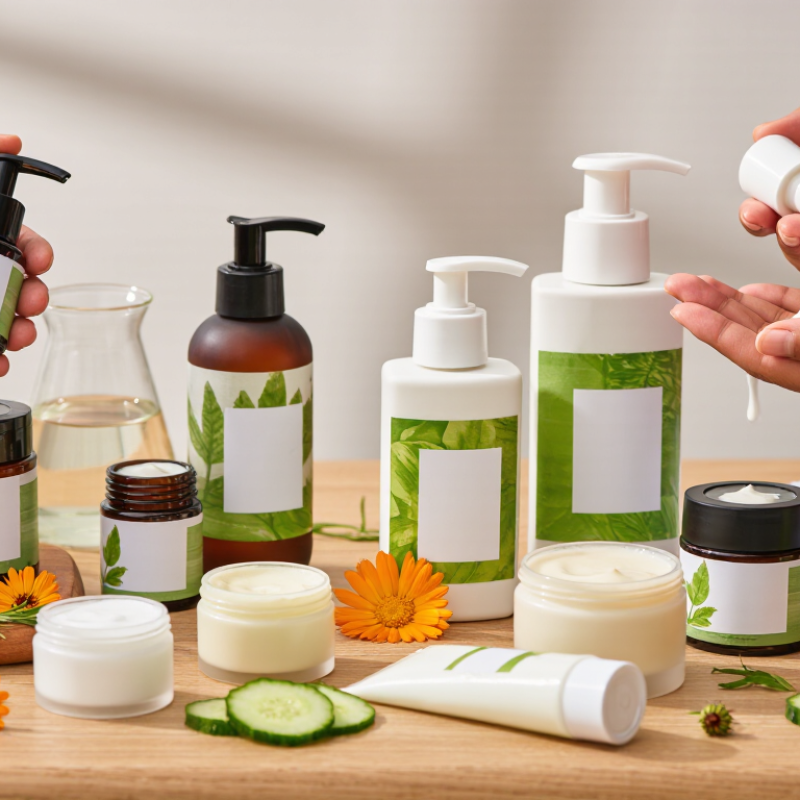
How to Choose Organic Body Lotion for Your Business?

Define Buyer Needs and Business Positioning Before Selecting a Lotion

Before comparing organic body lotions, define who will use them and why they should choose your business. A spa serving clients with dry, fragrance-sensitive skin may need a low-scent formula in a refillable pump. A gift shop may value a lighter texture, pleasant scent, and shelf-ready packaging. Ask potential buyers about preferred feel, price range, and bottle size. Guesses can miss the mark.

Then connect those needs to your positioning and operating limits. A premium wellness business should check ingredient sourcing, batch consistency, and evidence behind organic claims. Request ingredient lists, relevant certification documents, stability data, and samples from suppliers. Test a small amount on typical users. Note absorption, residue, and scent after several minutes. Small tests help. Compare minimum order quantities, lead times, packaging options, and landed cost against your target margin. If your audience expects unscented products, botanical fragrance is not automatically a benefit. I would not choose by the ingredient list alone; texture and repeat-purchase feedback matter, too. Specifications can change between batches, so confirm them in writing before ordering.

Set Organic Claims Against USDA’s 95% and 70% Labeling Thresholds

How to Choose Organic Body Lotion for Your Business?

For a lotion seeking USDA organic certification, the 95% and 70% thresholds shape what you can claim. “Organic” generally requires at least 95% organically produced ingredients, excluding water and salt. The remaining ingredients must meet USDA requirements. “Made with organic” requires at least 70% organic ingredients and cannot use the USDA organic seal. Below 70%, organic ingredients may still be identified in the ingredient statement, but the product cannot use those broader organic claims.

Check the formula before approving packaging. A lotion may contain mostly water, so percentages are not always obvious from the front label. Ask your manufacturer for ingredient documentation and confirmation of certification status. Verify which ingredients count toward the calculation; do not rely on a marketing sheet alone. A polished label can still confuse buyers. It is easy to overlook the difference between an ingredient being organic and the finished product qualifying for an organic claim.

Tips: Keep the certification documents with the final formula and label. Check claims after any supplier or ingredient change. When in doubt, ask the certifying agent before printing. A small wording change matters.

Screen Ingredients Using ISO 16128 Natural and Organic Index Methods

For a business buying organic body lotion, ISO 16128 offers a practical way to compare ingredient origin. ISO 16128-1 defines natural and organic ingredient categories; ISO 16128-2 explains how to calculate their indexes. Ask suppliers for ingredient-level calculations and supporting documents, not just a “natural” claim on a product sheet. The standard provides a calculation framework, not a product certification or proof of safety.

Check the finished formula, too. A lotion may contain organic oils but also water, emulsifiers, and preservatives that affect its overall index. Request the formula’s natural-origin and organic-origin percentages, then confirm how each supplier calculated them. Small details matter, such as whether a plant extract uses a carrier. That can change the numbers. The Soil Association’s 2023 Organic Beauty and Wellbeing Market Report put the UK market at £136 million in 2022, up 10.3% year over year—a useful sign of category interest, not proof that every buyer prioritizes the same attributes.

For purchasing decisions, compare like with like: the same index method, calculation basis, and documentation date. Keep technical files alongside batch records, and ask suppliers to flag formula changes. I would still review the underlying ingredient data manually; percentages can look precise while relying on assumptions that deserve a second look. ISO indexes help screen products, but they do not replace checks on performance, skin compatibility, or clear labeling.

How to Choose Organic Body Lotion for Your Business? — Screen Ingredients Using ISO 16128 Natural and Organic Index Methods

Use this screening worksheet to compare a body-lotion formula against supplier documentation. The example formula and index values below are illustrative, not a product claim or certification.

Illustrative body-lotion formula and ISO 16128 index screening
Ingredient (INCI-style name) Formula share (%) Natural Origin Index Organic Origin Index Natural-origin contribution (percentage points) Organic-origin contribution (percentage points) Screening evidence to request
Aqua (Water) 63.3 1.00 0.00 63.30 0.00 Supplier specification and confirmation of the index used in the calculation.
Aloe Barbadensis Leaf Juice 5.0 1.00 0.00 5.00 0.00 Composition details, processing information, and organic documentation if an organic claim is intended.
Glycerin 4.0 1.00 0.00 4.00 0.00 Feedstock, manufacturing process, and supplier-declared indices.
Helianthus Annuus (Sunflower) Seed Oil 10.0 1.00 1.00 10.00 10.00 Organic certificate or equivalent supply-chain evidence, plus ingredient index documentation.
Butyrospermum Parkii (Shea) Butter 5.0 1.00 1.00 5.00 5.00 Organic certificate or equivalent supply-chain evidence, plus ingredient index documentation.
Caprylic/Capric Triglyceride 5.0 1.00 0.00 5.00 0.00 Feedstock and processing details; confirm the index for the specific grade.
Cetearyl Alcohol 3.0 1.00 0.00 3.00 0.00 Feedstock, manufacturing process, and supplier-declared indices.
Glyceryl Stearate Citrate 2.0 1.00 0.00 2.00 0.00 Full composition, feedstock, processing details, and grade-specific index data.
Xanthan Gum 0.3 1.00 0.00 0.30 0.00 Manufacturing and feedstock information; check whether the supplied grade has an organic index.
Tocopherol 0.2 1.00 0.00 0.20 0.00 Source, carrier details if applicable, and grade-specific index documentation.
Phenoxyethanol 0.8 0.00 0.00 0.00 0.00 Confirm identity, use level, and index with the supplier; assess separately for preservation and regulatory suitability.
Ethylhexylglycerin 0.5 0.00 0.00 0.00 0.00 Confirm identity, use level, and index with the supplier; assess compatibility with the preservation system.
Sodium Benzoate 0.5 0.00 0.00 0.00 0.00 Verify the specific ingredient’s origin and index from supplier documentation.
Lactic Acid 0.2 1.00 0.00 0.20 0.00 Feedstock, manufacturing process, and supplier-declared indices.
Citric Acid 0.2 1.00 0.00 0.20 0.00 Feedstock, manufacturing process, and supplier-declared indices.
Total / illustrative formula result 100.0 Weighted formula screening result 98.70% 15.00% Recalculate using verified data for the actual formula and applicable ISO 16128 calculation rules.

How to use the screening results

Business screening step What to check Decision guidance
1. Verify ingredient identity Match each formula ingredient to its specification, full composition where applicable, and supplier documentation. Do not rely on an ingredient name alone to determine its origin index.
2. Confirm index values Request the Natural Origin Index and Organic Origin Index for the exact ingredient grade and production route. Use documented, grade-specific values rather than assumptions based on marketing descriptions.
3. Check organic evidence Review certificates, chain-of-custody records, scope, validity dates, and the portion of a blend that is certified. An organic-origin index is not, by itself, proof that the finished lotion meets an organic certification scheme.
4. Calculate formula-level results Weight each ingredient index by its formula share and follow the applicable ISO 16128 calculation method. Keep calculations, source documents, and assumptions together for review and updates.
5. Review product suitability Separately assess preservation, stability, safety, local regulatory requirements, packaging compatibility, and substantiation of claims. Index values do not establish product safety, performance, environmental impact, or compliance with a particular organic standard.

Important: The example indices are assumed solely to demonstrate a weighted screening calculation. Actual ingredient indices depend on the ingredient’s source and processing and must be supported by relevant supplier information. ISO 16128 provides definitions and calculation guidance; it does not itself certify a finished product or authorize an organic claim.

Check EU Compliance Under Regulation 1223/2009 and Six Claim Criteria

Choosing organic body lotion for an EU market starts with the product file, not the leaf symbol. Regulation (EC) No 1223/2009 requires a safety assessment, Product Information File, EU Responsible Person, and CPNP notification before sale. Ask suppliers for the Cosmetic Product Safety Report, ingredient specifications, stability results, and microbiological test data. Check that the label uses INCI ingredient names and includes required details, such as batch identification and precautions. Small details matter. A lotion that separates after heat exposure needs investigation. Organic certification can support sourcing claims, but it does not replace EU cosmetic compliance.

Claims must meet the six common criteria in Regulation (EU) No 655/2013: legal compliance, truthfulness, evidential support, honesty, fairness, and informed decision-making. For “24-hour hydration,” request testing on the finished lotion; data on one ingredient may not substantiate the whole-product claim. For “organic,” specify whether the claim concerns selected ingredients or the entire formula, and retain supporting records. Evidence first. Cosmetics Europe’s 2024 market report records €96 billion in European cosmetics and personal care sales for 2023, underscoring the scale of the market, not demand for a particular lotion. One point deserves scrutiny: even modest claims can mislead when their evidence is thin. Review each proposed phrase beside its substantiation file.

Choosing Organic Body Lotion for Your Business: EU Compliance and Claim Criteria

The EU Cosmetics Regulation (EC) No 1223/2009 sets the framework for cosmetic product compliance. Cosmetic claims are assessed against six common criteria established by Commission Regulation (EU) No 655/2013.

Each bar represents one criterion, not a product score or a claim of compliance. Assess product claims and supporting evidence individually.

Compare Suppliers Using Stability, Microbial, and Packaging Test Data

Choosing organic body lotion for a business means checking evidence, not just ingredient lists. Ask suppliers for stability data on the exact formula and packaging you plan to buy. Useful reports show storage conditions, test duration, appearance, odor, viscosity, and pH. Compare samples stored at room temperature and warmer conditions; temperature cycling can reveal separation or texture changes. A lotion that looks smooth on day one may thin after weeks. Not ideal.

Microbial data matters too. Request microbial limits results and, where appropriate, preservative efficacy or challenge-test data for the finished product. Confirm that the tested sample matches the proposed formula, manufacturing site, and preservative system. Reports should include dates, methods, and acceptance criteria, not only a “pass” note. If a supplier cannot explain a result clearly, pause and ask for clarification.

Tips: Match packaging tests to real use. Ask whether the filled bottle or jar was checked for leakage, pump function, discoloration, odor changes, and weight loss. Compare results for the intended packaging material and closure. Keep reports with samples and batch records. It is easy to overlook this: a test on a different bottle may not predict performance in your retail pack. Recheck after formula or packaging changes, even if that slows the timeline.

Go to Top