
FAQs2024-06-21T06:05:11+00:00

How to Choose the Best Mailer Bags in 2026?

Choosing the right Mailer Bags in 2026 means balancing protection, cost, presentation, and environmental priorities. A bag that looks sturdy on a product page may feel different when packed with a sharp-edged book or a folded sweater. Start with the item itself: measure its packed dimensions, note its weight, and consider how much movement it can tolerate during transit. Small details matter. A close fit can reduce excess material, but a bag that is too tight may split at the seams or strain its closure.

Material choice deserves equal care. Poly mailers are lightweight and often water-resistant, while paper options can suit brands seeking a different unboxing feel. Neither choice is automatically best for every shipment. Check the bag’s thickness, seam construction, closure strength, and any supplier claims about recycled content or recyclability. Ask for samples when possible, then test them with your actual products. A quick packing trial can reveal awkward seals or corners that catch, though it cannot predict every delivery condition.

This guide will help you compare Mailer Bags by use case, material, size, durability, branding, and overall value. It will also point out trade-offs that are easy to miss, such as paying for extra thickness your products may not need. Packaging decisions can change as products, shipping methods, and customer expectations shift. There is no perfect bag for every order. The practical goal is a reliable choice that protects the item, fits your workflow, and makes sense for your budget.
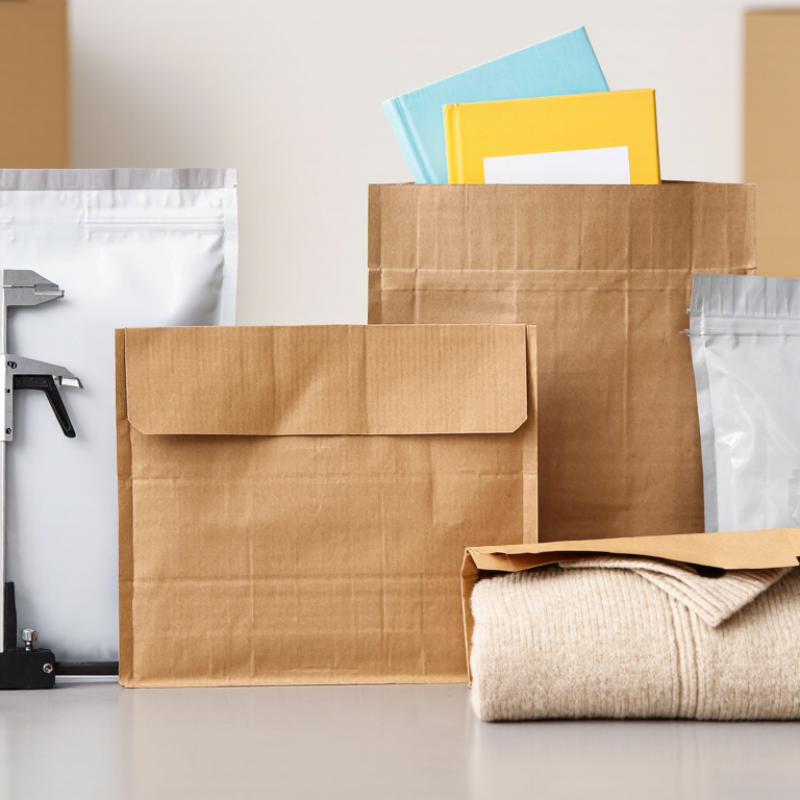
How to Choose the Best Mailer Bags in 2026?

Identify Your Shipping Needs and Product Requirements

Start with the parcels you actually send. List the usual product sizes, packed weights, and shipping frequency. Measure each item at its widest points, including any rigid parts or accessories. Measure it twice. A garment may compress, while a boxed product cannot. Leave enough space to seal the bag without bending the item or stretching the seams. Too much extra room can let contents shift during transit.

Match the bag to the product’s weak spots. Clothing and other soft goods may suit lightweight poly mailers. Books, prints, or items with sharp corners need stronger material or a protective insert. Fragile products generally need cushioning inside a mailer, and a padded bag may still be insufficient for very delicate items. Consider exposure to rain, rough handling, and repeated sorting. An opaque exterior can limit visibility, but it does not replace secure packing.

Think about the full packing routine, too. A bag that is difficult to seal can slow down daily fulfillment. If customers may return items, a second adhesive strip could be useful. Check the manufacturer’s size and thickness specifications, then pack and handle a sample as you would a real order. Test a sample. One imperfect detail: the lightest option may look efficient until a corner tears. Choose based on the product and packing process, not appearance alone.

Compare Mailer Bag Materials, Durability, and Protection

How to Choose the Best Mailer Bags in 2026?

Compare Mailer Bag Materials, Durability, and Protection

Choose a mailer by weighing the item, its edges, and its journey. Pitney Bowes’ 2023 Parcel Shipping Index reported 161 billion parcels worldwide in 2022. Packages face repeated handling, so a bag that looks sturdy on a packing table may still fail in transit. Trade-offs matter.

Poly mailers are lightweight and resist rain, but thin films can puncture around sharp corners. Paper mailers offer a firm surface and may suit flat, non-fragile goods, though moisture can weaken them. Padded mailers add cushioning for small items, but bubbles do not protect every edge. For heavier or delicate products, consider a reinforced mailer or a fitted inner wrap. More material is not automatically better; excess space can let contents shift.

Tips: Press the packed item gently from several sides. If an edge pushes through, add an inner layer or choose a stronger bag. Test a sample through your actual packing routine, including sealing and handling. One detail is easy to miss: a strong bag can still open if its adhesive strip meets dust or a folded edge.

Choose the Right Bag Size, Closure, and Design

Choosing the right mailer bag starts with the item, not the product listing. Measure its width, height, and depth, then leave room for tissue or a folded garment. A bag that fits tightly can stress seams and make packing awkward. Too much empty space lets items slide around. Test one sample with the actual contents. Small detail, big difference.

Closures should match how the order will be handled. A peel-and-seal strip is quick for daily packing, while a second adhesive strip can help customers return items in the same bag. Check that the adhesive holds after the bag is filled, not just when empty. I sometimes underestimate bulky corners; they can pull the seal out of alignment. A short packing trial catches this early.

Design should make the parcel clear and practical. Keep the shipping-label area smooth, light, and free of busy graphics. A simple color or small printed mark can make packaging feel considered without hiding important details. Think about the unboxing, too: a matte surface feels different from a glossy one, and dark interiors can conceal contents from view. There is no perfect choice for every order. Revisit the size and closure when products or packing routines change.

Evaluate Sustainability, Cost, and Branding Options

How to Choose the Best Mailer Bags in 2026?

Sustainability, cost, and branding should be evaluated together. The OECD’s 2022 Global Plastics Outlook reports that packaging generated 40% of global plastic waste in 2019. That figure is a useful reminder to check material choices, not just bag weight. Compare recycled-content options, and verify whether local facilities actually accept the material. A “recyclable” claim may mean little where collection systems cannot process it. Paper is not automatically the better choice; durability and shipping weight matter too.

Tips: Test a few sizes with real orders. Track bag price, packing time, dimensional-weight charges, and damage or replacement rates. Print a small batch before committing. A simple logo and clear opening instructions can make packaging feel intentional without adding a second label. Keep supplier specifications and claim evidence on file.

Branding has practical value, but it can be overdone. A full-color design may raise setup costs and leave unused stock when artwork changes. Start with one size and a restrained design, then review customer feedback and reorder data. I would also question whether a premium finish improves the unboxing experience enough to justify its cost. It may not. Choose bags that protect the product, fit the order, and communicate your values accurately.

How to Choose Mailer Bags in 2026: Cost and Recycled Content

Compare material options using illustrative bulk-planning estimates for 1,000 mailers measuring approximately 10 × 13 inches.

Recycled-content figures refer to the example specifications shown, not every bag made from that material. Costs are indicative estimates, not market quotes; size, thickness, print coverage, order quantity, and supplier can change pricing. For lower-impact choices, check recycled-content documentation and local recycling or composting access. Paper is generally straightforward to print on, while film mailers offer lightweight branding options.

Test Samples and Verify Supplier Quality and Compliance

Before placing a large order, request samples made from the same materials and production process you expect to receive. Check the seams, adhesive strip, thickness, and printed areas under ordinary handling. Small details matter. Try packing items with different edges and weights, then press the closure firmly and pull it open. A bag that looks sturdy on a desk may split when filled.

Run a simple transit check. Pack a representative item, seal the mailer, and simulate drops, stacking, and rubbing against other parcels. Record what fails, where it fails, and how many samples you tested. Results may vary with temperature and handling, so one successful test is not proof of consistent performance. I have seen teams overlook this point when a sample feels reassuringly strong.

Ask the supplier for current material specifications, quality-control procedures, and relevant compliance documents for the product and market you serve. Verify that document details match the sample, including material structure, dimensions, and any recycled-content claims. Request batch traceability and a written process for handling defects. Then inspect again. If answers are vague, ask for evidence rather than relying on a polished sales sheet. Keep your own notes and retain a sealed sample for comparison when production arrives. The process can feel fussy, and some checks may need refinement after real shipments. That is useful feedback, not a reason to skip verification.

How to Choose the Best Mailer Bags in 2026? - Test Samples and Verify Supplier Quality and Compliance

Use these as sample-evaluation checkpoints. Packaging performance varies by bag design, material, thickness, and intended use; agree on product-specific acceptance limits with the supplier before ordering.
Evaluation area What to record Sample test or verification Acceptance guidance Supplier evidence to request
Material and construction Material type, layer structure, color, finish, and nominal thickness or paper grammage. Compare the delivered sample with the approved specification; measure film thickness in μm or paper grammage in g/m². Values should match the agreed specification and approved sample. There is no single thickness or grammage suitable for every shipment. Material specification, bill of materials, and a written statement of any recycled or bio-based content.
Bag dimensions and consistency Usable width, usable length, flap length, and dimension tolerance in mm. Measure a set of bags from the sample lot using the same method and locations for every bag. Dimensions must fit the product with sufficient closure allowance; set the tolerance in the purchase specification. Dimensioned drawing, tolerance limits, and the supplier’s in-process inspection record.
Film tensile properties Tensile strength and elongation, reported separately in machine direction (MD) and cross direction (CD). For plastic film, request results using ASTM D882 or another agreed, suitable test method. Compare test results with the approved reference sample or agreed minimum values; do not compare results from different methods as if equivalent. Dated test report identifying the material, sample thickness, test direction, method, and results.
Impact and tear resistance Impact result, such as dart impact in g, and tear result in the reported unit. For plastic film, ASTM D1709 may be used for dart impact and ASTM D1922 for tear propagation, where appropriate to the material and application. Set a product-specific target based on shipment weight, contents, and handling conditions; check that the test method and specimen direction are stated. Test reports for the offered construction, not only for a similar material or a different thickness.
Seams and side seals Seal width, visible defects, and seal strength where applicable. Inspect the full seam for gaps, channels, wrinkles, or weak spots. ASTM F88/F88M can be considered for seal-strength testing of suitable flexible packaging. No open channels or incomplete seals; set seal-strength limits and test conditions for the specific bag design. Sealing-process controls, inspection criteria, and test results for the production material.
Closure and adhesive strip Closure type, adhesive coverage, liner removal, and adhesion after sealing. Seal sample bags on clean, dry surfaces and check bond continuity, edge lift, and opening behavior under the intended use conditions. The flap should seal consistently without exposed gaps or premature release; define any peel-strength target with the supplier. Adhesive specifications, shelf-life guidance, and storage-condition requirements.
Recycled-content claims Claimed recycled-content percentage and whether the content is post-consumer, pre-consumer, or both. Check that the claim is clearly defined and supported by traceable records; ISO 14021 provides guidance for environmental self-declared claims. The stated percentage and terminology should be supported by documentation and comply with the rules applicable in the destination market. Content calculation, supplier declarations, and available chain-of-custody or verification documents.
Compostability claims Claim type: industrial composting or home composting; exact product construction covered. Verify a current certificate or test evidence against a relevant specification, such as EN 13432 or ASTM D6400 for industrial compostability, where applicable. Do not treat industrial and home compostability as interchangeable. Confirm the certificate covers the complete bag, including inks, adhesives, and other components. Certificate scope, test reports, validity dates, disposal instructions, and applicable-market claims review.
Market compliance Destination country or region, applicable packaging rules, and any restricted-substance requirements. Review declarations and supporting test documents against the requirements that apply to the product and market. Compliance must be assessed for the intended market and the exact bag construction; a general statement alone is not proof of compliance. Signed compliance declaration, relevant laboratory reports, and material or ink documentation as applicable.
Production quality control Lot identification, inspection frequency, defect categories, and agreed sampling plan. Review recent lot inspection records. ISO 2859-1 can be used as a reference for attribute-sampling plans when agreed by both parties. Define the sampling level, AQL, and critical, major, and minor defects in the contract or quality agreement; there is no universal AQL for every order. Quality-control plan, sample inspection report, traceability process, and corrective-action procedure.

Article Source:

Go to Top