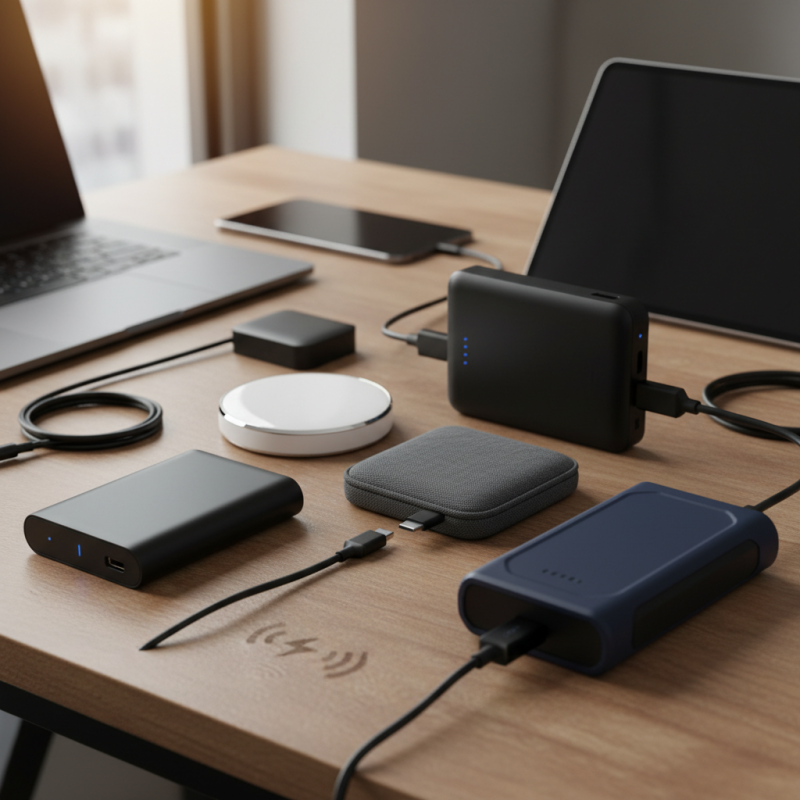
How to Choose the Best Wireless Power Bank for Your Devices?
Choosing the right Wireless Power Bank can be challenging. There are many options available that cater to different devices and usage needs. It is not just about capacity. Features also play a crucial role.
Consider your device type. Some Wireless Power Banks charge faster than others. Others come with extra ports for multiple devices. Look for compact designs if portability matters to you. Weight can vary significantly, impacting your decision.
Don't overlook the importance of safety features like temperature control. Reading user reviews can help. Not every product will meet your expectations, so research carefully. Be mindful of compatibility. Think about your charging habits too. Finding the perfect Wireless Power Bank takes effort.
Factors to Consider When Selecting a Wireless Power Bank
Choosing the right wireless power bank requires careful consideration. It's essential to assess the charging capacity. Look for banks that can power your devices multiple times. A typical power bank should have at least 10,000 mAh. Think about your daily usage. If you travel often, a higher capacity is beneficial.
Compatibility is another key factor. Ensure the power bank supports your devices. Not all power banks can charge every gadget; some may fail to provide enough power for larger devices. Additionally, consider the charging speed. Fast charging can save time. However, faster speeds often generate more heat.
Size and weight also matter. A compact power bank is easier to carry. But, smaller models may offer less capacity. This trade-off can be frustrating. Look for a balance that suits your lifestyle. Quality and durability can be overlooked but are crucial. A reliable power bank should withstand daily wear and tear. Always check for user reviews before making a purchase decision.
Understanding Different Wireless Charging Technologies
Wireless charging technology is evolving rapidly. It’s crucial to understand how it works before choosing a power bank. The two main types of wireless charging are inductive and resonant charging. Inductive charging uses coils to transfer energy. This method is common and widely supported. It may result in slower charging speeds compared to wired options.
Resonant charging allows for more flexibility. It can charge devices from further away. This could be useful for larger spaces and multiple devices. However, the technology is still developing. Not all devices support resonant charging yet.
Battery capacity is another aspect to consider. A power bank with a higher capacity can charge your device multiple times. But it may also be bulkier. Some users might prefer a lightweight option instead. Wireless charging is convenient, but it’s essential to reflect on your needs. Evaluate both the technology and the practicalities of daily use.
Power Bank Capacity vs. Wireless Charging Efficiency
This chart illustrates the correlation between the capacity of wireless power banks and their charging efficiency. As the capacity increases from 10000mAh to 40000mAh, the efficiency of wireless charging improves, demonstrating the trend that larger capacity power banks tend to have better performance in wireless charging scenarios.
Evaluating Battery Capacity and Charging Speed
When choosing a wireless power bank, battery capacity is crucial. Look for power banks around 10,000 to 20,000 mAh for good performance. This capacity can charge a smartphone multiple times. However, larger capacity often means a bulkier design. It’s a trade-off between portability and power.
Charging speed is another key factor. Many power banks offer fast charging options, but speeds can vary. Look for models that support Quick Charge or Power Delivery. These features can significantly reduce charging time. However, make sure your devices can utilize these faster speeds. Not all devices support high-speed charging.
Take note of the design, too. Some power banks are sleek and stylish, while others are rugged. A more robust design might be better for outdoor use. Reflect on where and how you'll use it most often. Balancing all these aspects can lead to the best choice for your needs. Remember, there is no perfect solution; it often depends on personal preferences.
Compatibility with Your Devices and Accessories
When choosing a wireless power bank, compatibility is key. You want to ensure your devices can charge without any issues. Check the charging standards supported by the power bank. Look for Qi compatibility if you have devices that support this technology. Not all wireless chargers are the same. Some may work better with certain devices than others.
Consider the charging speed as well. Some power banks may offer fast charging, which is great for those always on the go. However, not all devices can handle fast charging. It's frustrating when your new power bank doesn't charge your phone as expected. Take time to read reviews. They often highlight compatibility issues users face.
Battery capacity matters, too. A higher capacity means more charges for your devices. But, larger batteries can also be bulkier. Balance is crucial here. A stylish, slim design might be tempting, but it shouldn't come at the cost of practicality. Remember to think about your personal usage habits. An ideal power bank should fit seamlessly into your lifestyle without compromise.
How to Choose the Best Wireless Power Bank for Your Devices? - Compatibility with Your Devices and Accessories
| Power Bank Model | Battery Capacity (mAh) | Wireless Charging Output (W) | USB Ports | Weight (g) | Compatibility |
| Model A | 10000 | 10 | 2 | 200 | Smartphones, Tablets |
| Model B | 20000 | 15 | 3 | 300 | Smartphones, Tablets, Laptops |
| Model C | 15000 | 10 | 2 | 250 | Smartphones, Wearables |
| Model D | 25000 | 20 | 4 | 400 | Smartphones, Tablets, Laptops, Wearables |
Design and Portability Features of Wireless Power Banks
When selecting a wireless power bank, design and portability play crucial roles. A power bank’s size can determine its practicality. Some models are slim and lightweight, making them easy to slip into a pocket or handbag. Others may be bulkier, which could deter users who prioritize convenience. The choice largely depends on how you plan to use it.
Another aspect to consider is the materials used in the design. A durable exterior can withstand daily wear and tear. However, some lightweight designs may not offer the same level of protection. It might be worth exploring products that balance durability with portability, as you don’t want your power bank to fail during a crucial moment. Look for features like LED indicators, which can add a touch of functionality without making the device cumbersome.
Finally, aesthetics might matter more than you think. A sleek, modern design can enhance your tech ensemble. But remember, an attractive look can sometimes compromise durability. Pay attention to these details. Your choice should reflect your needs and lifestyle, rather than just aiming for the latest trend. Balancing form and function requires some reflection.