What is Drop Cable and How is it Used in Networking?
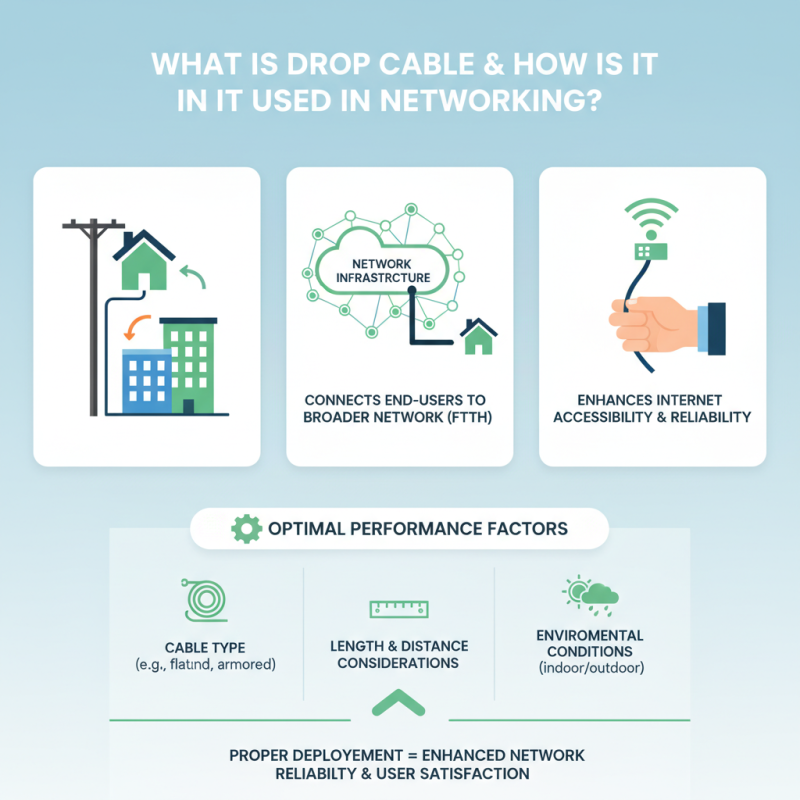
Drop Cables play a crucial role in networking. They are essential for connecting end-users to the broader network infrastructure. These cables are typically used in Fiber to the Home (FTTH) applications. Proper deployment of drop cables can significantly enhance internet accessibility.
In today's digital world, reliable connections are more important than ever. Drop cables provide a way to ensure that homes and offices receive high-quality internet service. They are designed for flexibility, making them suitable for various installation environments. However, many users may overlook their significance. A thoughtful consideration of drop cable selection is necessary for optimal performance.
While drop cables have proven reliable, there are still challenges in installation and maintenance. Users must reflect on factors such as the cable type, length, and environmental conditions. Understanding these details can prevent costly mistakes. Emphasizing the right approach to using drop cables can lead to enhanced network reliability and user satisfaction.
What is Drop Cable in Networking?
Drop cables play a vital role in networking infrastructure. They connect the main fiber optic lines to end-user devices, such as routers and switches. This type of cable is typically thinner and more flexible than standard cables, making it easier to install in various environments. According to industry reports, the drop cable market is expected to grow to over $3 billion by 2025. This expansion illustrates the increasing demand for efficient connectivity solutions.
Understanding drop cables is essential for effective network design. These cables can vary in construction, including single-mode and multi-mode fibers. Single-mode fibers transmit signals over longer distances with less loss, while multi-mode fibers are cost-effective for shorter runs. However, the choice between them may lead to challenges. For instance, improperly chosen cables can result in signal degradation. An estimated 20% of networking issues stem from poor cable management and selection.
In recent years, drop cables have evolved with advancements in technology. Enhanced materials improve durability and signal strength. Yet, some networks still struggle with installation errors and inadequate planning. Research indicates that up to 30% of networks experience outages related to cabling issues. Addressing these concerns is crucial for maintaining reliable connectivity and optimizing network performance.
Types of Drop Cables and Their Applications
Drop cables are essential in networking, designed to connect end-users to a broader network infrastructure. These cables come in various types, each serving different purposes. For instance, fiber optic drop cables are commonly used for high-speed internet connections. Their ability to transmit data over long distances with minimal loss makes them ideal for urban settings.
Copper drop cables are another option. They are often used for providing telephone and internet services in residential areas. While they are generally easier to install, they are limited by distance and can suffer from interference. Understanding these differences helps in selecting the right type for specific needs.
Some users may not be aware of how significant cable quality is. Poor-quality drop cables can lead to connection issues, impacting performance. Regular maintenance and assessment are crucial. Users should consider investing in higher-quality cables for critical applications. Recognizing the trade-offs in cost and performance can lead to better network stability.
Components and Structure of Drop Cable
Drop cables are essential for connecting users to broadband networks. These cables are designed with specific components to ensure reliable data transmission. The main structure consists of several optical fibers housed within protective layers. Typically, the core of the fiber is surrounded by cladding, which helps maintain signal strength. An outer jacket protects the fibers from environmental damage.
The use of drop cables in networking involves various configurations. Each drop cable can feature multiple fibers, allowing for different bandwidth requirements. A typical drop cable might include a strength member and a moisture barrier. These components are crucial for maintaining performance in challenging conditions. However, the design can sometimes complicate installations, as users may struggle with handling the cables properly.
One notable aspect of drop cable design is its flexibility. It allows for better routing in buildings and homes. Nevertheless, this flexibility can lead to challenges during setup. Some installers might not achieve the optimal bend radius, potentially impacting signal quality. Understanding the structure and components of drop cables helps improve installation practices and overall network reliability. Proper training and awareness of these details are necessary for successful deployments.
What is Drop Cable and How is it Used in Networking? - Components and Structure of Drop Cable
| Component | Material | Function | Typical Usage |
| Outer Jacket | PVC or Low Smoke Zero Halogen | Protects internal components | Outdoor and indoor applications |
| Fiber Core | Glass fiber | Carries data signals | High-speed internet, television |
| Strength Members | Aramid yarn or steel | Provides tensile strength | Aerial or buried installations |
| Buffer Coating | Polymer | Protects fiber from moisture and damage | Used in all fiber applications |
| Inner Jacket | PVC | Encases the fibers and provides insulation | Internal wiring and connections |
Installation and Connection Processes for Drop Cables
Drop cables play a crucial role in networking. They connect main distribution points to end-users. Proper installation and connection of these cables ensure effective data transmission. Understanding the steps involved in this process is essential.
Before starting, prepare all necessary tools. Gather cable connectors, stripping tools, and testing equipment. It’s vital to choose the right drop cable type based on distance and environmental conditions. The average drop cable can support speeds of up to 10 gigabits per second. This is significant for modern networks.
When connecting drop cables, strip the ends carefully. Expose the conductors without damaging them. The connection points must be clean and secure. Use appropriate connectors for reliable signal quality. Testing the connection after installation is a must. This avoids future issues.
**Tip:** Always verify the cable length before installation. Long cables can cause signal loss. **Tip:** Label each drop cable clearly. This saves time during troubleshooting. Reflecting on common mistakes, many technicians overlook testing. Ensuring a secure connection upfront can prevent headaches later.
Usage of Drop Cables in Networking
Benefits and Limitations of Using Drop Cable in Networking
Drop cable, a type of fiber optic or copper cable, plays a crucial role in connecting homes and businesses to a network. Its design is compact and flexible, making it ideal for last-mile connectivity. However, the choice to use drop cable should be weighed against its benefits and limitations.
One key benefit of drop cable is its cost-effectiveness. According to industry reports, deploying drop cable can reduce installation costs by 20% compared to traditional cables. Installation is simpler, requiring fewer tools and labor hours. This makes it a top choice for expanding network reach, especially in urban areas. However, drop cables can be more susceptible to physical damage. Outdoor installations may require additional protection against environmental factors.
Tip: Always consider the setting before installation. In high-risk areas, opt for armored drop cables to minimize risks.
Another limitation is the reduced distance capability of drop cables. While they are effective for short runs, their signal strength decreases over longer distances compared to fiber optic solutions. This can lead to potential data loss or slower speeds. Proper planning can help avoid these pitfalls.
Tip: Regularly assess your network’s demands to determine if drop cable is still the best choice. Being proactive can save resources and ensure reliability.