
10 Tips for Choosing the Right Bridge Gantry?
Choosing the right Bridge Gantry affects lifting safety, workflow, maintenance, and long-term project costs. The decision should never rely on rated capacity alone. Site conditions matter.
A Bridge Gantry must match the building span, runway length, lifting height, duty cycle, load shape, and available power supply. Measure the clear working area carefully. A few misplaced millimeters can create expensive installation problems. Check the heaviest load, not only the average load. Consider acceleration, braking, side-pulling risks, and repeated daily movements. These details reveal whether a standard design is suitable or needs customization.
Crane safety authority Dr. David MacCollum offers a useful reminder: “The crane is only one part of the lifting system.” That principle supports a broader evaluation. Inspect the runway structure, end trucks, controls, brakes, hooks, limit switches, and emergency stops. Ask how technicians will access critical components after installation. Ask about spare parts, inspection records, operator training, and manufacturer support. Good suppliers explain limitations clearly. Vague promises deserve caution.
Do not ignore the working environment. Dust, moisture, heat, corrosive chemicals, and outdoor wind can change equipment requirements. An apparently cheaper Bridge Gantry may require more repairs later. That possibility is easy to underestimate. It is also worth admitting that early specifications are sometimes incomplete. Recheck them with operators, engineers, and maintenance staff before approving the final design. The best choice balances safety, performance, compliance, and practical ownership costs.
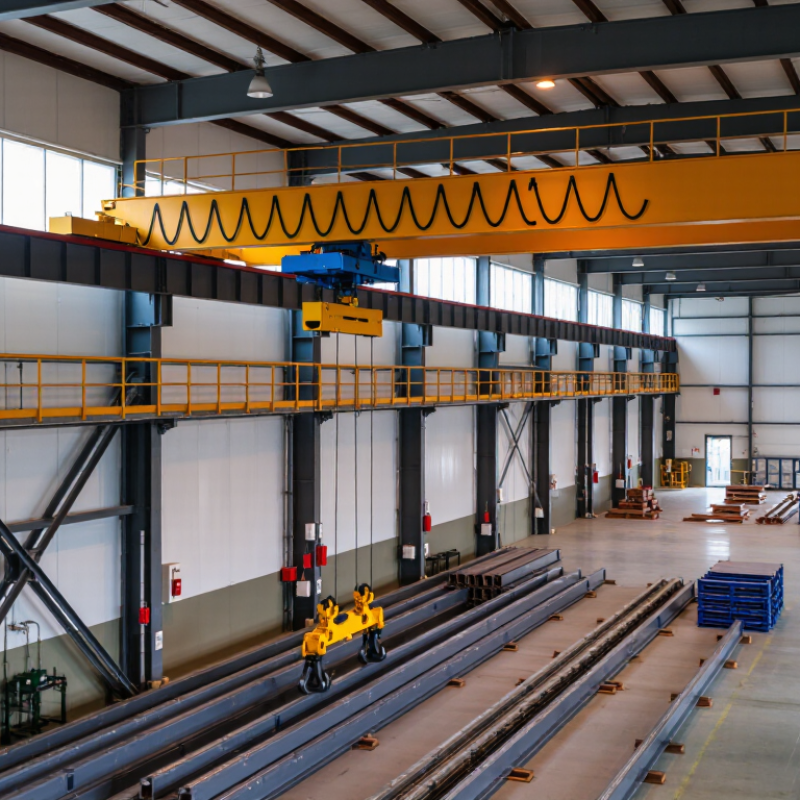
Define the Bridge Gantry’s Purpose and Operating Requirements
Choosing a bridge gantry starts with a clear definition of its job. Will it lift precast beams, move steel sections, or support repeated bridge assembly? Each purpose changes the required capacity, span, trolley speed, and travel distance. Write the heaviest load, lifting height, daily cycles, and site dimensions before comparing equipment.
Operating conditions deserve equal attention. Measure rail alignment, ground bearing strength, available headroom, and power access. A gantry working beside a river may face wind, moisture, and uneven foundations. A busy construction site may need precise low-speed movement rather than maximum travel speed.
Include emergency stops, overload protection, inspection access, and safe operator visibility in the specification. These details are practical, not decorative.
Small errors become expensive. A load chart can look adequate until lifting tools, slings, and temporary frames are included. Add their weight. I have also found that planned cycle times often ignore repositioning and weather delays. That assumption needs questioning. Ask qualified engineers to verify structural calculations, stability, fatigue performance, and compliance with applicable safety requirements. Check whether maintenance teams can reach brakes, wheels, controls, and electrical components without unsafe access. A gantry that fits the drawing may still obstruct concrete delivery or emergency routes. Leave room for those realities before final selection.
Assess Load Capacity, Span, Height, and Required Travel Range
Choosing a bridge gantry begins with the real load, not the heaviest object on paper. Record the product weight, lifting attachments, impact forces, and trolley weight. A 10-ton load may require a higher-rated system after dynamic loading and frequent starts are considered.
Span affects beam deflection, wheel loads, and installation cost. Measure the clear distance between runway supports, including columns, walls, and service zones. CMAA Specification No. 70 provides established guidance for crane design, duty classification, and deflection control. Still, site measurements matter more than a neat drawing.
Height needs practical clearance. Check the hook’s highest and lowest positions, roof obstructions, lighting, sprinklers, and the operator’s working space. Travel range should cover every pickup and set-down point without forcing side pulling. ASME B30.2 emphasizes controlled operation, inspection, and rated-capacity information.
That discipline is important: the U.S. Bureau of Labor Statistics recorded 1,069 fatal occupational injuries in transportation and material-moving occupations in 2023. This figure covers many equipment types, but it shows why capacity and travel assumptions deserve scrutiny.
Do not ignore floor loading. A gantry can fit overhead yet overload its wheels or supporting slab. Consider emergency stops, braking distance, wind exposure, and maintenance access. I have seen layouts that looked efficient until a door opened into the travel path. Recheck the drawing with an operator beside the actual work area. Small omissions become expensive corrections.
Compare Gantry Types, Materials, and Structural Configurations
Choosing the Right Bridge Gantry: 10 Practical Tips
Tip 1
Define the load path. A bridge gantry must move loads without twisting, binding, or excessive sway.
Tip 2
Confirm capacity, including the hook, trolley, spreader, and impact allowance. OSHA 1910.179 requires clear rated-load markings and documented inspections.
Tip 3
Compare single-girder and double-girder frames. Single girders reduce weight; double girders suit heavier spans and higher lifts.
Tip 4
Measure runway width, headroom, floor strength, and travel distance before requesting quotations. A beautiful design can fail in a cramped bay.
Tip 5
Choose steel for high loads and outdoor exposure, but check corrosion protection and weld quality. Aluminum can reduce dead weight, though it may limit stiffness and capacity.
Tip 6
Compare fixed, portable, and rail-mounted configurations. Portable units offer flexibility; rail systems usually deliver smoother, repeatable travel.
Tip 7
Check duty classification under ISO 4301-1, not only maximum capacity. Frequent cycling changes fatigue requirements.
Tip 8
Specify controls carefully. MHI’s 2024 Industry Report found that 83% of supply-chain professionals expect technology investment to increase, supporting safer monitoring and maintenance decisions. Technology alone is not competence.
Tip 9
Request load-test records, inspection access, emergency stops, and replacement-part details.
Tip 10
Ask for a stamped structural calculation from a qualified engineer. The 2024 ASCE infrastructure report continues to highlight aging infrastructure risks, so anchorage deserves serious attention.
My practical mistake was comparing purchase prices before checking installation hours. That decision looked cheaper. It was not.
Review Safety Features, Controls, Installation, and Maintenance Needs
Choosing the right bridge gantry begins with practical risk control, not lifting capacity alone. The ILO and WHO estimated 2.93 million work-related deaths globally in 2019. Material-handling risks deserve serious attention.
Inspect emergency stops, overload protection, limit switches, brakes, alarms, guarding, and access platforms. Confirm that controls are clearly labeled and responsive. Test them under controlled conditions. Pendant controls should feel natural, while remote controls need secure signal loss protection. Check visibility from the operator position. Poor sightlines create avoidable mistakes.
Installation quality affects every later inspection. Verify runway alignment, foundation strength, clearances, anchoring, and electrical protection against site conditions. Ask for load calculations, inspection certificates, and commissioning records. The U.S. Bureau of Labor Statistics reported 1,069 fatal occupational injuries in transportation and material-moving occupations during 2023. That figure covers many equipment types, but it shows why installation shortcuts are difficult to justify. I would not assume a factory-tested gantry will perform perfectly on an uneven floor.
Maintenance planning should include daily visual checks, scheduled lubrication, brake testing, cable inspection, corrosion reviews, and documented repairs. Keep records. Use competent personnel and follow the applicable inspection standard. Pay attention to unusual noise, drifting loads, heat, or delayed braking. These signs often appear before a serious failure. A low purchase price can become expensive when spare parts, technician access, and downtime are ignored. Review the maintenance manual with actual operators, because paperwork rarely reveals every site-specific weakness.
Evaluate Total Cost, Supplier Support, and Compliance Standards
Choosing the Right Bridge Gantry: Evaluate Total Cost, Supplier Support, and Compliance Standards
Purchase price is only the visible part of a bridge gantry’s cost. Include installation, power consumption, inspections, spare parts, operator training, downtime, and eventual removal. The U.S. Department of Energy’s Operations and Maintenance Best Practices Guide estimates that preventive maintenance can reduce costs by 12–18% compared with reactive maintenance. Ask for a five-year ownership model. A cheap trolley can become expensive after repeated wheel, brake, or control failures. My own bias is simple: I distrust forecasts that show no downtime.
Supplier support deserves equal attention. Request response times, technician coverage, spare-parts availability, manuals, and training records. Confirm who handles commissioning and load testing. The ISO Survey 2023 recorded 1,265,216 ISO 9001 certificates worldwide, showing the standard’s broad adoption. Still, certification does not guarantee strong field service. Check references from facilities with similar spans, loads, duty cycles, and working temperatures. Speak with operators, not only sales teams.
Compliance must be verified before fabrication. Depending on location, review OSHA 1910.179, ASME B30.2, EN 13001, electrical rules, and site-specific lifting requirements. Require material certificates, weld procedures, inspection reports, emergency-stop tests, and clear rated-load markings. A supplier should explain design assumptions in plain language. Missing documents can delay approval or expose workers to preventable risk. I sometimes overvalue technical specifications; practical maintainability may matter more. The best gantry is not merely powerful. It is inspectable, supportable, and legally acceptable.
10 Tips for Choosing the Right Bridge Gantry? - Evaluate Total Cost, Supplier Support, and Compliance Standards
| No. | Selection Tip | What to Evaluate | Practical Benchmark or Requirement | Evidence to Request | Cost and Risk Impact |
|---|---|---|---|---|---|
| 1 | Define the Duty Profile | Confirm rated load, span, lift height, lifting speed, travel distance, operating hours, starts per hour, and load spectrum. | Select the appropriate duty classification; frequent heavy lifting requires a higher service class than occasional light handling. | Load schedule, duty-cycle calculation, layout drawing, and written design assumptions. | Correct sizing reduces premature wear, overload exposure, and unplanned replacement costs. |
| 2 | Compare Total Cost of Ownership | Include purchase price, installation, commissioning, energy use, inspections, spare parts, maintenance, downtime, and eventual replacement. | Use a multi-year cost model rather than comparing equipment price alone; show assumptions for labor, service frequency, and downtime. | Itemized quotation, maintenance schedule, energy data, warranty terms, and estimated spare-parts prices. | A lower initial price may become more expensive if service access, reliability, or parts availability is poor. |
| 3 | Verify Structural Design | Review girder strength, deflection, fatigue, wheel loads, runway reactions, lateral forces, and local environmental conditions. | Design calculations should address rated load, dynamic effects, fatigue life, wind exposure, seismic conditions, and temperature where applicable. | Signed calculations, structural drawings, material certificates, weld procedures, and inspection records. | Adequate engineering margins help prevent deformation, cracking, misalignment, and costly structural modifications. |
| 4 | Check Compliance Standards | Identify the laws, codes, and standards applicable to the installation location and industry. | Depending on jurisdiction, relevant references may include EN 15011, ASME B30.2, ISO 9927, local lifting-equipment regulations, and electrical codes. | Standards matrix, conformity documentation, inspection certificates, risk assessment, and regulatory approval plan. | Early compliance review reduces redesign, approval delays, fines, and operational restrictions. |
| 5 | Assess Supplier Engineering Capability | Evaluate application engineering, site measurement, integration design, documentation quality, and project management. | The supplier should provide a clear technical proposal that identifies interfaces, exclusions, assumptions, and acceptance criteria. | Sample drawings, calculation templates, project references, quality procedures, and a responsibility matrix. | Strong engineering support lowers interface errors and the risk of expensive site changes. |
| 6 | Evaluate After-Sales Support | Check response times, technician coverage, remote diagnostics, preventive maintenance, and emergency repair capability. | Define service-level targets, escalation contacts, working hours, and maximum response times before signing the contract. | Service-level agreement, maintenance scope, technician qualifications, service coverage map, and customer references. | Reliable support can reduce production downtime and avoid prolonged dependence on a single specialist. |
| 7 | Review Controls and Safety Features | Examine overload protection, emergency stop, limit switches, anti-collision functions, brakes, pendant or radio controls, and access controls. | Safety functions should be risk-assessed, clearly documented, tested during commissioning, and suitable for the operating environment. | Control schematics, safety validation records, functional test procedures, operator manual, and training plan. | Effective controls reduce collision, dropped-load, equipment-damage, and injury risks. |
| 8 | Confirm Installation Compatibility | Check runway beam capacity, column alignment, floor loading, clearances, power supply, building geometry, and access for installation. | Conduct a documented site survey before final design; verify headroom, hook approach, maintenance access, and electrical capacity. | Measured site survey, as-built drawings, load calculations, utility information, and installation method statement. | Early compatibility checks prevent civil-work changes, installation delays, and unexpected construction costs. |
| 9 | Compare Maintainability and Spare Parts | Review access to motors, brakes, ropes or chains, wheels, bearings, electrical panels, sensors, and wear components. | Prioritize standard, documented components with defined inspection intervals and a clear parts-identification system. | Recommended spare-parts list, parts lead times, maintenance drawings, lubrication schedule, and preventive-maintenance checklist. | Good maintainability lowers labor hours, inventory risk, and the duration of corrective repairs. |
| 10 | Set Clear Testing and Handover Criteria | Define factory testing, site acceptance testing, no-load and rated-load tests, noise checks, braking performance, and operator training. | Acceptance tests should be agreed in writing, witnessed by responsible parties, and linked to documented performance requirements. | Inspection and test plan, commissioning records, load-test certificate, as-built drawings, manuals, and training records. | Clear handover documentation supports safe operation, warranty claims, audits, and future maintenance. |