
Top Beverage Can End Manufacturers in China?
China is a major hub for metal packaging, including manufacturers of Beverage Can End products for beverage brands and can makers. A dependable end must fit the can body, seal consistently, and perform reliably during filling, transport, and storage. Small details matter: the curl, coating, score line, and opening force can all affect production and consumer use.
This guide introduces leading Chinese manufacturers and explains what buyers should compare before requesting quotations. Company names alone tell only part of the story. Review product range, material options, production capacity, quality-control procedures, and experience with the required end size and design. Ask for current technical specifications and samples, then confirm that testing methods and acceptance criteria are clearly documented. Details matter.
A capable supplier should be able to discuss sealing performance, coating compatibility, dimensional checks, and how it handles defects. Buyers can also ask about traceability, production audits, export experience, and communication during sampling. These questions help separate verified capabilities from broad marketing claims. Still, no single ranking fits every project. A factory suited to a high-volume standard order may not be the best match for a custom specification or a smaller trial run. That takes time. This overview offers a practical starting point, not a substitute for technical review, sample evaluation, and direct supplier due diligence.
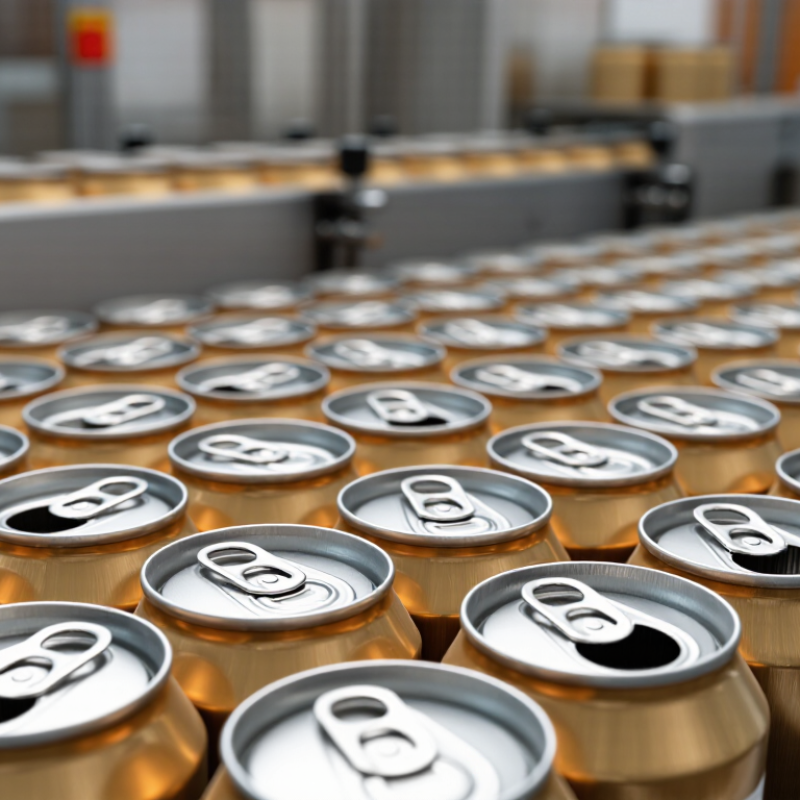
What Beverage Can Ends Are and How They Function
A beverage can end is the metal closure fitted to the open top of a filled can. It is usually made from thin aluminum alloy, shaped to balance strength with easy opening. A shallow groove, called a score, outlines the panel that will open. A rivet holds the pull tab in place. Small, but critical.
When a consumer lifts the tab, it acts as a lever and presses against the scored panel. The panel breaks along the score, creating a drinking opening while remaining attached to the end. This stay-attached design helps prevent loose pieces. The end is joined to the can body with a double seam, where folded metal layers form a tight mechanical seal. A sealing compound inside the seam helps limit leaks and protect the drink from air.
Can-end performance depends on several details working together: score depth, tab strength, seam dimensions, and the condition of the sealing compound. Manufacturers use inspection and testing to check these features, including seam measurements and pressure-related checks. A good end should open with controlled effort, yet remain secure during filling, handling, and transport. The balance is not always simple. For buyers comparing Chinese suppliers, clear specifications, consistent test records, and traceable production checks matter more than appearance alone.
China’s Beverage Can End Manufacturing Industry
China’s beverage can end manufacturing industry depends on precise forming, coating, and inspection. Aluminum or steel sheet is shaped into ends that must match the can body closely. Production teams check dimensions, score lines, and easy-open tabs throughout each run. A small variation matters. Poor fit can affect sealing and filling-line performance.
Tips: Ask about material consistency, coating checks, and sample testing. Request clear inspection records, not just a quoted production capacity.
Manufacturers balance speed with repeatable quality. Presses may produce thousands of ends quickly, but tooling wear and setup changes still need attention. Coatings also require careful handling; scratches or uneven coverage can create problems later. Buyers should compare specifications, trial samples, and communication practices before placing large orders. A low unit price alone tells little about long-term reliability. The industry has improved its process controls, though no factory is flawless. Even experienced teams can miss details, so open discussion about defects and corrective steps is useful.
Leading Beverage Can End Manufacturers and Their Capabilities
China’s beverage can end manufacturers serve beverage producers with a range of end formats, including standard, stay-on-tab, and easy-open designs. Capabilities vary by factory, so buyers should check the actual production line rather than rely on a broad product list. Small details matter.
A capable manufacturer typically controls several connected steps: aluminum coil preparation, shell forming, scoring, tab attachment, and protective coating. Precision scoring must open cleanly without weakening the panel during filling, transport, or storage. Coating coverage also deserves attention, especially around the curl and scored area, where exposed metal can affect product quality. Routine checks may include dimensions, opening force, coating integrity, and leak performance.
Manufacturers may support custom diameters, tab styles, and packaging specifications, but customization depends on tooling and order volume. Ask for samples, inspection records, material specifications, and clear acceptance criteria before approving production. A fast line is useful, but speed alone is not proof of consistency. I would also question any supplier that promises identical results across every material batch without explaining its controls. There is no perfect process; transparent testing and corrective action matter more than polished claims.
Materials, Production Processes, and Quality Standards
For beverage can ends made in China, material choice shapes both performance and cost. Aluminum alloys such as 5182 are commonly used for easy-open ends because they balance strength with formability. Steel ends may suit other packaging formats, but need corrosion-resistant coatings. The metal coil is cleaned and coated, then stamped into shells. A press forms the curl and countersink; scoring and tab riveting create the opening feature. Small variations matter.
Quality checks should cover score residual thickness, end dimensions, coating continuity, tab pull force, and leakage under pressure. ISO 9001 supports process control, while food-safety systems such as ISO 22000 help manage hygiene risks. Ask manufacturers for batch traceability, calibrated test records, and documented inspection limits. A smooth score line is not proof of consistent opening force.
Recycled content also matters. The International Aluminium Institute reports that recycling aluminium uses about 5% of the energy required for primary production. European Aluminium and Metal Packaging Europe reported a 76.1% beverage-can recycling rate in Europe for 2021. These figures do not guarantee a specific end’s quality. In practice, alloy temper, coating cure, and press maintenance still need close control. A missed check can be costly. And specifications can look perfect on paper, yet drift during a long production run.
How to Compare Beverage Can End Suppliers in China
When comparing beverage can end suppliers in China, look beyond unit price. Ask for the end diameter, alloy, coating, tab design, and compatible can-body specifications. Request recent inspection records for score dimensions, countersink depth, buckle resistance, and leak performance. A small measurement drift can cause trouble on a fast filling line.
Check quality systems and evidence, not promises alone. Request sample ends from multiple production lots, then test them on your own seaming equipment. Review batch traceability, defect reports, change-control procedures, and delivery records. The Aluminum Association and Can Manufacturers Institute reported a 43% U.S. aluminum beverage-can recycling rate for 2023. This is not a China supplier score, but it highlights why documented material recovery and scrap handling deserve specific questions. The International Aluminium Institute reports that recycling aluminum can save up to 95% of the energy required for primary production. Ask suppliers to substantiate recycled-content claims and explain how they verify material inputs.
Tips: Compare landed cost, including tooling, inspection, packaging, and freight. Ask for a written trial plan and corrective-action timeline. Visit the plant if practical; a video tour is useful, but it cannot show every shift or process variation. No scorecard is perfect. Recheck key measures after production scales up.
Top Beverage Can End Manufacturers in China: How to Compare Beverage Can End Suppliers
Use this fact-based comparison framework to assess supplier capabilities. Product specifications vary by can format, filling line, beverage, and destination market; confirm all requirements against approved drawings and samples.
| Comparison category | Evaluation dimension | What to compare | Evidence to request |
|---|---|---|---|
| Product range | End format and opening system | Check whether the supplier offers the required end diameter, profile, opening size, and easy-open feature, such as a stay-on-tab design. Compatibility depends on the can body, seaming equipment, and filling-line setup. | Approved technical drawing, end and can-body compatibility confirmation, and samples for line trials. |
| Materials | Metal alloy, temper, and thickness | Aluminum beverage can ends commonly use 5xxx-series alloys; 5182 is a commonly used end-stock alloy. The exact alloy, temper, and gauge must match the required end design and performance specification. | Material specification, mill test certificate, and traceability linking the material batch to production lots. |
| Performance | Pressure and opening performance | Compare performance against the customer-approved limits for pressure resistance, score quality, opening force, tab retention, and leakage. Appropriate limits depend on the package design and intended beverage. | Test methods, acceptance criteria, recent test reports, and samples tested under agreed conditions. |
| Seaming compatibility | Curl, countersink, and seam interface | End geometry must be compatible with the can body and seaming operation. Confirm the specified dimensions and seam requirements with the can maker or filling operation rather than relying on a universal target. | Controlled drawings, dimensional inspection records, and trial-seam results from the intended production setup. |
| Coatings and compounds | Internal coating and sealing compound | Confirm suitability for the beverage, processing conditions, and contact duration. Coating and compound requirements can differ by formulation and by the regulations of the destination market. | Product specifications, food-contact compliance documentation, and compatibility or migration test information where applicable. |
| Quality control | Inspection and defect management | Review controls for dimensions, score integrity, coating coverage, contamination, and other agreed defects. Compare inspection frequency, sampling plans, lot release criteria, and corrective-action procedures. | Quality-control plan, sample inspection records, nonconformance procedure, and traceability demonstration. |
| Food safety | Management system and market compliance | Check the scope and validity of relevant management-system certifications. ISO 9001 concerns quality management; ISO 22000 and FSSC 22000 are food-safety management schemes. Applicable food-contact rules depend on the import market. | Current certificates with site and scope details, audit information, and market-specific declarations or compliance documents. |
| Production capability | Capacity, lead time, and continuity | Compare available capacity for the required specification, planned maintenance, production scheduling, and contingency arrangements. Capacity and lead times should be confirmed for the actual order rather than assumed from general claims. | Written capacity confirmation, production and delivery schedule, and business-continuity plan. |
| Packaging and logistics | Protection, storage, and shipment | Evaluate packaging cleanliness, protection from damage and moisture, pallet configuration, storage recommendations, and shipment arrangements. Requirements should reflect the shipping route and handling conditions. | Packaging specification, pallet details, storage guidance, and a sample shipment or packaging inspection. |
| Commercial terms | Total cost and support | Compare quoted price alongside tooling or setup costs, minimum order quantities, payment terms, replacement policy, technical support, and the cost of qualification or line trials. | Itemized quotation, written commercial terms, tooling ownership details, and named technical-contact role. |