FAQs2024-06-21T06:05:11+00:00

What Is Range Exhaust and How Does It Work?

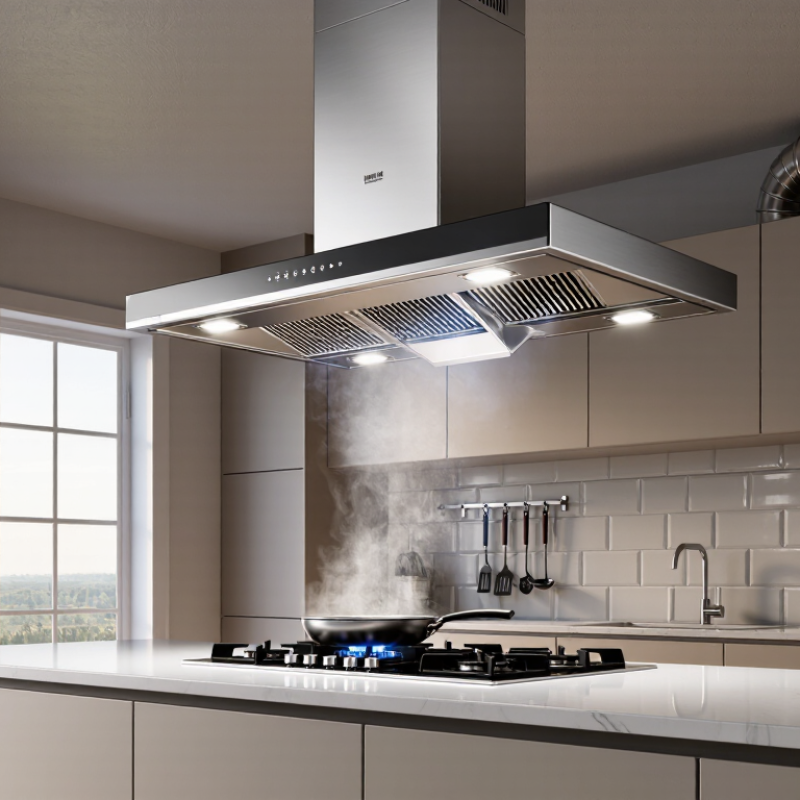
Range Exhaust is more than a metal canopy above a cooktop. It is a planned ventilation system that captures heat, smoke, grease, moisture, and cooking pollutants before they spread through the home. When operating correctly, it pulls contaminated air into a filter, then sends it outdoors through ductwork. Recirculating models filter some particles but return treated air indoors. That difference matters.

Cooking can produce fine particulate matter, nitrogen dioxide, carbon monoxide, and irritating odors. The U.S. Environmental Protection Agency reports that indoor pollutant concentrations can be two to five times higher than outdoor levels, and sometimes much higher. The World Health Organization’s 2021 Air Quality Guidelines set a 24-hour PM2.5 guideline of 15 micrograms per cubic meter. A sizzling pan can challenge that limit quickly. (U.S. EPA, “Indoor Air Quality”; WHO, “Global Air Quality Guidelines,” 2021.)

Performance depends on more than fan speed. The Home Ventilating Institute recommends approximately 100 cubic feet per minute for wall-mounted hoods and 150 CFM for island hoods in many residential applications. However, excessive airflow can create noise, drafts, and pressure problems. It may also pull combustion gases back into the room. ASHRAE Standard 62.2-2022 emphasizes whole-home ventilation and safe air balance, not simply maximum exhaust power.

The details are easy to overlook. A short, smooth duct usually performs better than a long, narrow route with sharp bends. Clean filters support capture. Correct installation matters most.

Still, no hood is perfect. Range Exhaust should be selected with the cooking style, kitchen layout, duct path, and makeup-air needs considered together. That practical balance is often missed.

What Is Range Exhaust and How Does It Work?

Definition and Purpose: What Range Exhaust Removes from Kitchen Air

Range exhaust is designed to remove pollutants created at the cooking surface before they spread through the kitchen. Its main targets include grease droplets, smoke, steam, odors, and fine particles from frying, searing, and boiling. Gas cooking can also release nitrogen dioxide and carbon monoxide, especially when ventilation is weak.

A hood is not a magic vacuum. Its capture area must sit close to the pan, while the fan moves contaminated air through a grease filter and outside the building. Recirculating models remove some grease and odors, but they return most air indoors. The U.S. Environmental Protection Agency reports that indoor pollutant levels can reach two to five times outdoor levels, with some pollutants exceeding that range. Cooking is one possible contributor.

The World Health Organization’s 2021 air-quality guidelines set a 24-hour PM2.5 guideline of 15 micrograms per cubic meter. Short cooking events can raise particle levels quickly, according to residential cooking research from Lawrence Berkeley National Laboratory. Opening a window may help, but it cannot replace effective capture at the source. In practice, a hood’s performance depends on airflow, filter condition, duct design, and user habits. This part is often overlooked. Even a well-designed system can miss emissions when tall pans block the intake or when the fan starts after cooking begins.

Main Components: Fan, Grease Filters, Ducts, Dampers, and Controls

What Is Range Exhaust and How Does It Work?

Range exhaust removes heat, smoke, grease, moisture, and cooking odors from above a cooktop. The fan creates negative pressure, pulling contaminated air through the hood. That air then travels through filters and ducts before leaving the building. Good performance depends on more than fan strength. The whole system must move air smoothly and safely.

Grease filters capture airborne oil before it enters the ductwork. Clean filters protect airflow and reduce buildup. The fan supplies the pulling force, while ducts provide the route to the outside.

Short, smooth ducts usually perform better than long runs with sharp bends. Dampers prevent outdoor air from flowing backward when the fan stops. Controls manage fan speed, lighting, and sometimes automatic activation near high heat.

Real kitchens are less tidy than diagrams. Poor installation can weaken even excellent equipment.

Tips: Wash reusable filters regularly, especially after frying. Check that the damper opens fully. Listen for rattling or unusual vibration. A blocked filter often sounds normal but moves less air. During installation, verify duct size, discharge location, and make-up air needs with a qualified professional. Small details matter. I would also reassess the system after several months, because grease patterns can reveal hidden airflow problems.

Airflow Sizing: HVI Guidance of 100 CFM for Wall Hoods and 150 CFM for Islands

What Is Range Exhaust and How Does It Work?

Airflow Sizing: HVI Guidance of 100 CFM for Wall Hoods and 150 CFM for Islands

Range exhaust captures smoke, grease, steam, and cooking odors before they spread. A fan pulls contaminated air through filters, then moves it outdoors through ductwork. Proper airflow matters, but the fan’s printed rating is not the whole story.

HVI guidance commonly recommends 100 CFM for a wall-mounted hood and 150 CFM for an island hood. An island needs more airflow because cabinets do not shield it from cross-drafts. A wall hood can often capture rising vapor more efficiently. These figures provide a practical starting point, not an automatic design answer.

Duct size and layout can change real performance. A long duct, several elbows, or a narrow outlet increases resistance. The hood may sound powerful while capturing very little. Field checks often reveal this mismatch. I have seen steam drift toward upper cabinets despite an impressive airflow label.

Use the recommended airflow as a baseline, then review the cooking surface, duct route, and room pressure. Heavy searing may need stronger capture than occasional boiling. A tightly sealed kitchen may also require replacement air for stable operation. That detail is easy to miss. It should not be. Filters need regular cleaning, and the duct outlet should remain unobstructed. A slightly oversized hood can help, but excessive airflow may create noise and waste energy. The best choice balances capture, comfort, and realistic installation limits.

What Is Range Exhaust and How Does It Work?

Airflow sizing reference based on commonly cited HVI guidance: 100 CFM for wall-mounted hoods and 150 CFM for island hoods.

Data Dimension Typical Value or Guidance How It Applies
Range Exhaust Definition Mechanical kitchen ventilation A range exhaust system captures smoke, grease, steam, odors, and combustion by-products near the cooking surface and removes them outdoors when configured as a ducted system.
Basic Operating Method Capture, filter, and discharge A fan creates negative pressure at the hood opening. Air and airborne contaminants are drawn through grease filters and then discharged through ductwork or recirculated after filtration in a non-ducted configuration.
Wall-Mounted Hood Airflow 100 CFM per linear foot of cooking surface This is the commonly cited HVI sizing guidance for a hood installed against a wall. For a 30-inch cooktop, the calculation is approximately 250 CFM: 2.5 feet × 100 CFM.
Island Hood Airflow 150 CFM per linear foot of cooking surface Island installations generally require more airflow because the hood is exposed on all sides and receives less assistance from an adjacent wall. For a 36-inch cooktop, the calculation is approximately 450 CFM: 3 feet × 150 CFM.
30-Inch Wall Cooktop Example Approximately 250 CFM Recommended starting point using the wall-hood guideline: 30 inches ÷ 12 × 100 CFM = 250 CFM. Actual requirements may vary with cooking style, hood design, and local regulations.
36-Inch Wall Cooktop Example Approximately 300 CFM Recommended starting point using the wall-hood guideline: 36 inches ÷ 12 × 100 CFM = 300 CFM.
36-Inch Island Cooktop Example Approximately 450 CFM Recommended starting point using the island-hood guideline: 36 inches ÷ 12 × 150 CFM = 450 CFM.
High-Heat Cooking Use a higher airflow allowance when appropriate Frequent grilling, wok cooking, searing, frying, or use of multiple high-output burners can require more airflow than the basic linear-foot calculation.
Hood Capture Area Hood should cover the cooking surface A hood that is at least as wide as the range generally provides better capture. Island hoods may need additional depth or width because cross-drafts can carry contaminants beyond the canopy.
Typical Mounting Height Approximately 24–30 inches above an electric cooktop; approximately 30–36 inches above a gas cooktop These are common installation ranges, not universal requirements. The installation manual and local code should control the final mounting height.
Grease Filter Function Metal mesh or baffle filtration Filters remove grease particles from the exhaust stream and help protect the fan and ductwork. Filters must be correctly installed and cleaned regularly.
Ducted Exhaust Discharges air outdoors Ducted systems generally provide the most effective removal of heat, moisture, smoke, and odors. The duct route should be as short and straight as practical.
Recirculating Exhaust Filters and returns air indoors Non-ducted systems can reduce grease and some odors but do not remove heat, moisture, or combustion gases from the room. Carbon filters may require periodic replacement.
Duct Efficiency Rigid, smooth, correctly sized ductwork preferred Long runs, sharp bends, undersized ducts, flexible ducting, and restrictive terminations increase resistance and can reduce delivered airflow and increase noise.
Make-Up Air Consideration Evaluate at higher exhaust rates Strong exhaust can depressurize a tightly sealed home. Depending on local requirements and the airflow level, a dedicated make-up air system may be needed to replace exhausted air.
Noise and Performance Higher airflow usually increases sound and power demand Fan noise depends on airflow, motor design, duct resistance, and installation quality. Selecting a hood with more capacity than necessary does not always improve capture if the duct system is restrictive.
Final Sizing Check Use the greater applicable requirement Confirm the airflow calculation against the hood installation instructions, appliance output, duct design, make-up air provisions, and local building or mechanical codes before installation.

Note: Airflow figures are planning guidelines rather than a substitute for product instructions or local code requirements. Final sizing should account for the cooking appliance, hood position, duct length, number of elbows, termination type, and building pressure conditions.

Operating Sequence: How the Hood Captures, Filters, and Discharges Pollutants

A range exhaust hood begins working when its blower draws air upward from the cooking surface. Hot air, smoke, grease, and fine food particles enter the hood’s capture zone. The canopy shape and distance from the cooktop matter greatly. A poorly positioned hood may miss the plume before it rises and spreads. Small details matter.

Inside the hood, removable baffle or mesh filters slow the airflow and collect grease droplets. Baffle filters usually guide air through sharp directional changes, allowing grease to separate and drain into collection areas. Mesh filters use layered metal surfaces to trap residue. Some systems also include charcoal filters for certain odors, but these filters do not remove every pollutant. They require regular replacement. A strong fan cannot compensate for a blocked filter.

After filtration, the blower pushes the remaining air through a duct toward an exterior outlet. Short, smooth ducts usually preserve more airflow than long runs with several bends. The outlet should discharge safely away from windows and air intakes. In tightly sealed buildings, replacement air may be needed to prevent weak capture or pressure problems. In practice, capture is rarely perfect. Boiling pots, open doors, and cross drafts can defeat a well-designed hood. That limitation deserves attention during installation and daily use.

Makeup Air Rules: IRC Requirements for Exhaust Systems Above 400 CFM

What Is Range Exhaust and How Does It Work?

A range exhaust system captures smoke, grease, moisture, and cooking odors above the cooktop. Its fan pulls contaminated air through a hood and sends it outdoors through ductwork. The stronger the fan, the more air the house loses. That missing air must come from somewhere.

The International Residential Code, Section M1503.4, requires makeup air when a range hood can exhaust more than 400 cubic feet per minute. The replacement airflow should approximately match the exhaust rate. A 600-CFM hood may therefore need about 600 CFM of incoming air. The system must open and operate with the exhaust fan. IRC guidance also limits makeup air to 10°F below indoor room temperature. Local code adoption can differ.

ASHRAE kitchen ventilation guidance treats pressure balance as part of safe exhaust design. DOE Building America research also identifies strong exhaust fans as a contributor to house depressurization and combustion-air concerns. Duct length, elbows, filters, and wind can reduce actual airflow. Rated CFM is not always installed CFM. That detail gets overlooked.

A practical design uses a dedicated intake, washable filter, motorized damper, and tempering method. The intake should stay away from garages, vents, and dusty exterior areas. Airflow testing matters. A hood that feels powerful may still capture poorly if the canopy is too small or the duct is restrictive. The 400-CFM threshold is important, but it is not a complete safety guarantee.

Go to Top