What Is the Strongest AA Battery for International Buyers?
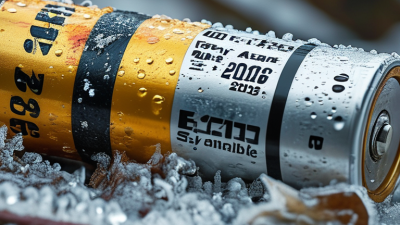
Choosing the strongest AA batteries is not as simple as selecting the highest capacity on a package. International buyers face different temperatures, shipping conditions, device demands, and purchasing standards. A battery that performs brilliantly in a camera may disappoint in a remote control. That difference matters.
Isidor Buchmann, founder of Cadex Electronics and Battery University, once said, “The battery is the most unpredictable part of a portable device.” His observation remains practical for global purchasing. Battery performance depends on chemistry, storage age, discharge rate, and operating temperature. Alkaline AA batteries are widely available and affordable. Rechargeable NiMH cells can deliver dependable power for high-drain devices. Lithium AA batteries often provide strong cold-weather performance and a longer shelf life.
Numbers can mislead.
This guide examines the strongest AA batteries through measurable, real-world factors. We will compare capacity, voltage stability, cycle life, leakage resistance, shelf life, and performance in demanding equipment. We will also consider packaging quality, manufacturer reputation, and supply consistency for international buyers. These details become visible when a flashlight dims during a winter trip or a wireless keyboard suddenly stops working.
Still, no single AA battery wins every test. That is an uncomfortable limitation. Some product comparisons rely on laboratory conditions that do not match household use. Retail pricing and regional availability also change quickly. Therefore, the most reliable choice depends on the device, climate, usage pattern, and replacement access. By examining evidence instead of marketing language, buyers can make a more confident decision. The strongest option is often the best-matched one, not the most expensive package.
AA Battery Chemistry: Alkaline, NiMH, Lithium, and 1.5-Volt Li-Ion Types
What Is the Strongest AA Battery for International Buyers?
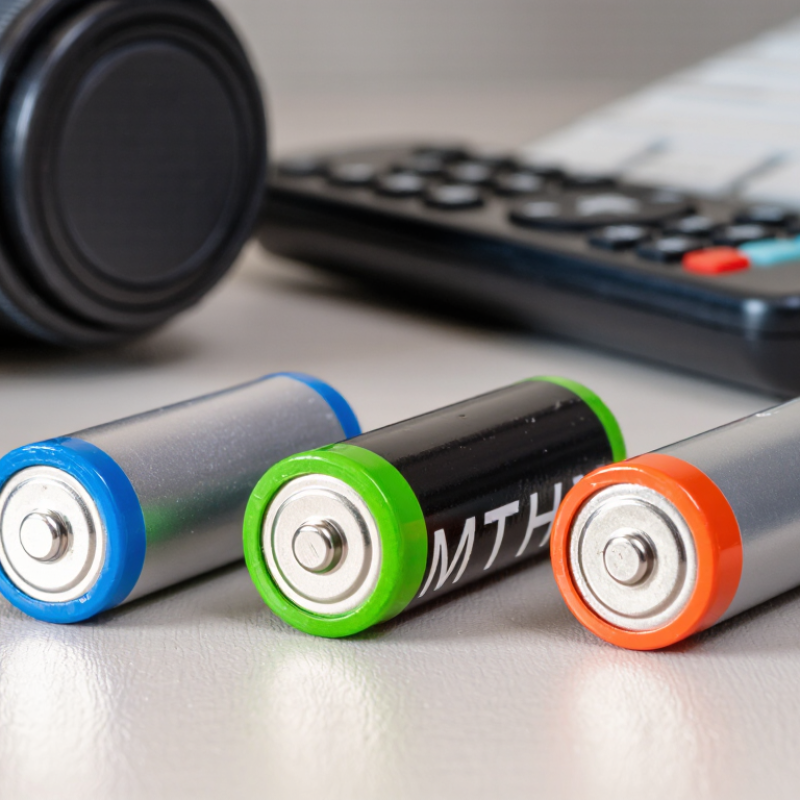
“Strongest” depends on the device, workload, and required runtime. Battery chemistry matters more than package claims. Alkaline AA cells usually provide 1.5 volts initially and suit remotes, clocks, and low-drain household devices. They are widely available, inexpensive, and easy to store. However, voltage drops during use, especially in cameras, toys, and motorized equipment.
NiMH rechargeable cells typically deliver 1.2 volts, yet they handle repeated high-drain use well. A flash unit, wireless controller, or portable microphone may perform better with NiMH chemistry. Their lower voltage can confuse devices designed for standard alkaline cells. Check the equipment manual. Capacity also varies, and cold conditions can reduce practical runtime.
Lithium AA batteries are light and perform strongly in cold weather. Primary lithium cells often maintain voltage longer than alkaline cells, making them useful for outdoor sensors and emergency equipment. They should not be recharged. Regulated 1.5-volt lithium-ion AA cells contain internal electronics that stabilize output near 1.5 volts. This steady voltage helps some precision devices, but charging requires the correct charger, and compatibility is not universal.
For international purchasing, verify chemistry, nominal voltage, capacity, terminal design, and safety documentation. Transport and import requirements can differ by destination. I have found that “highest capacity” rarely means “best battery.” Runtime tests under the actual load remain more reliable. The strongest choice is still conditional. That is the part many listings overlook.
What Is the Strongest AA Battery for International Buyers?
Representative energy values at moderate drain: lithium primary cells generally provide the highest energy and the best cold-weather performance, while NiMH offers the best rechargeability. Alkaline is widely available and economical, and 1.5-volt Li-ion cells provide stable voltage but require built-in electronics and recharging.
Capacity Comparison: 1,900–2,800 mAh NiMH Versus Alkaline AA Cells
What Is the Strongest AA Battery for International Buyers?
Capacity matters, but the printed number can mislead. Rechargeable NiMH AA cells usually range from 1,900 to 2,800 mAh. Alkaline AA cells may show similar capacity under gentle, low-drain testing. However, cameras, toys, and portable tools demand more current. Under these conditions, NiMH cells often deliver their stored energy more consistently.
Voltage changes the experience. A fresh alkaline cell starts near 1.5 volts, while NiMH typically provides about 1.2 volts. Some devices require the higher starting voltage and may report “low battery” sooner with NiMH cells. Other devices work better with NiMH because its voltage remains steadier during heavy use. Check the equipment manual and its minimum operating voltage.
My first comparison focused only on mAh. That shortcut was wrong. A capacity label depends on discharge rate, temperature, and the device’s cutoff point. A 2,800 mAh NiMH cell is not automatically stronger than a 2,400 mAh cell in every product. High-capacity versions can also lose charge faster during storage, although modern low-self-discharge designs reduce this weakness. Test results matter more than packaging claims.
For international buyers, confirm charger compatibility, regional plug support, and safe storage conditions. A matched charger helps prevent overheating and uneven charging. NiMH suits frequent use and high-drain devices, while alkaline cells remain practical for emergency storage and low-use equipment. Keep records from real tests. Your results may differ.
High-Drain Performance: Internal Resistance and Continuous-Current Ratings
For international buyers, the strongest AA battery is usually judged by current delivery, not advertised capacity. Internal resistance is the critical figure. It determines voltage sag when a camera flash, game controller, or motor starts. A simple relationship applies: voltage loss equals current multiplied by resistance.
Published comparative tests using IEC 60086-2:2021 methods often place fresh alkaline AA resistance around 100–300 milliohms. High-drain nickel-metal hydride cells commonly measure near 20–50 milliohms. At 5 amps, that difference can create roughly 1.25 volts of sag. The rechargeable cell keeps the device operating longer.
Numbers matter.
Continuous-current ratings need careful reading. IEC 61951-2:2017 defines testing conditions for rechargeable nickel systems, but manufacturers may report different temperatures, cut-off voltages, and test durations. High-drain AA cells are often rated for continuous currents between 5 and 15 amps, while alkaline cells usually perform better below 1 amp.
These figures are not universal. A warm laboratory result may fail inside a cold outdoor sensor. I would request the test temperature, discharge curve, and cut-off voltage before comparing suppliers. Some listings also confuse pulse current with continuous current. That mistake is easy to make.
Global Standards: IEC 60086, IEC 61951, UN 38.3, and Safety Compliance
What Is the Strongest AA Battery for International Buyers?
Global Standards: IEC 60086, IEC 61951, UN 38.3, and Safety Compliance
“Strongest” depends on the device. For high-drain equipment, rechargeable nickel-metal hydride cells often deliver steadier current than standard alkaline cells. IEC 61951 covers portable sealed rechargeable batteries, including NiMH designs. Primary AA batteries fall under the IEC 60086 series, which addresses dimensions, performance, marking, and safety. A higher capacity number is useful, but it does not guarantee better real-world performance. Contact resistance, discharge rate, storage temperature, and leakage control also matter. A perfect ranking is impossible.
Lithium-based AA cells require closer transport checks. UN 38.3 testing evaluates battery safety during pressure, vibration, shock, and temperature changes. Buyers should request test summaries, safety data sheets, and traceable production records. IATA’s 2024 lithium battery guidance also stresses correct classification, packaging, labeling, and documentation. This matters because the Global E-waste Monitor 2024 reported 62 million tonnes of electronic waste generated in 2022. Poor battery selection increases waste and replacement costs. Sometimes, the cheapest cell becomes expensive.
Tips: Match the chemistry to the device manual. Check IEC markings, capacity, cycle-life data, and expiry dates. For rechargeable AA cells, confirm IEC 61951 relevance. For lithium cells, verify UN 38.3 evidence before shipment. Ask for independent laboratory reports, not only supplier claims. Sample testing is wise. Small inconsistencies can reveal larger quality problems.
| AA Battery Type | IEC Designation | Nominal Voltage | Typical Capacity Range | High-Drain Performance | Typical Shelf Life | Operating Temperature | International Standard and Compliance Notes | Best Use Case |
|---|---|---|---|---|---|---|---|---|
| Nickel-Metal Hydride Rechargeable | HR6 under IEC 61951-2 | 1.2 V | 1,900–2,700 mAh, depending on cell design and rated discharge conditions | High Low internal resistance and strong continuous-current capability; suitable for cameras, toys, flashlights, and motorized equipment. |
Approximately 1–3 years when stored correctly; capacity gradually declines during storage and use | Typically about −20 °C to 50 °C; charging limits may be narrower and charger-dependent | Covered by the IEC 61951-2 family for rechargeable nickel systems. A compliant charger and overcharge protection are required. Air-transport rules generally differ from those for lithium batteries, but local battery-shipping requirements still apply. | Best overall choice for repeated high-drain use and lower long-term operating cost |
| Lithium Primary, Lithium/Iron Disulfide | FR6 under IEC 60086-4 | 1.5 V | Approximately 2,400–3,500 mAh, highly dependent on load and cutoff voltage | Very High Excellent energy-to-weight ratio, low internal resistance, and stable performance in demanding devices. |
Typically up to 15–20 years when stored within the manufacturer’s specified conditions | Often about −40 °C to 60 °C; exact limits must be confirmed on the product safety data sheet | Primary lithium batteries are evaluated under IEC 60086-4. Shipments commonly require UN 38.3 test evidence for lithium battery transport, plus applicable packaging, marking, labeling, and documentation requirements. | Best for long storage, cold environments, emergency equipment, and high energy density |
| Alkaline Manganese | LR6 under IEC 60086-1 and IEC 60086-2 | 1.5 V | Approximately 1,800–3,000 mAh at low to moderate drain | Medium Reliable for everyday loads, but voltage and usable capacity decrease faster than lithium primary or NiMH cells under high drain. |
Typically 5–10 years, subject to storage temperature and leakage-control design | Commonly about −18 °C to 55 °C; cold conditions can significantly reduce available capacity | Covered by the IEC 60086 primary battery series. It is not a rechargeable chemistry. International buyers should verify leakage resistance, date coding, packaging, and conformity documentation. | Best for general-purpose consumer devices, remote controls, clocks, and moderate-drain equipment |
| Zinc-Carbon | R6 under IEC 60086-1 and IEC 60086-2 | 1.5 V | Approximately 600–1,600 mAh, depending on discharge rate | Low Voltage drops relatively quickly under demanding loads and leakage risk is generally higher than with modern alkaline designs. |
Typically 2–3 years | Commonly about −10 °C to 45 °C | Covered by the IEC 60086 primary battery series. Not rechargeable. Suitability for export depends on destination-market labeling, chemical disclosure, packaging, and waste-battery requirements. | Low-drain devices where purchase price is the main consideration |
| Rechargeable Lithium-Ion, 14500 Format | Not an IEC AA replacement designation; commonly identified by size code 14500 | 3.6–3.7 V nominal; approximately 4.2 V when fully charged | Typically 600–1,000 mAh | High High power output, but the voltage is substantially higher than standard 1.2 V or 1.5 V AA cells. |
Typically 2–5 years, depending on cycle count, storage state of charge, and temperature | Often about −20 °C to 60 °C for discharge; charging limits are usually narrower | Not a drop-in AA replacement unless the equipment specifically supports 14500 cells. Rechargeable lithium-ion batteries require suitable protection, an approved charger, and UN 38.3 transport compliance when applicable. | Only for equipment explicitly designed for protected or specified 14500 lithium-ion cells |
Shelf Life and Climate: Up to 20 Years for Lithium AA Batteries
For international buyers, primary lithium AA batteries often offer the longest shelf life. Many technical datasheets specify retention for up to 20 years at approximately 20°C. That figure is impressive, but it is not a promise.
The U.S. Department of Energy’s 2023 Battery R&D Review identifies lithium primary cells as high-energy-density storage devices. IEC 60086-2:2021 also provides standardized performance tests for household batteries. These references support careful comparison, not blind trust. Lithium AA cells usually perform better than alkaline cells in cold conditions. Some specifications list operating ranges near -40°C to 60°C. However, heat still accelerates chemical aging. A battery stored in a hot warehouse may lose useful life earlier.
Climate changes the buying decision. In humid coastal regions, packaging quality and terminal protection matter. In desert climates, repeated heat exposure deserves more attention than the printed expiry date. I once treated a 20-year shelf-life claim as an exact deadline. That was careless.
Storage temperature, packaging, and production date can matter more than the headline number. For long-distance inventory, choose cells with clear date codes, sealed packaging, and published test conditions. Check performance data under both low-temperature discharge and room-temperature storage.
“Up to 20 years” sounds strong. The details decide whether it is useful.
Related Posts
-
How to Choose the Strongest AA Batteries in 2026?
-
Top 10 Types of AA Batteries for Global Buyers?
-
How to Choose the Best Double AA Batteries?
-
Empowering Innovation: How Chinese Manufacturing Leads the Charge with Best Double AA Batteries
-
Innovative Solutions for Long Lasting aa Batteries in Modern Electronics
-
Ultimate Guide to Double A Batteries Comparing Performance Lifespan and Efficiency