
7 Tips for Choosing a Shoulder Press Machine
Choosing a Shoulder Press Machine is not just a matter of picking the largest frame or heaviest weight stack. The right machine should fit your body, move smoothly, and feel stable throughout each repetition. A few minutes of careful checking can reveal problems that a product photo will not show.
Start with the seat and back pad. Your feet should rest firmly on the floor, while the handles begin near a comfortable shoulder height. Small details matter. A grip that feels fine at the start may become awkward as the handles rise. Check whether the machine allows a natural range of motion without forcing your elbows or shoulders into uncomfortable positions. People have different proportions, so no single design suits everyone.
These seven tips will help you compare machines with practical questions in mind: Does the frame feel steady? Can you adjust the seat easily? Is the resistance smooth, and are the grips comfortable? Look closely at welds, cable routing, weight-stack increments, and the space needed around the unit. If possible, try a few controlled repetitions before buying. A showroom test is useful, though it cannot tell you how the machine will feel after months of use. That uncertainty is worth remembering. The best choice is one that matches your training needs, available space, and budget—not simply the most impressive specification sheet.
Set Your Training Goal with ACSM’s 8–12-Rep Strength Guidance
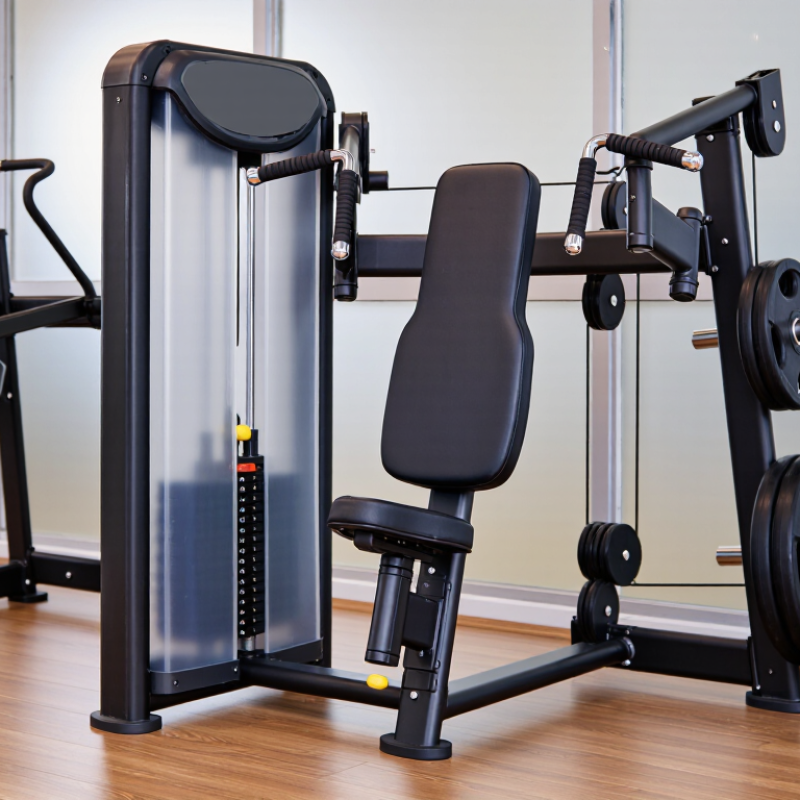
Choosing a shoulder press machine starts with your training goal, not its size or display. For general strength, use the American College of Sports Medicine’s 8–12-repetition guidance as a practical starting point. Its position stand on resistance training recommends this range for novice and intermediate adults. Choose a load you can press for at least eight controlled repetitions, but not far beyond twelve. Keep your back against the pad and your wrists stacked over your elbows. That matters. If your shoulders pinch or your lower back arches, reduce the load or adjust the seat.
Check that the handles begin around shoulder height and move smoothly through your comfortable range. A machine with adjustable seat height can help align the handles with your shoulders, rather than forcing an awkward start. Rest, then repeat your set with steady control; the last few repetitions should feel challenging, not painful. ACSM’s guidance is a useful baseline, not a rule for every lifter. Advanced trainees or people managing shoulder discomfort may need different loads and ranges. I still find machine fit easy to overlook. Test the setup before choosing, and ask a qualified trainer to check your position if the movement feels uncertain.
7 Tips for Choosing a Shoulder Press Machine
Set your training goal with ACSM’s 8–12-rep strength guidance
For a strength-focused routine, ACSM guidance commonly uses 8–12 repetitions per set for novice and intermediate resistance-training participants. Choose a shoulder press machine that lets you use a controlled range of motion and adjust the load appropriately.
Check Seat and Handle Fit for Comfortable Shoulder Alignment
Before judging a shoulder press machine, sit down and check where its handles meet your body. The U.S. Army’s 2012 ANSUR II survey recorded 93 body measurements from 6,068 service members, including shoulder-related dimensions. Its sample is military, not a portrait of every gym user, but it illustrates why one fixed setup cannot fit everyone. Adjust the seat so the handles start near shoulder height, not beside your ears. Your upper arms should move comfortably without forcing your shoulders to shrug. Small adjustment, big difference.
Check the back pad, too. It should support your torso without pushing your chest upward or pinning your shoulder blades awkwardly. Grip the handles and make a light test press. Your wrists should stay roughly straight, and your elbows should feel comfortable rather than sharply flared. If you need to lean, twist, or reach forward just to grasp the handles, change the seat position—or choose another machine. Stop if you feel sharp pain, and reduce the load if the movement feels strained. I still check twice. A mirror can help, though it may not show how the joint feels. The ANSUR II data are useful context, not a fitting rule for every person.
Compare Load Options, Adjustability, and Smoothness Through the Full Range
7 Tips for Choosing a Shoulder Press Machine
Compare how the machine delivers resistance. A weight stack makes small load changes easy, while plate-loaded arms can feel different as leverage changes. Try several settings, not just the lightest one. The American College of Sports Medicine’s 2009 resistance-training position stand recommends 8–12 repetitions for novice and intermediate adults. Choose a machine that lets you control that range without straining or rushing.
Adjustability matters because shoulder comfort depends on where the press begins. Set the seat so the handles start near shoulder height, then check that your wrists stay roughly above your elbows. Can you reach the start position without shrugging? That matters. Test both sides, since a shared handle path may not suit every user equally. The fit test is imperfect, but it reveals obvious mismatches.
Press slowly through a comfortable range, then lower the handles with control. Watch for sticking, clanking, or a sudden change in resistance near the top. Feel the catch. A smooth-feeling machine is not automatically a good fit; smoothness should not come at the cost of a forced shoulder position. Try a moderate load for several repetitions and notice whether the motion stays steady. I may give smoothness too much weight, but an awkward transition is hard to ignore.
Verify Safety Against ISO 20957-2 Strength-Equipment Requirements
A shoulder press machine should have more than a sturdy-looking frame. Check that its safety documentation identifies ISO 20957-2:2020, used alongside ISO 20957-1, which covers general requirements for stationary training equipment. Ask for test records, not just a label. Confirm the machine stays stable when the handles move through their full range, and check that adjustment pins lock securely. Look closely at pivot points and moving joints for pinch or shear hazards. Small details matter.
A 2010 analysis by Kerr, Collins, and Comstock estimated 970,801 U.S. emergency-department injuries related to weight training between 1990 and 2007. The estimate covers many types of equipment, not shoulder press machines alone, but it makes careful checks worthwhile. Sit down and adjust the seat: your feet should rest flat, and the handles should begin near shoulder height without forcing your elbows back. Then test the movement with a light load. I’d be wary of treating a standards claim as a substitute for inspecting a loose pivot, worn cable, or machine that rocks on the floor.
Assess Durability, Maintenance Needs, and Warranty Coverage Before Buying
A shoulder press machine should feel solid before it feels impressive. Check the frame for stable welds, a level base, and parts that do not flex under firm pressure. Move the seat and handles through their adjustment range. Pins should lock cleanly, without rattling or sticking. A thick coat of paint is not proof of durability.
Maintenance affects how reliably the machine works over time. Ask which parts need regular inspection, lubrication, or replacement. Cables, pulleys, bearings, and upholstery can wear differently depending on use. Check whether replacement parts are available and whether routine servicing requires special tools. Small details matter. Wipe sweat from contact points after use, and follow the care instructions rather than assuming every surface tolerates the same cleaner. I still find maintenance easy to overlook when comparing machines.
Read the warranty carefully, not just the headline term. Confirm what coverage applies to the frame, moving parts, and upholstery, and whether labor or shipping is included. Ask how claims are handled and what maintenance records may be required. A long warranty can still have exclusions. Compare the written terms with your expected training frequency, then decide whether the coverage feels practical.