
FAQs2024-06-21T06:05:11+00:00

China Top 10 Auto Tint Film Manufacturers

China’s Auto Tint Film market is shaped by heat, glare, UV exposure, and the demand for clearer, more comfortable cabins. Yet “top manufacturer” should mean more than a glossy sample. Buyers need comparable data on visible-light transmission, solar-energy rejection, haze, color stability, and warranty coverage.

Grand View Research estimated the global window film market at approximately US$11.56 billion in 2023 and forecast growth through 2030. That figure covers window films broadly; it is not an automotive-tint-only market estimate. The distinction matters. Market totals can signal momentum, but they cannot prove that a specific factory delivers consistent film across production batches.

Small differences show up in real use. A film that looks neutral under showroom lights may appear blue beside a white dashboard. Edge lift, adhesive marks, or fading can also change an owner’s view of quality. These details deserve scrutiny.

Lighting and vision researcher Dr. John D. Bullough offers relevant expertise, but no verifiable Auto Tint Film quotation from him is available here. Rather than invent a quote, this introduction uses his field as a reminder: visual performance needs measurement, not marketing language. That is an imperfect starting point. It is still more reliable than treating unverified claims as evidence.

This guide to China’s top ten manufacturers will compare published specifications, product range, testing transparency, and after-sales support. Readers should verify current certificates and warranty terms directly with each supplier. Names alone are not proof. The strongest shortlist is the one whose claims can be checked.
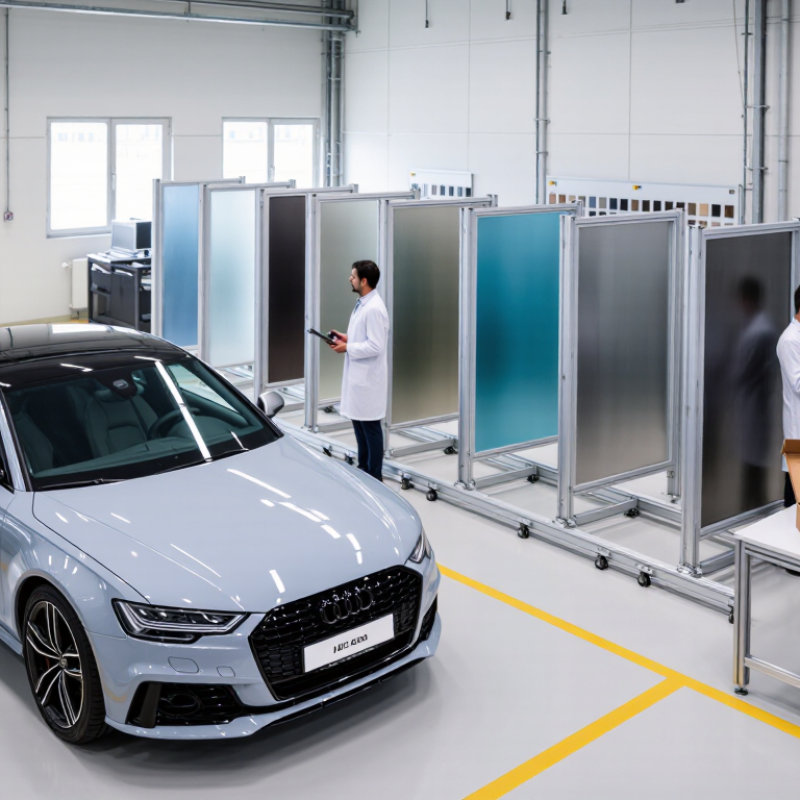
China Top 10 Auto Tint Film Manufacturers

China’s Automotive Tint Film Industry: Scope and Market Context

China Top 10 Auto Tint Film Manufacturers

China’s Automotive Tint Film Industry: Scope and Market Context

China’s tint-film industry is tied to a substantial vehicle market, but vehicle sales are not film sales. The China Association of Automobile Manufacturers reported 30.16 million vehicles produced and 30.09 million sold in 2023. These figures show the scale of the potential installation base, not actual demand for tint film. Replacement cycles, vehicle age, and customer preferences also matter. The data has limits.

The market spans film substrates, optical and protective coatings, adhesives, converting, and installation services. OICA reported 93.5 million vehicles produced worldwide in 2023, placing China’s manufacturing ecosystem in a broader global supply context. Yet public statistics rarely separate automotive tint film from other window films. That gap deserves attention when comparing market estimates. Buyers often assess heat rejection, visible-light transmission, optical clarity, and durability together; a strong claim in one area may not mean balanced performance overall.

Tip: Request test results for the exact film construction, including haze and adhesive durability. Check that product specifications suit the vehicle and intended use.

Types and Key Technologies of Automotive Tint Film

Automotive tint film is made in several ways, and each construction changes its performance. Dyed film reduces glare and adds privacy, but its color may fade with prolonged sunlight. Carbon film uses fine carbon particles for a darker appearance and stable color. Metalized film reflects some solar energy, though its conductive layers can affect radio signals. Ceramic film uses nonconductive particles to filter infrared energy while keeping good visibility. No film does everything.

Key technologies include multilayer optical coatings, precise particle dispersion, and pressure-sensitive adhesive systems. A well-made coating can reduce heat without making glass excessively dark. Still, a single infrared rejection figure does not describe total cabin comfort; visible light transmission and total solar energy rejected matter too. In practice, installers also check for dust, edge gaps, and trapped moisture. Small flaws show clearly in direct sunlight. Results depend on the glass, film, and installation conditions, and product charts do not always make comparisons easy. That deserves a closer look.

China Top 10 Auto Tint Film Manufacturers - Types and Key Technologies of Automotive Tint Film

A technology-focused overview of ten common automotive window-film constructions and their typical characteristics; this is not a company ranking.

Film Type Typical Construction Key Technology Typical Optical and Thermal Behavior Main Advantages Considerations Common Applications
Dyed polyester film Polyester film with colorant incorporated into or applied to one or more layers. Absorptive coloring; adhesive lamination and surface hard coating. Creates a tinted appearance and reduces visible light transmission according to shade; heat rejection is generally limited compared with advanced IR-control constructions. Simple construction, broad shade options, and typically low metallic interference. Color and performance depend on formulation; lower-grade products may fade or change color with prolonged exposure. Appearance-focused tinting and basic glare reduction.
Metallized film Polyester film with a thin deposited metal layer. Metal deposition reflects part of the incoming solar energy. Can provide strong solar-energy rejection and a reflective appearance; visible reflectance varies by product. Reflective performance can be achieved with relatively thin film layers. Metal layers may affect radio-frequency signals, including some cellular, GPS, or in-vehicle communication signals; appearance may be more reflective. Vehicles where reflective styling and solar control are desired.
Hybrid film Combination of dyed and metallic layers or components. Balances absorption and reflection to tune appearance and solar-control performance. Optical and heat-control properties vary with the metal content, tint, and layer design. Can offer a middle ground between dyed and highly reflective films. May retain some signal-interference potential if metallic layers are present; specifications differ considerably by construction. General-purpose side and rear window tinting.
Carbon-particle film Polyester film incorporating carbon-based color particles. Particle-based light absorption rather than a continuous metal layer. Usually provides a non-metallic dark appearance; solar and infrared performance depend on the particle system and overall film design. Generally does not rely on a metal layer, so it is less likely to interfere with radio-frequency signals. Performance and color stability are product-dependent; carbon content alone does not define heat rejection. Drivers seeking a darker, non-metallic appearance.
Ceramic-particle film Polyester film containing ceramic or other non-metallic functional particles. Particle engineering designed to manage selected portions of solar radiation while maintaining the desired visible appearance. Can be designed for infrared control at a range of visible-light transmission levels; actual results depend on the specific formulation and test method. Non-metallic constructions generally avoid the signal-interference mechanism associated with metal layers. Performance claims should be compared using the same measurement standards; ceramic content does not guarantee a particular result. Solar-control tinting where a non-metallic film is preferred.
Sputtered film One or more very thin material layers deposited onto a film substrate. Vacuum sputtering provides controlled deposition of functional layers, often including metals or metal oxides. Can be engineered for specific combinations of visible transmission, reflection, and solar-energy control. Layer thickness and composition can be precisely controlled in production. Optical appearance and signal effects depend on the deposited materials; not all sputtered films have the same properties. Higher-specification solar-control applications.
Multi-layer optical film Multiple thin polymer layers with differing optical properties. Interference and selective reflection created by a carefully designed layer stack. May selectively manage portions of the solar spectrum while retaining a relatively clear appearance; results depend on layer design. Can provide solar control without relying solely on dark tint or a conventional metal coating. Complexity of construction can increase manufacturing requirements; product performance must be verified by published test data. Clear or lightly tinted solar-control glazing applications.
Clear infrared-control film Optically clear polyester film with a functional non-metallic or multi-layer solar-control system. Selective control of infrared energy while maintaining high visible-light transmission. Designed to remain relatively clear while reducing selected infrared transmission; visible transmission and total solar-energy performance vary by product. Useful where a dark appearance is not desired, including some glazing positions subject to local rules. Infrared rejection figures alone do not describe total heat rejection; confirm the test wavelength and measurement method. Clear or near-clear glazing, subject to vehicle and local requirements.
Automotive safety film Thicker or multi-ply polyester construction with strong adhesive and, in some designs, a hard coat. Film and adhesive are designed to help hold broken glass fragments together after breakage. May be clear or tinted; it is not automatically a high-performance solar-control film. Can help retain glass fragments and provide added resistance to tearing compared with basic thin tint films. Does not make automotive glass unbreakable or guarantee prevention of intrusion; performance depends on thickness, attachment, glazing, and installation. Applications where fragment retention is a priority.
Decorative or privacy film Colored, patterned, or surface-textured film, commonly using polyester layers. Color, pattern, or surface treatment alters light transmission and visibility through the glazing. Privacy and light transmission depend on shade, pattern, and lighting conditions; it may offer limited solar control unless specifically engineered for it. Provides styling options and can reduce direct visibility through selected windows. Privacy appearance changes with lighting; automotive glazing rules may restrict permissible tint or reflectance. Styling and privacy applications on permitted vehicle windows.

Note: Actual visible light transmission, solar-energy rejection, ultraviolet transmission, reflectance, and signal effects vary by product and test method. Check product test documentation, vehicle glazing requirements, and applicable local regulations before selection or installation.

Manufacturing Processes and Quality Standards

For China’s leading auto tint film manufacturers, process control matters more than polished claims. Production typically starts with optical-grade polyester film, followed by precision coating, dyeing or sputtering, lamination, and controlled curing. Each stage can affect color stability, clarity, and heat rejection. A clean coating room helps prevent dust from becoming visible specks beneath the film. Small flaws matter.

Quality checks should measure visible light transmission, haze, peel strength, and solar performance—not rely on appearance alone. ISO 9050 evaluates optical and solar properties across defined wavelength ranges; visible light is assessed from 380 to 780 nanometres. ASTM D1003 provides a recognized method for measuring haze in transparent materials. These references help buyers compare test results consistently, though test conditions should be stated clearly.

A dependable factory also records coating thickness, curing temperature, and batch variation, then retains samples for repeat testing. Ask for independent laboratory reports and check whether the tested film matches the production specification. Market growth figures can signal rising demand, but they do not prove manufacturing quality. That distinction is easy to overlook. Even capable producers may have weak spots: a film can look clear in the lab yet show color shifts under real vehicle glass. Practical validation still counts.

Profiles of 10 Auto Tint Film Manufacturers in China

China’s auto tint film manufacturers serve a large and varied vehicle market. The China Association of Automobile Manufacturers reported 30.16 million vehicles produced in 2023. That figure indicates a substantial potential installation base, but it does not measure tint-film sales. A useful profile compares manufacturing focus, test evidence, and support—not just advertised heat rejection.

Across ten anonymized manufacturer profiles, buyers can distinguish dyed-film converters, metallized-film makers, ceramic-film specialists, sputtered-film producers, and high-clarity film suppliers. Other profiles may focus on UV performance, low-reflectance finishes, private-label production, export service, or custom roll widths. These are capability categories, not a verified ranking. Ask for visible-light-transmission and solar-energy-rejection results, plus test conditions. Without comparable methods, figures can mislead. Even a polished sample may conceal uneven coating or color shifts after installation.

Tips: Request a recent technical data sheet and a sample roll. Check edge consistency, adhesive behavior, and clarity through glass. Treat unsupported performance claims cautiously; specifications alone cannot predict installation quality. A supplier’s weak point may be after-sales support, not the film itself.

How to Compare Manufacturers, Products, and Services

When comparing China’s top 10 auto tint film manufacturers, look beyond headline performance numbers. Ask for test reports that identify the testing method and film construction. Visible light transmission, total solar energy rejected, and ultraviolet rejection describe different properties; one impressive figure cannot tell the whole story. Check how clearly a supplier explains these measurements.

Request samples and compare them under the same conditions. View each film through glass, then inspect it in daylight for haze, color shift, and reflections. Ask about thickness, adhesive performance, available shades, and consistency between production batches. A tidy brochure can still hide uneven batches. Small details matter.

Service deserves equal attention. Confirm sample lead times, minimum order quantities, packaging, technical guidance, and how the manufacturer handles defects or installation questions. Check whether warranty terms are written clearly and match the intended use. Replies are informative. Specific answers usually inspire more confidence than broad promises. Still, no supplier is perfect, and a polished sample may not represent every shipment. Compare documents, samples, and communication together before making a decision.

Go to Top