
FAQs2024-06-21T06:05:11+00:00

Top 10 LED Screen Rental Suppliers for Global Buyers

Hiring an LED display is rarely just a matter of choosing the brightest screen. Buyers must match pixel pitch, screen size, viewing distance, and brightness to the venue. A conference room needs different specifications from an outdoor festival stage. Weather protection, rigging options, spare modules, and technical support also affect the result. Small details matter.

This guide introduces ten Led Screen Rental suppliers serving buyers across different markets. It offers a starting point, not a universal ranking: supplier capabilities, availability, and service coverage can change by location and project. Some companies may be a better fit for a touring production, while others focus on corporate events, exhibitions, or large outdoor displays. Ask for recent project examples and a written equipment list.

Before requesting a quote, share the event dates, venue dimensions, content format, and expected viewing distance. Clarify whether the price includes delivery, installation, an on-site technician, and dismantling. Request details about backup equipment and response times, too. Get it in writing. Comparing these points helps reveal differences that a headline rental rate can hide. Still, no checklist can predict every setup problem; venue access or a late schedule change may require adjustments. Use the profiles below to shortlist suppliers, then confirm specifications and terms directly before committing.
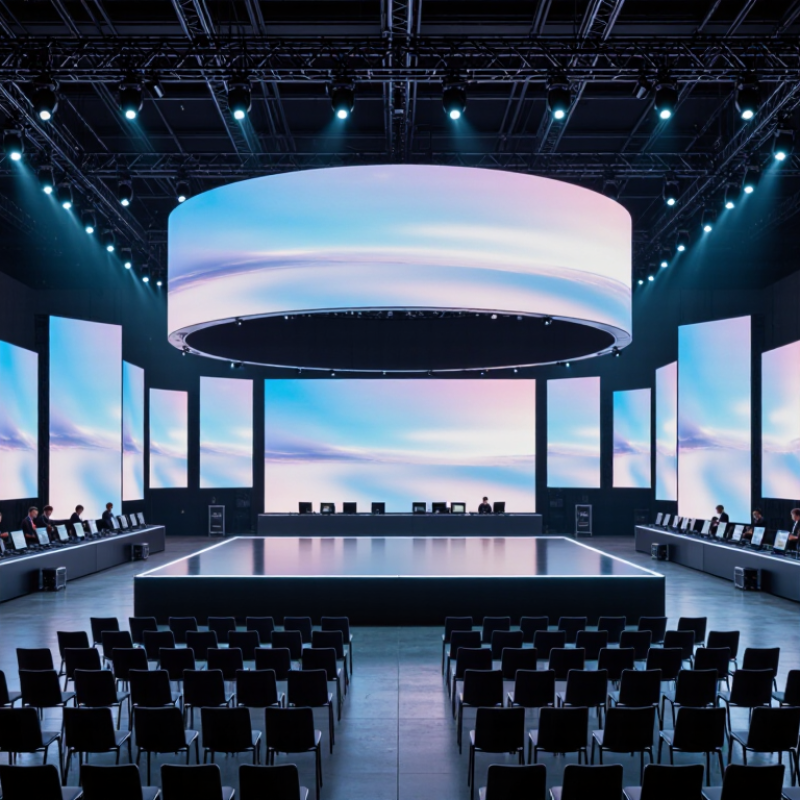
Top 10 LED Screen Rental Suppliers for Global Buyers

How LED Screen Rental Suppliers Serve Global Buyers

Top 10 LED Screen Rental Suppliers for Global Buyers

Global LED screen rental suppliers do more than ship display panels. They help buyers match pixel pitch, brightness, and screen size to venues, viewing distances, and content. A trade-show booth may need crisp text at close range; an outdoor stage needs brighter output and weather-ready equipment. Suppliers also coordinate processors, rigging, spare modules, freight, and local technicians. AVIXA’s 2024 Industry Outlook and Trends Analysis projects the broader professional audiovisual industry will grow from about $325 billion in 2024 to $402 billion by 2029. This is not an LED-rental-only forecast, but it signals rising demand for reliable event technology. Yet cross-border coordination is not flawless; a late customs document or missing cable can disrupt setup.

Tips: Ask for a written equipment list, pixel-pitch specification, and backup plan. Confirm who handles freight, installation, on-site testing, and teardown in each location. Request recent project references for venues similar to yours. Small details matter. Also check that the supplier’s quoted schedule includes time for a full signal test, not just panel assembly. A polished proposal is useful, but clear responsibilities are better.

Key Factors for Evaluating LED Screen Rental Suppliers

When comparing LED screen rental suppliers, look beyond the equipment list. Ask for the exact panel model, pixel pitch, brightness, refresh rate, and viewing distance for your venue. Request a site plan showing screen dimensions, sightlines, cable routes, and power needs.

A demo can mislead. Check whether the supplier has handled similar venues and audience sizes, and ask for references you can contact. Photos help, but a dated project record or direct client feedback offers stronger evidence.

Reliability depends on the people and process behind the panels. Confirm who will install, operate, and troubleshoot the screen, and whether a technician will remain on site during the event.

Ask how spare modules, processors, and cables are stored and delivered if a fault occurs. Get response times and replacement terms in writing. Test the playback system with your actual content before opening; small text and fast motion can reveal problems a showroom clip hides.

Even a careful checklist misses things. Venue access may change, or a power outlet may be farther away than planned, so discuss backup options and assign one contact for last-minute decisions.

Profiles of 10 LED Screen Rental Suppliers Worldwide

This worldwide overview compares ten supplier profiles by practical strengths, not by unsupported performance claims. A European touring-rental supplier may offer lightweight cabinets, spare modules, and crews familiar with rapid venue changes. A UK-based production supplier might focus on indoor conferences, where quiet fans and clean image calibration matter. A North American convention supplier often needs broad inventory and dependable overnight setup. An outdoor-sports supplier may prioritize high-brightness displays, weather protection, and secure ground support. Details vary by project.

An East Asian rental-and-manufacturing supplier can offer access to replacement parts and varied pixel pitches. A Southeast Asian event supplier may serve hotel ballrooms and temporary stages, with compact panels suited to tight load-in routes. A Gulf-region supplier might handle large-format outdoor installations and demanding heat conditions. An African event integrator may combine screen rental with local transport and technical crews. Ask how backup equipment reaches remote venues. It matters.

A Latin American live-event supplier may be experienced with touring shows and changing site conditions. An Australian supplier could specialize in outdoor festivals, where wind planning and long cable runs deserve close attention. These are useful profile types, not endorsements of particular companies. Compare recent project references, cabinet specifications, crew experience, and written contingency plans. A polished demo is not enough. Sometimes, the weakest detail is the delivery schedule.

Comparing Supplier Services, Equipment, and Market Reach

Global buyers comparing LED screen rental suppliers should examine service depth, not just daily rates. Ask whether the quote includes delivery, installation, on-site technicians, and dismantling. A clear scope helps prevent last-minute costs. Details matter.

Equipment comparisons should cover pixel pitch, brightness, refresh rate, and cabinet weight. A fine-pitch screen may suit an indoor conference, while a brighter display can handle a sunlit outdoor stage. Request photos of actual cabinets and recent test reports where available. Also check spare-panel availability and the supplier’s process for resolving dead pixels or signal issues. A specification sheet is useful, but it cannot show how a crew works under a tight load-in schedule.

Market reach is more than a map of service locations. Confirm local inventory, shipping lead times, language support, and whether technicians can reach the venue during the event. Ask for references from projects with similar screen dimensions and audiences. Not always. A supplier with broad coverage may rely on local partners, so clarify who handles equipment checks and service calls. Compare response times in writing, and ask what happens if a flight case arrives late or a backup processor is needed. Even experienced buyers can overlook small details, such as power distribution or access restrictions at the loading dock.

How to Select a Supplier for an International Event

Top 10 LED Screen Rental Suppliers for Global Buyers
How to Select a Supplier for an International Event

Choosing an LED screen rental supplier for an international event takes more than comparing daily rates. Ask for examples of projects with similar screen sizes, viewing distances, and venue conditions. A supplier should explain pixel pitch, brightness, refresh rate, and power needs in clear terms. Request a written equipment list and confirm who handles freight, customs paperwork, installation, and on-site technical support. Small gaps in these details can become expensive on event day.

Tips: Share the venue drawings early. Confirm screen dimensions, rigging limits, local power connections, and delivery times in writing. Ask who provides backup processors and spare modules. Get one named contact for urgent changes, with a reachable phone number and agreed response hours.

For cross-border events, check how the supplier coordinates with local crews and transport providers. Confirm the packing plan, insurance scope, and contingency schedule if freight is delayed. If possible, review a test video or arrange a technical call before signing. A polished proposal is useful, but it cannot prove every part of the service. I would still question vague promises, especially around response times and replacement equipment. Request references and verify that the proposed setup matches your venue, not just a previous event photo.

Top 10 LED Screen Rental Suppliers for Global Buyers — How to Select a Supplier for an International Event Anonymous comparison profiles for supplier screening. Capability figures are illustrative planning ranges, not verified company data or quotations; confirm specifications, availability, and terms directly before booking.
Profile Typical Event Fit Common Rental Pixel Pitch Typical Panel Format Outdoor Readiness Indicative Inventory Scale International Logistics On-Site Support Key Checks for Buyers
Supplier Profile 01 Large touring concerts and festivals 2.6–4.8 mm 500 × 500 mm or 500 × 1000 mm cabinets Outdoor-rated product options; confirm the exact IP rating and permitted operating conditions Large rental fleet; request a dated stock and condition report May coordinate freight for multi-country tours; confirm customs responsibility and local import rules Touring crew and show-day technicians may be available Check cabinet uniformity, spare-panel ratio, touring references, and backup processing equipment
Supplier Profile 02 Corporate conferences and product launches 1.5–2.9 mm 500 × 500 mm fine-pitch cabinets Primarily indoor use; verify any outdoor equipment separately Medium to large stock, often split across event configurations Suitable for advance-planned shipments; confirm delivery windows and venue access coordination Video engineer and installation crew commonly requested as separate line items Ask for camera test results, refresh-rate specifications, calibration records, and a signal-flow plan
Supplier Profile 03 Trade shows and exhibition stands 1.9–3.9 mm Lightweight modular panels, often 500 × 500 mm Indoor-focused; assess ingress protection if the venue is open-air Small to medium stock, with configuration-dependent availability Can work with stand builders or exhibition freight agents; agree delivery and dismantling slots Installation support may be available during build days Confirm rigging or floor-support requirements, fire-safety documentation, and union or venue rules
Supplier Profile 04 Sports venues and outdoor public events 3.9–10 mm Rugged outdoor cabinets, commonly 500 × 500 mm or 500 × 1000 mm Outdoor models available; verify IP rating for front and rear, wind limits, and weather plan Medium to large stock, depending on screen size and event season Regional deployment may reduce transit time; verify local crew and replacement-part access Technicians may support setup, testing, and event operation Check structural calculations, ballast or rigging plan, power distribution, and rain contingencies
Supplier Profile 05 Broadcast, awards shows, and camera-heavy productions 1.2–2.6 mm Fine-pitch cabinets with multiple processing options Usually indoor; outdoor use requires a separately confirmed product and protection plan Specialist stock may be limited; reserve early and confirm matching batches International shipment requires advance technical and customs documentation Video engineering support is important; confirm frame-rate and camera-testing coverage Request refresh rate, scan mode, grayscale performance, color calibration, and camera test procedures
Supplier Profile 06 Brand activations and short-term pop-up events 2.6–4.8 mm Compact modular panels; curved or creative configurations may be offered Indoor options are common; verify enclosure rating for exposed locations Small to medium stock, often optimized for flexible designs Best suited to clearly scheduled shipments; confirm packing, insurance, and return arrangements Setup crew may be available; clarify whether content and playback are included Check shape limitations, control system compatibility, content-format requirements, and replacement lead time
Supplier Profile 07 Large-scale conferences and multi-screen venues 1.5–3.9 mm Standard modular cabinets for walls, banners, and stage screens Indoor systems typically; confirm weather protection for any exterior use Medium to large stock, subject to concurrent event bookings May support international projects through local partners; identify the contracting and servicing entity Local partner support can be useful; confirm response times and responsibility boundaries Verify who supplies processors, cabling, rigging, power, and on-site troubleshooting
Supplier Profile 08 Touring theatre, concerts, and repeat venue dates 2.6–4.8 mm Touring cabinets with quick-lock systems Indoor and outdoor options may be available; match the product to each venue Medium to large stock; touring quantities require early confirmation Tour routing and freight planning may be supported; check cross-border transit buffers Tour crew support may be offered for load-in, show operation, and load-out Confirm cabinet consistency across dates, spare parts, power connectors, and tour-ready packing
Supplier Profile 09 Outdoor festivals and temporary city installations 3.9–8 mm Weather-oriented cabinets, often in larger modular formats Outdoor models may be available; confirm exact IP rating, drainage, wind limits, and temperature range Seasonal availability varies; request a firm allocation and contingency quantity Plan for transport permits, site access, customs clearance, and weather-related schedule changes Ask whether overnight monitoring and emergency replacement support are included Review engineering sign-off, site power, cable protection, weather monitoring, and evacuation procedures
Supplier Profile 10 Regional events requiring rapid deployment 2.6–6 mm Common rental cabinet formats with locally available accessories Depends on regional stock; request product-specific outdoor documentation Small to medium stock held within a regional service area Local sourcing can simplify delivery; verify import status and local compliance documents Regional technicians may be available on shorter notice, subject to event dates Confirm local inventory, crew language, service hours, insurance, and written replacement commitments
Go to Top