
FAQs2024-06-21T06:05:11+00:00

China Top L CNG Refueling Station Manufacturers?

China’s L-CNG/CNG Refueling Station manufacturers serve projects ranging from fleet depots to highway sites. NGV Global’s published market statistics estimate roughly 26 million natural-gas vehicles worldwide, supported by more than 30,000 refueling stations. These figures indicate a substantial installed base, though they do not predict demand at any individual site. That distinction matters.

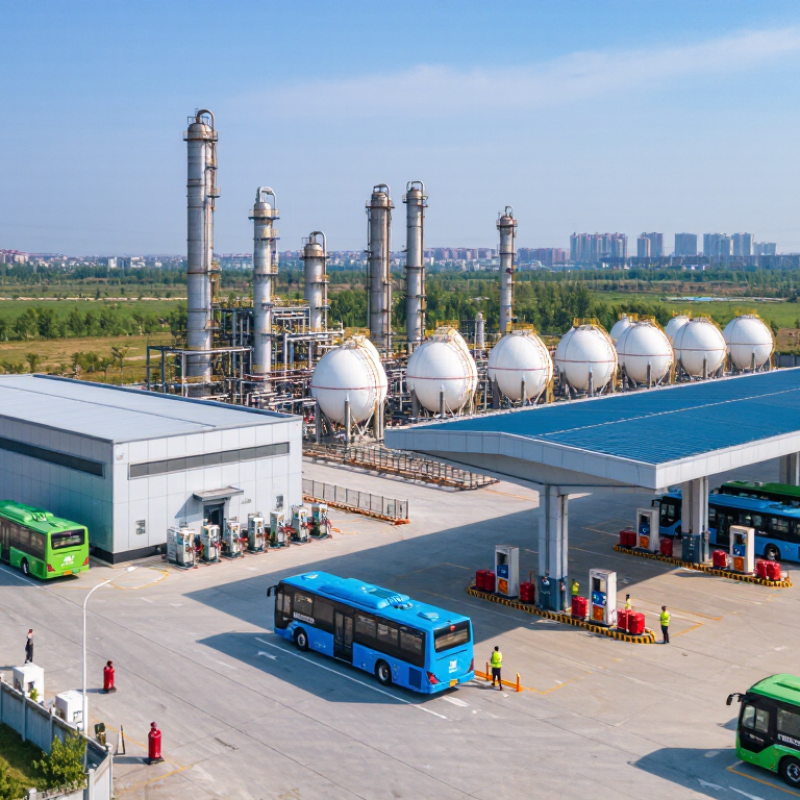
An L-CNG station typically stores liquefied natural gas, then uses pumps and vaporizers to supply compressed gas. Buyers should examine equipment integration, flow capacity, controls, maintenance access, and service support—not just quoted output. A compressor room, cryogenic pump, vaporizer, storage cascade, and dispenser must work as one system. Details count. Site conditions can change the answer.

Climate claims also need care. The International Energy Agency’s Global Methane Tracker 2024 estimates that fossil-fuel operations emitted about 120 million tonnes of methane in 2023. That figure is not specific to refueling stations, but it highlights why upstream leakage and operational monitoring matter when assessing fuel pathways. Natural gas is not automatically low-emission in every supply chain.

This guide compares Chinese manufacturers through practical evidence: project experience, technical documentation, component quality, customization, and after-sales response. Ask for verifiable references and clear performance data. Not every project needs the same configuration. The comparison is a starting point, not a substitute for site-specific engineering review.
China Top L CNG Refueling Station Manufacturers?

L-CNG Stations Explained: LNG Boils at About −162°C at Atmospheric Pressure

At atmospheric pressure, LNG boils at about −162°C, though its exact behavior varies with composition. That temperature makes insulation a working requirement, not a cosmetic feature. LNG absorbs heat from its surroundings and gradually turns into vapor. Cold matters. A storage tank therefore needs suitable insulation, pressure controls, and instruments that operators can read clearly.

An L-CNG station stores LNG in a cryogenic tank, then uses a pump to raise the liquid’s pressure. A vaporizer warms the pressurized LNG into gas before it reaches vehicle dispensers. This process differs from conventional CNG stations, which typically compress incoming gas. Temperature and pressure readings matter throughout the transfer. A small leak or faulty sensor can affect performance, so inspection and maintenance procedures deserve close attention. The equipment is specialized, and no single layout fits every site.

When evaluating Chinese L-CNG station manufacturers, ask how they handle tank insulation, pump performance, vaporizer capacity, and control-system alarms. Request clear operating data and maintenance documentation, not just capacity claims. Check whether the design accounts for local climate and expected vehicle demand. One detail is easy to overlook: operators need practical training, too. Equipment specifications alone do not explain how a real station behaves during changing temperatures or a busy refueling period.

How L-CNG Works: Cryogenic Pumping and Vaporization for 20 MPa CNG Filling

An L-CNG station stores natural gas as a cryogenic liquid in an insulated tank. A cryogenic pump raises the LNG pressure before it enters the vaporizer. Pressurizing liquid requires less energy than compressing an equivalent volume of gas, which can make this route practical where LNG supply is available.

The pressurized LNG passes through a vaporizer, where ambient air or another heat source warms it into gas. Temperature and pressure need close monitoring. The gas then travels through metering and dispensing equipment to fill a vehicle’s cylinder to its specified service pressure, often nominally 20 MPa. The sequence matters.

During operation, staff check for frost, leaks, unusual pump vibration, and stable outlet readings. A cold dispenser line may affect the early part of a fill, so controls must account for changing conditions. Compared with direct gas compression, L-CNG can reduce compression work, but it depends on reliable cryogenic storage and vaporization. That trade-off is easy to underestimate. A poorly insulated tank or uneven heat transfer can disrupt performance. Real sites still need careful commissioning and regular inspection; the process is efficient, not effortless.

Key Equipment and Safety Checks Under China’s GB 50156-2021 Standard

China’s GB 50156-2021 standard provides the design and construction framework for vehicle gas-filling stations. For an L-CNG site, safety checks should follow the approved process design, covering LNG storage, cryogenic pumps, vaporizers, high-pressure piping, and dispensers. Inspect tank supports and pipe joints for corrosion, movement, frost, or visible damage. Small signs matter.

Confirm that pressure gauges and relief devices suit their service conditions, and that emergency shutdown controls are accessible and tested. Verify gas detection and ventilation around enclosed or partly enclosed equipment. Check electrical protection, grounding, fire-control access, and clear escape routes. Keep inspection records tied to equipment identifiers; otherwise, a fault can be difficult to trace during a shift change.

The IEA’s Global Methane Tracker 2024 estimated that fossil-fuel operations released about 120 million tonnes of methane in 2023. This is not a station-specific risk estimate, but it underlines why leak detection and prompt repair deserve routine attention. A practical walk-through should include listening for unusual pump noise, checking detector status, and confirming isolation points are clearly marked. Paper checks alone are not enough. Operators should verify the current standard text and approved project documents, since site conditions can differ—and some checklists may miss that.

China Top L-CNG Refueling Station Manufacturers? – Key Equipment and Safety Checks Under China’s GB 50156-2021 Standard

Use this checklist to compare L-CNG station equipment and project documentation. It summarizes review topics; final design, distances, inspection intervals, and acceptance requirements must be verified against the applicable standard clauses, approved drawings, and current regulations.

System or evaluation area Key equipment or documentation Safety and compliance checks Useful evidence for supplier or project review
LNG storage Cryogenic storage tank, valves, level and pressure instruments, pressure-relief devices Check the approved layout and required separation distances; confirm tank foundations, access, protection from vehicle impact, instrument functions, and safe relief discharge arrangements. Approved equipment data, pressure-vessel documentation where applicable, layout drawings, relief-device records, and commissioning test results
LNG unloading connection Unloading pipeline and couplings, isolation valves, grounding or bonding provisions, emergency shutdown interface Verify secure connections, accessible isolation, clear operating and vehicle arrangements, leak checks, and a documented unloading procedure that addresses abnormal conditions. Piping and instrumentation diagrams, connection specifications, inspection records, and unloading procedure
Cryogenic pumping and pressurization LNG pump, cryogenic piping, pressure and temperature instruments, isolation and check valves Confirm equipment pressure and temperature ratings suit the design conditions; check piping supports, valve accessibility, leak-tightness, and safe response to pump or instrument failure. Design conditions, equipment specifications, pressure or leak-test records, and operating and maintenance instructions
Vaporizer and gas conditioning Ambient-air or other specified vaporizer, outlet temperature and pressure instruments, associated safety devices Check capacity against the design duty, installation clearances and ventilation, instrument alarms, and protection against operation outside specified temperature or pressure limits. Capacity calculations, equipment data, instrument calibration records, and functional test results
High-pressure storage and piping CNG storage cylinders or other approved storage equipment, manifolds, high-pressure piping, pressure-relief devices Verify design pressure, approved arrangement, protection from impact and unauthorized access, relief-device discharge provisions, and required pressure-equipment documentation and inspections. Design and equipment records, applicable registration or inspection documents, pressure-test records, and maintenance plan
CNG dispenser and filling hose Dispenser, meter, hose, nozzle, breakaway device, emergency stop Check rated pressure and compatibility, hose and nozzle condition, leak integrity, metering requirements, emergency-stop operation, and safe vehicle positioning. Equipment specifications, metrology documentation where applicable, hose inspection records, and functional test records
Emergency shutdown system Emergency-stop stations, shutdown valves, control logic, power-loss response Confirm emergency stops are identifiable and accessible, shutdown actions match the approved design, and cause-and-effect functions are tested, including relevant power or signal failures. Cause-and-effect matrix, control drawings, functional test records, and emergency response procedure
Gas detection and alarms Combustible-gas detectors, alarm indicators, control and monitoring equipment Check detector locations against the design and credible leak points; verify alarm indication, calibration, fault reporting, and any linked shutdown functions. Detector layout, calibration certificates or records, alarm test results, and maintenance instructions
Electrical safety and hazardous areas Electrical equipment, wiring, bonding and earthing system, hazardous-area equipment Check equipment selection against the approved hazardous-area classification; verify bonding and earthing continuity, electrical protection, and inspection of relevant installations. Hazardous-area drawings, equipment certificates where required, electrical inspection records, and continuity test results
Fire protection and site layout Fire protection facilities, access routes, signs, barriers, and emergency access provisions Check fire-protection provisions and facility layout against the approved design and applicable GB 50156-2021 requirements; verify that access, escape, and emergency response routes remain unobstructed. Approved general arrangement, fire-protection design documents, inspection records, and site acceptance documentation
Piping, valves, and leak testing Process piping, fittings, isolation valves, supports, and pressure-test points Confirm materials and pressure ratings match the approved design; review installation, inspection, pressure or leak testing, identification, and isolation arrangements. Piping specifications, welding and inspection records where applicable, test reports, and as-built drawings
Operations and maintenance readiness Operating procedures, emergency plans, training records, inspection and maintenance schedules Confirm personnel responsibilities, routine checks, abnormal-operation response, and emergency drills are documented; set inspection intervals according to applicable regulations, equipment instructions, and the site’s approved procedures. Controlled procedures, training and drill records, maintenance logs, and equipment inspection plans

Note: GB 50156-2021 does not replace equipment-specific codes, pressure-equipment requirements, fire-safety rules, or project approval conditions. Confirm exact clause references and numerical separation distances from the current official standard and the approved project documents.

How to Compare Chinese L-CNG Station Manufacturers: Capacity, Reliability, and Service

Comparing Chinese L-CNG station manufacturers starts with the duty the station must perform. Ask for rated daily capacity and peak-hour output, then compare both with your expected vehicle arrivals. A large nameplate figure can look reassuring. It may not reflect performance during repeated refueling peaks. Check the proposed pump, vaporizer, high-pressure storage, and dispenser configuration as one system.

Reliability depends on details buyers can verify. Request operating data from installations with similar weather and demand, plus records of commissioning tests and routine maintenance. Ask how the design handles pump downtime, power interruptions, and cold starts. Spare capacity matters. So does access to replacement seals and valves. A neat equipment list is useful, but it cannot prove dependable service. That distinction is easy to overlook.

Service quality shows up after delivery. Clarify who supervises installation, trains operators, and responds when alarms interrupt refueling. Get response times, spare-parts arrangements, warranty exclusions, and remote-support limits in writing. Ask for a sample maintenance schedule, not only a promise of support. I would compare total downtime risk alongside purchase price; cheaper equipment may cost more if a specialist must travel for every fault. No comparison is perfect, so keep assumptions visible.

Verify Suppliers Through Pressure Ratings, Certifications, and Operating Projects

Choosing an L-CNG refueling station manufacturer takes more than comparing price sheets. Request documented pressure ratings for pumps, storage vessels, valves, and dispensing lines. Confirm that each rating suits the planned inlet conditions and dispensing duty. A small mismatch matters. Ask for pressure-test records that state the test conditions, not just a headline figure.

Review certificates for relevant equipment and the installation location, then check their scope and validity where possible. A certificate for one component does not automatically cover the whole station. Look for traceable material records, inspection plans, emergency shutdown details, and maintenance instructions. These details are less glossy than a brochure. They matter during commissioning.

Operating projects offer practical evidence. Request references from sites with similar throughput, climate, and duty cycle, along with uptime and maintenance records. If you can visit, observe frost patterns, leak-check routines, compressor noise, and operator responses to alarms. Photos help, but they are not proof. I would ask what failed and what changed afterward. Some answers may be incomplete; a candid account can still reveal more than polished claims.

CNG Refueling Station Supplier Verification: Pressure-Reference Check

Illustrative reference for a common 20 MPa CNG vehicle cylinder—not a station-equipment rating or a supplier performance claim.

Use the pressure values as context only: ISO 11439 addresses onboard CNG cylinders, not refueling-station equipment. For supplier due diligence, check the nameplate and design documents for each pressure-bearing station component against the project specification and applicable codes; verify relevant certificates and their scope, then confirm operating projects with documented references.

Go to Top