
FAQs2024-06-21T06:05:11+00:00

Why Choose a High Voltage Distribution Box?

Why Choose a High-Voltage Distribution Box?

Modern electrical systems demand more than simple power delivery. They require controlled routing, dependable protection, and clear maintenance access. A High-Voltage Distribution Box brings these functions into one engineered enclosure. It can distribute power between batteries, inverters, motors, chargers, and other high-energy equipment.

The details matter. Strong busbars reduce unnecessary resistance. Insulated barriers limit accidental contact. Proper sealing helps protect internal components from dust, moisture, and vibration. Carefully selected fuses and contactors can interrupt dangerous fault currents before damage spreads. These features support safer operation in electric vehicles, energy-storage systems, industrial machinery, and renewable-energy installations.

Safety comes first.

William Thomson, Lord Kelvin, remains a respected figure in electrical engineering. His often-cited principle states, “If you cannot measure it, you cannot improve it.” This idea fits high-voltage distribution design. Voltage drop, temperature rise, insulation resistance, and fault performance should be tested, not simply assumed.

A qualified manufacturer also considers enclosure materials, thermal behavior, cable routing, service conditions, and installation errors. Experience shows that small design weaknesses can become costly failures. However, no distribution box can compensate for poor system integration or careless maintenance. That limitation deserves attention.

Choosing the right High-Voltage Distribution Box is therefore an engineering decision, not merely a purchasing decision. The best solution balances electrical capacity, protection, durability, serviceability, and verified compliance. It may not be the smallest or cheapest option. It should be the one that performs reliably when the system is stressed.
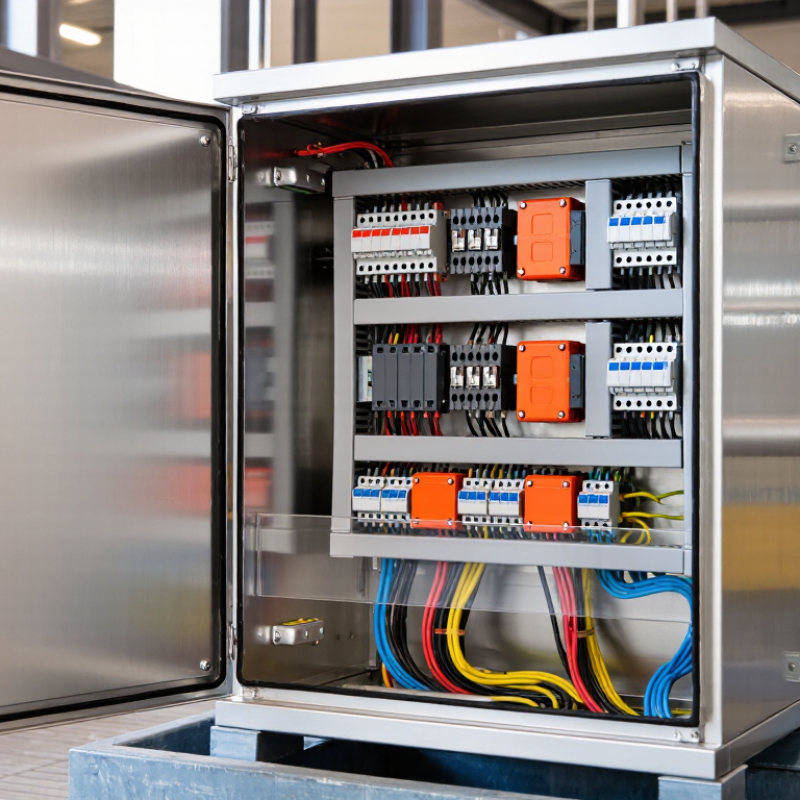
Why Choose a High Voltage Distribution Box?

What Is a High Voltage Distribution Box?

A high-voltage distribution box is a protected electrical unit that routes energy from a battery to several high-voltage loads. It is common in electric vehicles, energy storage systems, and industrial equipment. It is central. The box receives direct current, controls its distribution, and helps isolate circuits during faults or maintenance. Unlike a battery pack, it does not store energy. It manages energy flow.

Inside, copper busbars carry substantial current through carefully arranged paths. Fuses protect against short circuits and excessive current. Contactors connect or disconnect the high-voltage supply. A pre-charge circuit limits the initial current entering capacitors, reducing electrical stress. Sensors may monitor voltage, current, temperature, and insulation conditions. Small parts matter. In practical installations, loose terminals, poor sealing, or incorrect cable routing can create serious heating and reliability problems. The enclosure therefore needs suitable insulation, thermal control, and resistance to vibration and moisture.

Choosing a high-voltage distribution box requires more than checking its rated voltage. Engineers should examine continuous current, peak current, fault capacity, connector design, cooling conditions, and service access. Standards and testing requirements also vary by application and region. A box can look robust yet perform poorly if its internal spacing does not match the operating voltage. That mistake is easy to make. Careful validation under real load conditions often reveals weaknesses that a desk review misses. Even a small temperature rise at one connection deserves attention.

How Does a High Voltage Distribution Box Work?

Why Choose a High Voltage Distribution Box?

A high voltage distribution box controls electrical power inside electric vehicles and energy systems. It receives current from the battery pack and sends it to key loads. These may include the inverter, onboard charger, compressor, and cabin heater. Inside, contactors, busbars, fuses, sensors, and precharge components work together.

How Does a High Voltage Distribution Box Work?

When the system starts, a low-voltage controller checks safety conditions. The precharge circuit slowly raises voltage on the inverter side. This reduces the sudden current surge that could damage electronic components. After the voltage becomes balanced, the main contactors close. Power then travels through protected busbars to different circuits. Sensors monitor current, voltage, and temperature continuously. If a serious fault appears, the contactors open and isolate the battery.

In practical testing, technicians inspect connector tightness, insulation resistance, and heat marks near terminals. A loose connection can create resistance and localized heating. That small issue may become a major failure later. No design is flawless. Sensor accuracy, sealing quality, and service procedures still need careful review.

Tips: Choose a box with suitable voltage, current, protection, and cooling ratings. Check the fuse size against the actual load. Keep high-voltage service procedures documented and use qualified personnel. Never judge safety by appearance alone.

What Components Are Found Inside It?

Why Choose a High Voltage Distribution Box?

Its internal architecture explains the answer. The IEA Global EV Outlook 2024 reported more than 14 million electric cars sold in 2023, nearly 18% of new-car sales. That scale makes controlled high-voltage routing an engineering necessity, not a decorative feature.

The IEA Global EV Outlook 2024 reported more than 14 million electric cars sold in 2023, nearly 18% of new-car sales.

Inside, high-voltage contactors connect or isolate the battery from the inverter, charger, and auxiliary loads. A pre-charge resistor and contactor limit the first current surge. Without that step, capacitors can demand a sharp, damaging inrush. Fuses provide fast protection during severe short circuits. A current sensor measures flow, while an insulation monitor checks leakage toward the chassis. High-voltage interlock loops add another layer. They detect an open connector or service cover before the system is energized. Every connection matters. Seals, creepage distances, shielding, and torque-controlled terminals protect performance against vibration, dust, and moisture.

BloombergNEF’s 2024 Battery Price Survey placed average lithium-ion pack prices at 115 dollars per kilowatt-hour, a 20% annual reduction. Lower pack costs do not make protection optional. Compact boxes still need calibrated fuses, verified isolation, and thermal paths around resistors and contactors.

Field inspections often reveal the weak point: a connector that looks secure but carries heat. Specifications can be excellent on paper. Real service data should challenge them. Engineers should validate each box against the vehicle duty cycle and applicable electrical safety standards.

Why Is It Essential for Electrical Safety and Control?

Why Choose a High Voltage Distribution Box?

A high voltage distribution box is essential because it organizes dangerous electrical energy inside a controlled enclosure. It separates incoming power from outgoing circuits, reducing accidental contact and confusing cable paths. Technicians can isolate sections before inspection or maintenance. That physical separation matters when equipment operates under heavy loads.

Safety depends on more than thick metal walls. A reliable box may include fuses, contactors, insulation barriers, grounding points, and temperature monitoring. These features help limit fault energy and reveal abnormal heating early. Clear labels also improve control during urgent work. A technician should identify each circuit without tracing cables by hand. Small details matter.

In practical installations, poor cable routing can create pressure, heat, or damaged insulation. Moisture and dust can cause trouble too. No enclosure stays safe without regular inspection. Qualified personnel should check torque, grounding, seals, and signs of discoloration against applicable electrical requirements. A useful design is not always the largest one. Oversized spaces can complicate routing, while cramped boxes may restrict cooling. This balance deserves careful review. Some control systems also need service records, although teams sometimes treat paperwork as optional. That is a mistake. Reliable records reveal repeated temperature rises or loose connections before a minor defect becomes a serious hazard.

Why Choose a High Voltage Distribution Box? - Why Is It Essential for Electrical Safety and Control?
Data Dimension Typical Data or Specification Safety and Control Value
Common System Voltage Approximately 400 V DC or 800 V DC in many electric vehicle and energy-storage systems Provides a centralized enclosure for distributing high-voltage power while keeping energized components separated and protected.
High-Voltage Definition In vehicle applications, high voltage is generally above 60 V DC or 30 V AC RMS under UNECE R100 terminology. Establishes when enhanced insulation, controlled access, isolation, and service procedures are required.
Main Switching Device A DC-rated contactor or circuit-breaker selected for the system voltage, continuous current, and interruption duty Enables remote power isolation and controlled energization during operation, maintenance, or emergency shutdown.
Pre-Charge Circuit A resistor and switching path used before closing the main contactor Limits inrush current into capacitive loads, reducing contact welding, electrical stress, and nuisance trips.
Overcurrent Protection DC fuses or circuit-breakers sized according to conductor capacity, load current, and prospective fault current Interrupts excessive current and helps limit damage caused by short circuits or overloads.
Insulation Monitoring An insulation-monitoring device can continuously measure resistance between the isolated DC system and chassis or earth. Provides early warning of insulation deterioration and reduces the risk of electric shock or unintended current paths.
Interlock and Service Disconnect A high-voltage interlock loop and, where required, a manually removable service disconnect Detects open covers, disconnected connectors, or removed service devices and can command the system to de-energize.
Ingress Protection The enclosure rating is selected for the installation environment; IP ratings are defined by IEC 60529. Helps protect against solid objects, dust, and water when the enclosure is correctly designed, installed, and maintained.
Isolation and Creepage Clearance and creepage distances are selected according to working voltage, pollution degree, material group, and applicable standards. Reduces the likelihood of arcing, tracking, and insulation breakdown between conductive parts.
Thermal Management Busbars, terminals, fuses, and contactors are rated for continuous current and the permitted temperature rise. Prevents excessive heating, improves component life, and supports stable operation under continuous loads.
Voltage and Current Monitoring Voltage sensors and current sensors provide real-time electrical measurements to a supervisory controller. Supports load management, fault diagnosis, protective shutdown, and accurate system-status reporting.
Applicable Assembly Framework IEC 61439-1 and IEC 61439-2 address low-voltage switchgear and controlgear assemblies up to 1,000 V AC or 1,500 V DC, where applicable. Provides a structured basis for design verification, temperature-rise evaluation, dielectric performance, and short-circuit considerations.
Primary Benefit Centralized power distribution, protection, monitoring, and isolation in one engineered enclosure Improves electrical safety, simplifies service procedures, reduces wiring complexity, and enables coordinated system control.
Note: Actual voltage, current, fuse, contactor, insulation, thermal, and enclosure requirements must be selected through the system design and validated against the applicable regional standards and installation conditions.

How Should You Select the Right Distribution Box?

Choosing the right high voltage distribution box starts with the electrical system, not the enclosure’s appearance. Confirm the system voltage, continuous current, peak load, and expected short-circuit current. A box with insufficient fault capacity can fail dangerously. Leave room for future circuits, but avoid excessive internal space that complicates thermal control.

Check the installation environment carefully. An outdoor cabinet may face rain, dust, salt air, vibration, or sudden temperature changes. Select suitable ingress protection, corrosion resistance, insulation, and cooling performance. Cable entry points need proper sealing, while busbars and terminals require safe clearance distances. Small details matter here. They often do.

Protection functions should match the application. Review fuses, disconnect devices, monitoring sensors, grounding arrangements, and emergency isolation requirements. Verify compliance with applicable electrical standards through reliable test reports and traceable documentation. Ask for temperature-rise data, insulation ratings, and routine inspection procedures. Do not rely on a sales sheet alone.

Maintenance access also affects the decision. Technicians should reach terminals without removing unnecessary components. Clear labels, organized wiring, and visible status indicators reduce troubleshooting time. I have seen projects focus heavily on initial cost and overlook service space. That choice seemed efficient, but later repairs became slower and more expensive. Before ordering, compare the technical design, site conditions, installation method, and long-term maintenance plan with a qualified electrical engineer.

Go to Top