
FAQs2024-06-21T06:05:11+00:00

Why Choose Custom Tractor Trailers for Your Business?

A standard trailer can handle many jobs, but it may not fit the way your business actually works. A crew carrying compact equipment has different needs from one hauling bulky materials or making frequent deliveries. The right setup can affect loading time, cargo protection, towing compatibility, and how smoothly a workday runs. Small details count.

Custom Tractor Trailers let businesses consider practical features such as deck dimensions, ramp placement, tie-down locations, storage compartments, and lighting. Those choices should match the equipment being hauled and the towing vehicle’s rated capacity. A carefully planned trailer can reduce awkward loading and help keep tools accessible. It still needs regular inspection and maintenance.

Customization is not automatically the better choice. Added features can increase purchase and upkeep costs, while an unusual design may be harder to adapt when business needs change. That deserves a second look. Before requesting quotes, list typical loads, routes, loading methods, and must-have features. Ask manufacturers how design choices affect weight, serviceability, and compatibility, and verify specifications against the vehicle and applicable requirements. Clear answers matter more than a long options list.

This guide explores when a custom build makes sense, which features may support daily operations, and what to consider before investing. The goal is not to make every trailer unique. It is to help you choose a dependable setup that fits real work, not just a sales brochure.
Why Choose Custom Tractor Trailers for Your Business?

What Custom Tractor Trailers Are and How They Differ from Standard Models

A custom tractor-trailer is a truck-and-trailer setup tailored to specific work. The changes may involve trailer dimensions, axle placement, deck height, storage, or tie-down points. They can also include features such as reinforced flooring or a particular door arrangement. The tractor may need compatible equipment, too. Details matter.

Standard models are built around common dimensions and widely used configurations. That often makes them easier to source, service, and replace. A custom model, by contrast, can better match a regular route or a recurring load. For example, a lower deck may help with loading certain equipment, while carefully placed tie-downs can reduce awkward securing angles. Small changes can save time. Not every change helps.

The trade-off is worth examining before ordering. Custom specifications may add cost and delivery time, and less common components can be harder to replace. It is easy to overbuild. Start with measured loads, loading methods, route conditions, and the tractor’s capacity; then confirm the design with a qualified trailer professional. A feature that looks useful in a drawing may be inconvenient during daily loading. Standard models can be the better fit when work varies often or requirements are still uncertain.

How to Match Trailer Design to Your Business Operations

Why Choose Custom Tractor Trailers for Your Business?

How to Match Trailer Design to Your Business Operations

A useful trailer starts with the work it must do each day. List typical cargo, loaded weights, loading methods, and route conditions before choosing a design. A landscaping crew may need tool storage and side access, while a machinery hauler may rely on a low deck and sturdy ramps. Measure the equipment, including attachments; a few overlooked inches can complicate loading. That matters. Match deck length and width to the largest regular load, not just an occasional oversized job. Then check turning space, parking, and the tractor’s towing capacity with a qualified trailer professional.

Daily handling deserves equal attention. If workers load from the sides, removable rails or accessible tie-down points may save time. If cargo is exposed to rain or road spray, consider suitable covers or enclosed storage. Specify practical details, such as ramp angle, deck height, lighting, and where chains or straps will be kept. Small choices add up. It is tempting to request extra capacity and features for every possible job. But more weight, length, or equipment can make routine trips less convenient and costly. Review several real work scenarios with the builder, then question the design against your actual routes and loading habits. A plan can look perfect on paper and still feel awkward at the job site.

Why Choose Custom Tractor Trailers for Your Business? — How to Match Trailer Design to Your Business Operations

Business Operation Suitable Trailer Design Typical Configuration Useful Custom Options Why It Fits Key Planning Considerations
Packaged goods and general freight Dry van Commonly 48–53 ft long, with enclosed cargo space and swing or roll-up rear doors Load bars, logistics posts, E-track, side-access door, liftgate, and interior lining Protects palletized or boxed freight from weather and road debris; a familiar format for dock loading Check dock height, pallet layout, door clearance, axle limits, and the liftgate’s effect on payload and maintenance
Temperature-sensitive food, flowers, or medical products Refrigerated van Typically a 48–53 ft insulated trailer with a powered refrigeration unit Multi-zone temperature control, temperature monitoring, insulated bulkhead, and compatible loading equipment Supports controlled-temperature transport when cargo requirements and delivery routes are known Specify the required temperature range, airflow, washdown needs, and service access; refrigeration performance depends on operating conditions
Construction materials, machinery, and irregular freight Flatbed Commonly 48 or 53 ft, with an open deck; deck height and axle arrangement vary by design Stake pockets, rub rails, winches, removable headache rack, additional tie-down points, and tarp systems Allows loading from the side or above and accommodates cargo that cannot be enclosed in a standard van Plan securement points, load distribution, weather protection, cargo overhang, and applicable permit requirements
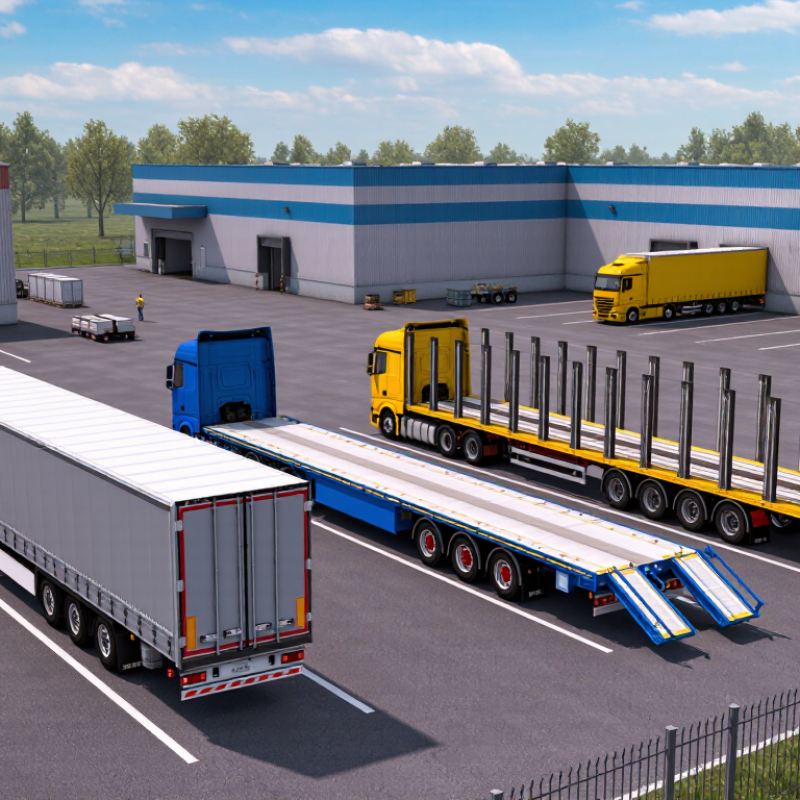
Oversized or heavy equipment transport Lowboy or detachable gooseneck trailer Low deck height with a configuration selected for the cargo’s dimensions, weight, and loading method Removable gooseneck, ramps, deck extensions, extra axles, and equipment-specific tie-down locations A low deck can reduce the overall loaded height, while loading features can simplify equipment movement Confirm loaded height, axle loading, route clearances, tractor compatibility, and permit needs before specifying the trailer
Bulk grain and other dry agricultural products Hopper-bottom trailer Multiple hopper compartments with bottom discharge gates; capacity varies by trailer design and commodity Compartment layout, gate controls, access ladders, tarp system, and discharge features matched to receiving equipment Enables gravity unloading and can help separate loads when different products or destinations are involved Match gate position and unloading clearance to the site; account for product density, moisture, cleaning, and loading limits
Liquid products or bulk materials requiring sealed transport Tanker trailer Tank size, shape, material, and compartment arrangement depend on the product and applicable requirements Product-compatible tank material, baffles where appropriate, insulation, heating, and specified valves or fittings A purpose-configured tank can support controlled loading, transport, and discharge for compatible liquids or materials Specify the product, temperature, cleaning method, and loading system; tank design and operating requirements are product-specific

Planning note: Dimensions and configurations shown are common examples, not guaranteed specifications. Usable payload depends on trailer tare weight, tractor and axle configuration, cargo distribution, and applicable weight and size regulations. Confirm requirements with a qualified trailer designer and the relevant authorities.

Key Customization Options for Capacity, Cargo, and Equipment

A custom tractor trailer should fit the loads your business actually moves, not an idealized average. Start with typical payload weight, cargo dimensions, and loading frequency. A longer deck may help with oversized materials, while extra axle capacity can support heavier loads. Check turning space and route conditions too. More capacity is not always more useful.

Cargo needs shape practical choices. Enclosed bodies help shield packaged goods from rain and road dust, while curtains or removable sides can speed access. Tie-down rails, stake pockets, and interior blocking points keep loads steadier during transit. Equipment matters just as much: ramps, liftgates, tool storage, or temperature controls may reduce handling time. Choose features workers can operate safely and maintain with available support. A rarely used add-on can become costly weight.

Tips: Measure twice. Record the largest load, pallet spacing, and dock height before ordering. Ask drivers and maintenance staff to review the layout; they may spot a clearance issue drawings miss. Leave room for changing work, but be honest about which options will sit unused. Customization is a trade-off, and the first specification may need revision after real operating experience.

Business Benefits of a Trailer Built for Specific Workloads

Why Choose Custom Tractor Trailers for Your Business?

A trailer built for a specific workload can make daily operations smoother. Deck length, axle placement, loading height, and tie-down points can match the cargo and handling equipment your team actually uses. That fit may reduce awkward loading and wasted space. Small details matter. The Federal Highway Administration’s Freight Analysis Framework projects U.S. freight tonnage will rise from about 18.4 billion tons in 2022 to 26.4 billion by 2050. More freight does not mean every business needs a custom trailer, but changing loads make flexibility worth examining.

The cost case deserves attention. The American Transportation Research Institute’s 2024 Operational Costs of Trucking report put average truck operating costs at $2.270 per mile in 2023. That figure is not a promised saving from customization. It does show why payload use, loading time, and avoidable trips deserve careful review. For example, a construction operator carrying compact equipment may value a low loading angle and reinforced points, while a refrigerated carrier may prioritize insulation and airflow. Match the design to measured work, not assumptions.

Custom builds can also bring trade-offs. Added structure may increase weight, purchase cost, or maintenance demands. A useful starting point is a week of load records: cargo dimensions, weights, loading methods, and route conditions. Then compare a tailored specification with a standard trailer over its expected service life. Be honest about uncertain workloads. A perfect fit today can become limiting when the business changes.

Factors to Weigh When Planning a Custom Trailer Investment

A custom tractor trailer should solve a recurring work problem, not just look impressive. Start with the loads you carry most often. Record their weight, length, and loading method, then note any unusually bulky jobs. A trailer built around rare exceptions may add cost every day. Measure your usual loading dock, yard turns, and storage space. Small clearances matter.

Match the design to routes and working conditions. Rough access roads may call for stronger suspension and protected components, while frequent stops can make easy-to-reach tie-downs more valuable. Consider deck height, axle arrangement, braking needs, and materials with a technician who understands your operating pattern. Ask how each choice affects payload, maintenance, and repair access. Details count. A lighter structure may improve usable capacity, but only if it suits the loads and service demands.

Set a full ownership budget before approving drawings. Include fabrication, delivery, inspections, tires, routine service, and likely downtime. Compare these costs with the hours saved or extra work handled each week. Be cautious with projected savings; they often look cleaner on paper than in a muddy yard. Lead times also matter if seasonal work is approaching. Keep some room for revisions, since the first specification may miss a practical detail your drivers notice. Define which dimensions and components can change before production begins.

Go to Top