
FAQs2024-06-21T06:05:11+00:00

Why Choose a Slim Smart Lock for Global Sourcing?

A Slim Smart Lock is more than a smaller lock body. It is a compact access system designed for doors where every millimeter matters. For global sourcing teams, that difference affects installation, packaging, battery placement, software integration, and after-sales service.

Jason Johnson, co-founder of August, said, “The smart home is about making life easier.” That principle matters when evaluating a Slim Smart Lock from overseas suppliers. A thin interior module can preserve hallway space and reduce visual clutter. However, a smaller design may leave less room for batteries, motors, sensors, and protective components. Buyers should test torque performance, battery endurance, emergency access, and operation across different door thicknesses.

Details reveal quality.

Experienced sourcing teams request production samples before placing large orders. They check cylinder compatibility, mounting stability, app responsiveness, firmware-update procedures, and resistance to dust and moisture. They also review factory quality controls, traceability records, packaging tests, and documented security practices. Regional requirements may differ, so compliance evidence should be verified for each target market.

The cheapest quotation can become expensive after installation failures, delayed replacement parts, or unclear software support. That is an uncomfortable reality. Supplier claims also need independent checking. A reliable partner should explain limitations, not only promote features.

Choosing a Slim Smart Lock therefore requires more than comparing prices. It requires practical testing, technical judgment, transparent documentation, and a realistic view of long-term ownership. The best global sourcing decision may not be the thinnest model. It may be the one that performs consistently in ordinary homes, under ordinary pressure.
Why Choose a Slim Smart Lock for Global Sourcing?

Slim Smart Locks: Definition and Core Design Features

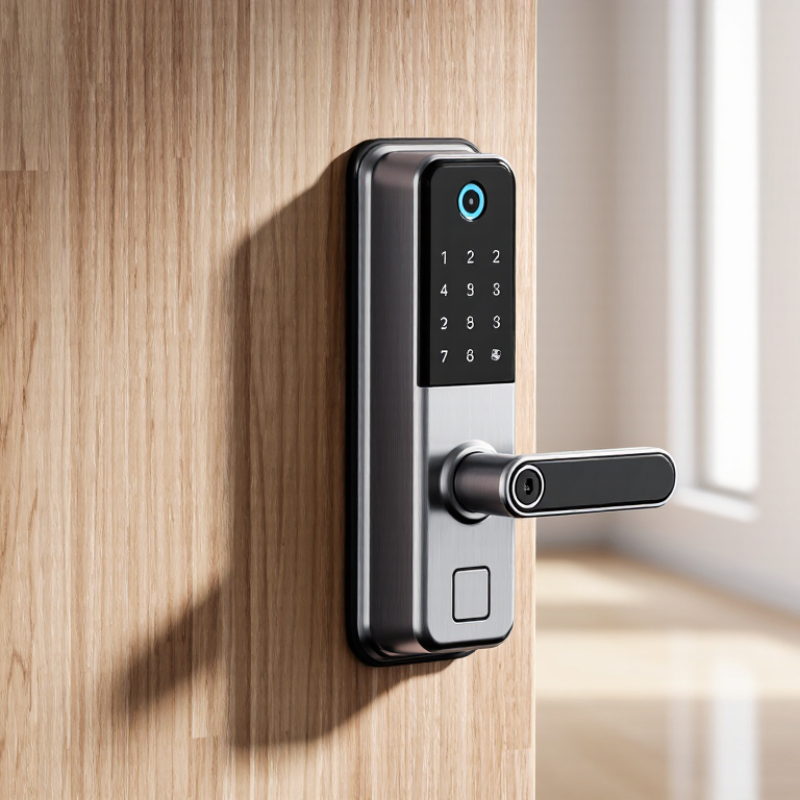
A slim smart lock is an electronic locking device designed with a narrow body and compact internal mechanism. It connects digital access with a smaller footprint than traditional smart locks. This design suits apartments, offices, and doors with limited clearance. It also supports cleaner interior styling.

The core feature is compact engineering. A thin motor drives the locking bolt without adding excessive weight to the door. Built-in sensors can detect bolt position, door status, and unusual movement. Many models support Bluetooth, Wi-Fi, keypad entry, or temporary digital keys. Battery access should remain simple. A hidden cover is attractive, but difficult replacement creates real frustration.

For global sourcing, suppliers should provide measured drawings, battery data, material details, and test records. Check the lock against different door thicknesses, cylinder types, and installation angles. A sample may work smoothly in a showroom, yet fail after dust, humidity, or repeated use. That trade-off deserves attention. Slimness is not automatically better.

Reliable evaluation includes cycle testing, wireless stability checks, emergency power testing, and manual override inspection. Ask how the product protects stored access data and limits unauthorized entry. Regional requirements may differ, so documentation must be current and traceable. In my experience, the smallest lock often demands the most careful installation review. A few millimeters can change everything.

How Slim Smart Locks Compare with Conventional Locking Systems

When evaluating a slim smart lock, compare it with a conventional lock beyond appearance. I have handled installations where a narrow design fit neatly on a glass office door or a compact apartment frame. Traditional locks usually need less space and rarely depend on software. However, they require physical keys, rekeying, and manual access tracking. A slim smart lock can use a keypad, mobile credential, or temporary code. That changes daily access management.

In apartments, hotels, and shared workplaces, digital entry records can reduce disputes about who entered and when. Remote permission changes also remove the need to deliver spare keys. Yet batteries need regular inspection. Connectivity may fail during a network outage. A mechanical key remains useful in emergencies, but its storage creates another security concern. Not perfect.

For global sourcing, buyers should check door thickness, backset measurements, cylinder types, and local installation practices. A lock that fits one market may require extra spacers elsewhere. Suppliers should provide documented testing for cycle life, weather resistance, battery safety, and data protection. Independent test reports are more reliable than polished product claims. Ask for replacement parts and clear warranty procedures before placing large orders. I would also examine the mobile application’s language support and offline functions. Some buyers focus too heavily on a thin housing. That assumption can hide weak hinges, poor sealing, or difficult maintenance. Small details affect long-term value.

Why Choose a Slim Smart Lock for Global Sourcing?

Slim smart locks combine a low-profile design with digital access capabilities. Compared with conventional mechanical locking systems, they can support more access methods, remote management, and entry activity records while preserving physical key access on selected models.

Comparison based on commonly available product functions. “1” indicates that the function is normally available within the product category; actual specifications vary by model and supplier.

Key Benefits for International Buyers and Global Sourcing

Why Choose a Slim Smart Lock for Global Sourcing?

For international buyers, slim smart locks offer easier installation across varied door designs. Their compact bodies reduce clearance problems in apartments, offices, and hospitality projects. Grand View Research estimates that the global smart lock market will grow at about 19.6% annually from 2024 to 2030. That growth creates opportunity, but it also increases sourcing pressure. Buyers must check dimensions, battery access, connectivity, and replacement parts before approving samples. A smaller housing is useful. It is not automatically better.

Global sourcing teams can benefit from lower packaging volume and simpler warehouse handling. Every millimeter matters when thousands of units cross borders. The World Bank reports that trade costs remain a major barrier for developing markets, making efficient packaging and predictable documentation valuable. Suppliers should provide carton measurements, gross weight, test records, and clear installation guides. Regional compatibility matters too. Wireless frequencies, door thickness, emergency power options, and data security expectations can differ. These details often decide whether a product survives field testing.

MarketsandMarkets projects the smart lock market to reach about 4.4 billion dollars by 2028. Buyers should therefore assess long-term support, not only the initial unit price. Ask for firmware update procedures, warranty terms, spare components, and failure-rate data. A slim design may leave less internal space for stronger batteries or mechanical parts. That trade-off deserves honest testing. Sometimes, the thinnest model is not the most reliable choice.

Why Choose a Slim Smart Lock for Global Sourcing? - Key Benefits for International Buyers and Global Sourcing

Sourcing Dimension Typical Slim Smart Lock Specification or Range Key Benefit for International Buyers Global Sourcing Consideration Recommended Verification
Lock body depth Approximately 20–35 mm for selected slim interior modules; exact dimensions vary by design. Fits more doors and creates less visual impact than bulkier assemblies. Door thickness, backset, spindle position, and existing mortise geometry differ by market. Request dimension drawings, installation templates, and samples for the target door profiles.
Door compatibility Common residential door thickness ranges are approximately 35–60 mm, depending on the lock format. A broader compatibility range can reduce SKU complexity and support more destination markets. Cylinder, mortise, latch, and hinge standards are not uniform worldwide. Confirm compatibility with local door standards and test at least one door sample per priority market.
Access methods Common options include PIN code, mechanical key, RFID or NFC card, fingerprint, mobile app, and temporary passcode. Multiple entry methods support residential, rental, hospitality, and serviced-apartment applications. Preferred methods vary by region, user group, privacy expectations, and property type. Check the access-method mix, emergency override, user-capacity limits, and audit-log functions.
Wireless connectivity Bluetooth Low Energy is common for local access; Wi-Fi or a separate gateway may be used for remote access. Local Bluetooth operation can lower power consumption, while gateway options enable remote management. Radio requirements, app availability, cloud hosting, and data-transfer rules can differ by destination. Verify frequency bands, gateway requirements, regional app support, firmware updates, and offline behavior.
Battery performance Many battery-powered designs use 4 AA or 4 AAA cells; advertised operating life commonly ranges from 6–12 months under stated conditions. Standard replaceable batteries simplify after-sales support and reduce dependence on local charging infrastructure. Actual life depends on lock cycles, connectivity, temperature, battery quality, and motor load. Run cycle tests using the intended battery type and define a low-battery alert and emergency power procedure.
Emergency entry Typical solutions include a concealed mechanical keyway, external USB-C or micro-USB emergency power, or a 9V contact point. Provides access continuity during battery depletion, connectivity failure, or mobile-device loss. Emergency procedures should be understandable to users and acceptable to local security requirements. Inspect the override mechanism, test it repeatedly, and require clear multilingual instructions.
Weather resistance Outdoor ratings may range from basic indoor protection to IP65 or higher, depending on the exterior component. A suitable ingress-protection level expands use in exposed entrances and humid environments. IP ratings apply to defined test conditions and do not automatically confirm corrosion or freeze resistance. Request test reports and evaluate sealing, corrosion resistance, temperature range, and drainage design.
Security functions Relevant functions may include auto-lock, anti-peep PIN entry, failed-attempt lockout, tamper alerts, and encrypted communication. Layered controls can improve user confidence and support property-management requirements. Security claims must be supported by documented design controls and testing rather than feature lists alone. Review cybersecurity documentation, penetration-test scope, credential management, and firmware-update policy.
Materials and durability Common exterior materials include zinc alloy, stainless steel, aluminum alloy, and engineering plastics. Appropriate material selection balances slim design, weight, corrosion resistance, and production cost. Salt spray, humidity, UV exposure, and temperature conditions vary significantly between markets. Define material grades, coating requirements, cycle-life targets, and environmental test conditions in writing.
Compliance planning Potential requirements may cover electrical safety, radio equipment, electromagnetic compatibility, batteries, privacy, and chemical restrictions. Early compliance planning reduces customs delays, relabeling work, and market-entry risk. Applicable rules depend on the destination country, wireless functions, power source, and sales channel. Build a country-specific compliance matrix and obtain current laboratory reports before shipment.
Packaging efficiency Slimmer assemblies can reduce package volume when protection, accessories, and installation hardware are efficiently arranged. Lower dimensional weight can improve container utilization and international freight planning. Packaging savings depend on carton dimensions, protective materials, order quantity, and shipping mode. Compare packed dimensions, gross weight, units per carton, drop-test results, and pallet configuration.
Customization potential Possible options include finish, keypad layout, language, packaging, firmware settings, and mechanical interface. Controlled customization helps buyers meet regional preferences without creating unnecessary product complexity. Changes to hardware or firmware may affect tooling, certification, lead time, and minimum order quantity. Separate standard features from chargeable options and approve a golden sample before mass production.
Total landed cost Cost elements include product price, gateway or accessories, packaging, freight, duties, testing, installation, and after-sales support. A complete cost model prevents a low purchase price from hiding higher deployment or service expenses. Taxes, import classification, local installation labor, returns, and warranty logistics vary by country. Compare suppliers using the same specification, Incoterm, order quantity, warranty terms, and delivery destination.
Note: Specification ranges are indicative market-planning values, not universal standards. Final selection should be based on destination-country regulations, door compatibility, laboratory reports, and sample testing.

Technical, Security, and Compatibility Factors to Evaluate

Why Choose a Slim Smart Lock for Global Sourcing?

A slim smart lock saves space around narrow doors and modern handles. However, compact design must not weaken the internal mechanism. During a sample-door inspection, check the backset, lock body depth, cylinder position, and thumb-turn clearance. Measure twice. A lock that fits one door may fail on another. Confirm materials, corrosion resistance, battery access, and the stated operating temperature. An IP rating helps, but it does not replace real installation testing.

Security needs more than a keypad or mobile application. Look for encrypted communication, secure boot, signed firmware, and protected credential storage. Audit logs should record access events without exposing unnecessary personal data. A mechanical override can support entry during battery failure, but it must resist casual tampering. Test failed PIN limits, temporary credentials, remote revocation, and offline behavior. Some suppliers describe these features vaguely. Ask for test reports and clear technical evidence.

Compatibility is equally important for global sourcing. Confirm support for common wireless standards, regional frequency requirements, voltage ranges, and local network conditions. Check whether the lock works with existing access systems, property software, and voice or automation platforms. Firmware updates should remain available after installation. This point is often overlooked. Also review installation tools, spare parts, language options, and warranty response times. A slim product may look efficient, yet its total ownership cost can rise when integration is poor. Testing a small batch before a large order is slower, but usually wiser.

A Practical Process for Selecting a Slim Smart Lock Supplier

Why Choose a Slim Smart Lock for Global Sourcing?

A slim smart lock suits narrow doors, metal frames, and renovation projects with limited clearance. Grand View Research valued the global smart lock market at approximately USD 2.49 billion in 2022. It also projects strong growth through 2030. That growth increases supplier choices, but not necessarily supplier quality.

A practical selection process starts with the door. Measure backset, lock body depth, cylinder length, handle position, and available battery space. Request engineering drawings, not only product photos. Ask suppliers for sample units from the intended production line. Test installation on several door materials. Check motor noise, emergency access, battery replacement, and connection stability. Small details matter.

They often become expensive problems.

I have learned that a polished sample can hide weak production controls. Our early supplier checklist focused too heavily on appearance. That was a mistake. Now, we review incoming inspection records, failure rates, tooling ownership, traceability, and after-sales response times.

A factory audit should include assembly areas and aging-test records. Verify applicable safety, radio, privacy, and market-entry requirements for each destination. MarketsandMarkets forecasts the smart lock market could reach about USD 4.4 billion by 2028, showing why scalable production deserves attention. Compare quotations only after confirming materials, firmware support, packaging, minimum order quantities, and replacement-part terms. The cheapest offer is rarely the lowest total cost.

Go to Top