How to Choose the Best AA Lithium Ion Battery in 2026?
Choosing the best aa lithium ion battery in 2026 takes more than comparing package claims. Look past the large mAh number. Check usable energy in watt-hours, regulated output voltage, protection features, charging method, and verified cycle-life data. For a 1.5-volt AA replacement, confirm that the battery suits the device; some sensitive electronics respond poorly to different voltage behavior. A flashlight, wireless mouse, and camera impose different loads. Fit matters, too.
The International Energy Agency’s Global EV Outlook 2024 reports that electric-vehicle battery demand exceeded 750 GWh in 2023. That figure describes a much larger market, not AA cells. Still, it shows why clear testing and performance data matter across lithium-ion products. For AA-sized cells, seek manufacturer specifications and independent tests that state the load, temperature, and cutoff voltage. A capacity figure without test conditions tells only part of the story. Small detail. Big difference.
Battery researcher Dr. Jeff Dahn’s work offers a useful buying principle: evaluate durability over repeated cycles, not just a fresh charge. That is a paraphrase of his research focus, not a direct quotation. Compare real runtime, low-temperature performance, self-discharge, and the warranty. Also check whether the charger is included or proprietary. One honest caveat: public, apples-to-apples test data for AA lithium-ion cells remains limited. Treat bold claims cautiously. In this guide, we’ll separate measurable specifications from marketing language, so your choice fits the device and the way you actually use it.
What Is an AA Lithium-Ion Battery in 2026?
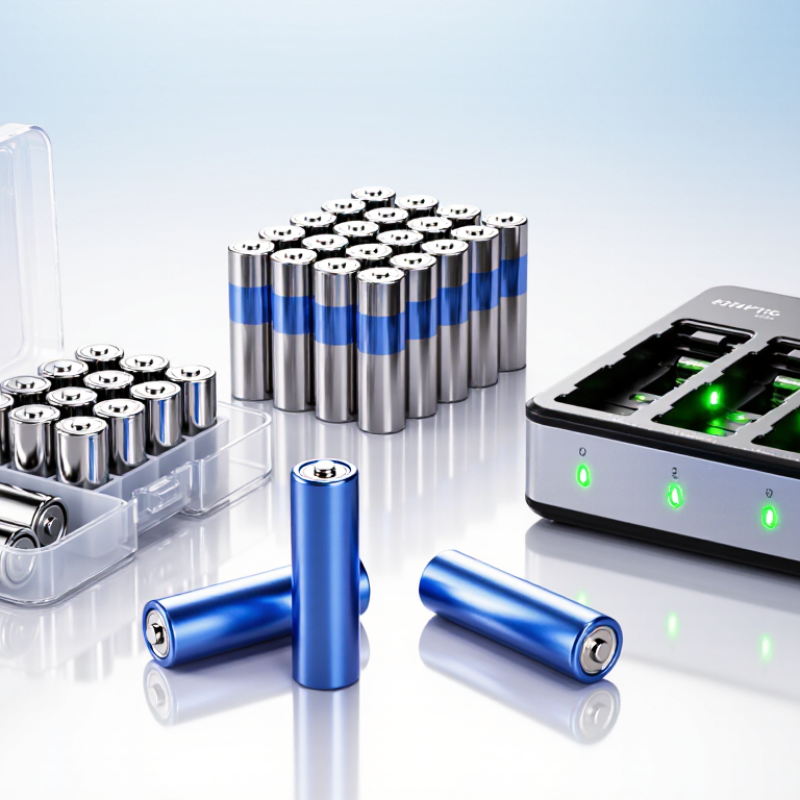
An AA lithium-ion battery is a rechargeable cell in the familiar AA size, but the name can hide an important electrical difference.
A conventional lithium-ion cell typically has a nominal voltage around 3.6 or 3.7 volts, much higher than the 1.5 volts expected by many AA devices. Some products use internal electronics to provide a regulated 1.5-volt output; others deliver the cell’s higher voltage directly. Check the label and device manual before buying. The IEC 60086-2 standard defines the common AA size as approximately 14.5 millimetres in diameter and 50.5 millimetres long.
Same shape, not necessarily same behavior.
Do not confuse rechargeable lithium-ion AA cells with non-rechargeable lithium-metal AA batteries.
They use different chemistries and charging rules. A 2024 International Energy Agency report found that lithium-ion battery prices fell 14 percent in 2023, reflecting wider manufacturing and supply-chain changes—not a guarantee that every AA cell is cheaper or better. Small details matter: a camera flash may tolerate voltage changes that a remote control cannot.
Not always.
Look for stated output voltage, capacity in milliamp-hours, charging method, and protection circuitry. Capacity figures are difficult to compare when products use different output voltages or test conditions. I would treat unusually large claims cautiously and check the manufacturer’s technical sheet.
This is easy to misread.
A familiar AA outline does not make every lithium-ion cell a safe substitute.
How Do Its Voltage, Capacity, and Chemistry Affect Performance?
When choosing an AA lithium-ion battery in 2026, check voltage before comparing capacity. Many rechargeable lithium-ion cells have a nominal voltage near 3.6 or 3.7 volts, higher than the 1.5 volts expected by ordinary AA devices. That difference matters. A cell with built-in voltage regulation may provide a steady 1.5-volt output, but its internal design and charging method can differ. Check the device manual, not just the battery’s shape.
Capacity, usually listed in milliamp-hours, estimates how much charge a cell stores. It can help predict runtime, but it is not the whole story. For a fair comparison, consider watt-hours and the battery’s rated output voltage. A camera flash drawing high current may behave differently from a wall clock. Real runtime also depends on temperature, battery age, and the device’s power use. Ratings are useful, but they are not promises.
Chemistry and protection circuitry affect how a cell handles charging, heat, and repeated use. Look for clear specifications, compatible charging instructions, and safeguards against overcharge or short circuit. A regulated cell may suit a device requiring 1.5 volts, while a higher-voltage cell may not. I would not choose by capacity alone; I have found that the voltage label is easier to overlook than it should be. Check both.
Which Devices and Charging Systems Are Compatible?
AA size does not guarantee electrical compatibility. IEC 60086-2 specifies common AA dimensions, but lithium-ion AA cells may have different output voltages and charging methods. Many provide regulated 1.5-volt output through internal electronics. Others are 3.6- or 3.7-volt 14500 cells, which can damage devices designed for ordinary AA batteries. Check the device manual and cell label before use. A camera flash or toy may also draw more current than a low-drain remote control.
Charging matters just as much. Battery University’s technical guidance describes conventional lithium-ion cells as charging to about 4.2 volts per cell; that is not the same process used for nickel-metal hydride AA cells. Some 1.5-volt lithium-ion AA cells recharge through a built-in USB port, while others require a dedicated charger. Do not assume a household AA charger is suitable. This label can be confusing. I still double-check it.
Tips: Match the cell’s stated voltage and charger type to the device instructions. Look for clear chemistry and charging specifications, not just “AA.” If the manual is vague, pause and ask the manufacturer; guessing here is not worth a damaged device. A snug fit is not proof of compatibility.
What Safety Features and Certifications Should You Check?
For an AA lithium-ion cell, check more than the label. Many rechargeable AA-format cells regulate their output to 1.5 volts and contain control electronics. Look for documented protection against overcharging, excessive discharge, short circuits, and overheating. The U.S. Consumer Product Safety Commission’s 2023 review recorded more than 25,000 fire or overheating incidents involving lithium-ion batteries across product categories from 2017 to 2022. That figure is not specific to AA cells, but it underscores why protection details matter.
Check whether the exact cell model has been evaluated to standards such as IEC 62133-2 or UL 1642, and verify the certificate with the issuing laboratory. UN 38.3 indicates transport testing; it is not a consumer safety certification. A printed logo alone proves little. Ask for a test report tied to the model number, plus clear guidance on compatible chargers and operating temperatures. Small details matter: a charger mismatch can defeat the cell’s intended safeguards.
Tips: Inspect the wrapper for dents, tears, or swelling before use. Stop using a cell that becomes unusually hot. Keep similar cells together, and avoid mixing old and new ones in a device. Marks can be copied. Check the paperwork, not just the packaging.
How to Choose the Best AA Lithium-Ion Battery in 2026?
Check the applicable safety documentation—not just the label. This chart lists the eight test types in the UN Manual of Tests and Criteria, subsection 38.3. Each bar represents one test type; applicability varies by cell or battery configuration.
What to verify: Ask for a UN 38.3 test summary for transport compliance, and check whether IEC 62133-2, UL 1642, or UL 2054 documentation applies to the specific product. UN 38.3 is a transport test requirement, not a consumer safety certification. Confirm that documents match the exact battery model; a logo alone is not proof.
How Can You Compare Options for Your Needs and Budget?
Compare AA lithium-ion options by usable energy, runtime, charging method, and total cost—not headline milliamp-hour numbers alone. Many lithium-ion AA cells regulate output to 1.5 volts, while common rechargeable AA cells deliver about 1.2 volts. Check that your device accepts the stated voltage, and use only the charger specified for that cell type. That detail matters. Compare watt-hours or independent runtime results, since milliamp-hours can mislead when voltages differ.
For budget context, BloombergNEF’s 2024 Lithium-Ion Battery Price Survey reported an average battery-pack price of $115 per kilowatt-hour, down 20% from 2023. That is pack-level data, not a prediction of retail AA prices. The U.S. Geological Survey’s Mineral Commodity Summaries 2025 estimated global lithium production, excluding the United States, at 240,000 metric tons in 2024, up from 180,000 in 2023. Neither figure tells you which AA cell is the best value. Calculate cost per usable watt-hour, then check cycle-life claims and warranty terms. A simple test helps: run the same flashlight at the same brightness and record hours. I still find advertised capacity hard to compare without that context. For occasional use, lower upfront cost may matter more; for frequent use, charging performance and replacement frequency can matter more.